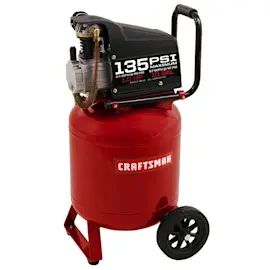
Owner’s manual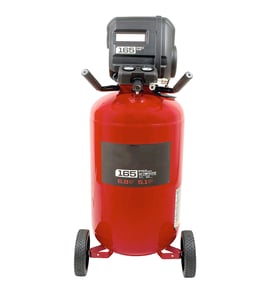


How to tell if an air compressor pressure switch is bad?
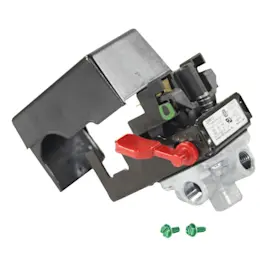
On the Craftsman 919162121 air compressor, a bad pressure switch shows up when the motor does not start at low tank pressure, does not shut off at cut-out pressure, or short-cycles. You may also hear the pressure release valve venting at the wrong time or see burned or welded electrical contacts.
- Unplug the compressor and bleed all tank pressure before removing covers or touching wiring.
- Set the switch to ON/AUTO and listen for normal cycling: it should start at cut-in and stop at cut-out.
- If the unit keeps running and the safety valve pops, the switch is not shutting off at cut-out.
- If the motor struggles to restart after stopping, the pressure release valve may not be unloading head pressure (often tied to the pressure switch assembly).
- If you hear constant leaking at the pressure switch release valve area when the motor is running, that is not normal.
The owner's manual explains the basic operation:
| Function | What should happen | What it suggests if it does not |
|---|---|---|
| Cut-in | Switch starts the motor when tank pressure drops | Switch not sensing pressure or internal failure |
| Cut-out | Switch stops the motor at factory set cut-out | Switch contacts stuck or welded; switch out of adjustment |
| Unload (pressure release valve) | Brief hiss for a few seconds after shutoff | If it keeps leaking or never vents, restart problems can occur |
- Compressor will not shut off and tank pressure climbs until the safety valve opens.
- Electrical contacts inside the switch look burned, pitted, or welded.
- Compressor will not start even though the tank is below cut-in (and power supply is good).
- Rapid on/off cycling that is not tied to air demand.
The pressure switch controls when the motor runs. If it fails to shut off at cut-out, the tank can over-pressurize and the safety valve may open. If it fails to unload, the motor may not restart because compressed air remains trapped in the compressor head and outlet tube.
If your main symptom is a no-start condition, follow our troubleshooting flow in air compressor won't start.
Last updated: February 2026
Is it worth it to repair a compressor?
Yes, it’s worth repairing a Craftsman air compressor like model 919162121 when the problem is limited to serviceable components (such as a pressure switch, check valve, regulator, or pump seals) and the tank is sound. If the air tank is damaged, leaking, or heavily rusted, replacement is the right choice.
Our 919162121 owner information is clear: drain the tank daily or after each use to prevent internal rust, and never attempt to repair a damaged or leaking tank. A compromised tank can fail violently, so tank issues are not a “repair vs replace” decision; they are a replace decision. See the safety and maintenance guidance in the owner's manual.
Repairs are typically worthwhile when the compressor still has a solid tank and the failure is isolated.
- Compressor won’t start but power is good (often switch, wiring, or motor start components)
- Runs but won’t build pressure (often pump, reed valves, gasket, or check valve)
- Leaks air at fittings or valves (often seals, drain valve, safety valve, or connections)
- Output pressure won’t adjust (often regulator issues)
- Gauge readings are wrong (often a failed gauge)
A good next step is to match the symptom to a proven troubleshooting path like air compressor won't start or air compressor won't build tank pressure.
Use this to decide fast:
| What you found | Typical outcome | Recommendation |
|---|---|---|
| Tank leaks, deep rust, or tank damage | Unsafe to continue | Replace compressor (or tank if available) |
| Electrical issue (switch, wiring, grounding) | Repairable, but safety-critical | Repair by qualified service personnel |
| Pump wear (low pressure, slow fill) | Often repairable | Consider pump rebuild |
| Minor air leaks at fittings/valves | Usually low-cost fix | Repair |
Air compressors store high-pressure air and use household electricity. The manual warns against modifying pressure controls (pressure switch, safety valve, other pressure components) and stresses proper grounding and safe servicing. Choosing repair only makes sense when the fix keeps the unit operating at factory-set pressures and the tank remains structurally sound.
Last updated: February 2026
What are the 4 types of compressors?
The four common compressor types are reciprocating (piston), rotary screw, centrifugal, and axial. Your Craftsman air compressor model 919162121 is a small, positive-displacement style used to run air tools and inflate items; the owner's manual explains its operation and safe use.
- Reciprocating (piston): Uses a piston and cylinder to compress air; common for home shops and intermittent tool use.
- Rotary screw: Uses two meshing rotors; designed for steady, high-duty-cycle air demand.
- Centrifugal: Uses a high-speed impeller; common in large industrial plants needing high flow.
- Axial: Uses multiple rotating and stationary blade stages; typically found in very high-flow applications.
| Category | Types | How it builds pressure | Typical use case |
|---|---|---|---|
| Positive displacement | Reciprocating, rotary screw | Traps air and squeezes it into a smaller space | Tools, shop air, many industrial systems |
| Dynamic | Centrifugal, axial | Adds velocity to air then converts it to pressure | Large-scale, continuous high-flow systems |
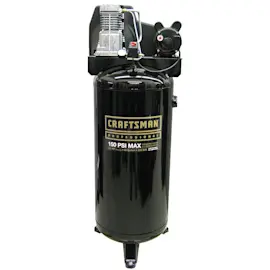
Our Craftsman 919162121 is described as a one-cylinder, single-stage pump with an air tank, and it’s designed for common tasks like operating paint spray guns, air tools, and inflating tires. It also uses a regulator and gauges so you can control outlet pressure for the tool you’re running.
Choosing the right compressor type affects duty cycle, airflow stability, noise, and maintenance. For most DIY and garage use, a piston-style unit is a practical fit because it delivers usable pressure for intermittent tools without the complexity of industrial systems.
Last updated: February 2026
What is the most common cause of air compressor failure?
The most common cause of air compressor failure is poor maintenance that leads to overheating, moisture damage, and accelerated wear. On the Craftsman 919162121, the owner's manual highlights daily tank draining to prevent rust and tank weakening, plus safe operating practices that reduce electrical and pressure-control failures.
Most breakdowns trace back to a few preventable issues:
- Water left in the tank: condensation causes internal rust, thinning steel, and leaks.
- Restricted airflow and heat: dust buildup and poor ventilation raise operating temperature and shorten motor and pump life.
- Air leaks: loose fittings, leaking valves, or worn seals force longer run time and overwork the pump.
- Pressure-control problems: a misbehaving pressure switch or safety valve can cause unsafe pressure behavior and shutdowns.
- Electrical issues: incorrect grounding, wrong circuit protection, damaged cords, or loose connections can stop the motor or damage components.
Use this routine to reduce failures and extend service life:
- Drain the tank daily or after each use and store the compressor in a clean, dry location.
- Keep cooling areas clear; do not block shrouds or ventilation openings.
- Check for leaks with soapy water at fittings, regulator, and valves.
- Bleed air pressure from the hose and tank before maintenance.
- Avoid modifying the tank, pressure switch, safety valve, or any pressure-control component.
| What you notice | Common cause | What to do first |
|---|---|---|
| Safety valve pops or tank pressure seems too high | Pressure switch not cutting out | Turn switch OFF; inspect pressure switch behavior |
| Constant hissing near fittings | Loose fitting or seal leak | Tighten fittings; recheck with soapy water |
| Won’t build tank pressure | Leak, valve issue, worn pump components | Check leaks first, then valves |
| Motor won’t run | Power supply, cord, fuse/breaker, connections | Verify correct circuit, grounding, and cord condition |
When an air compressor runs hot, runs longer to overcome leaks, or sits with water in the tank, it wears out the pump and motor faster and can create unsafe pressure or tank conditions. Consistent draining, leak checks, and correct electrical setup prevent most “sudden” failures.
Last updated: February 2026