

How to identify a Kenmore washer model?
To identify a Kenmore washer model, we look for the model number on the appliance’s ID tag, then match that exact number (for example, 11092282100) when ordering parts or troubleshooting. On many Kenmore top-load washers, the tag is under the lid or along the lid opening.
Check these common locations first (use a flashlight and wipe dust off the label):
- Top-load washer: under the lid, around the lid opening, or on the underside of the lid
- Front-load washer: inside the door opening, on the door frame, or behind the door
- Back of cabinet: rear panel label (less common, but worth checking)
- Service/tech sheet pocket: sometimes behind the lower front panel or inside the cabinet (varies by design)
Kenmore model numbers are usually all digits and often start with a 3-digit prefix (many begin with 110). Use the full model number exactly as printed, including any extra digits.
- Copy the model number exactly (no spaces)
- Record the serial number too (helps confirm production series)
- Take a clear photo of the ID tag before it fades
- Use the model number to confirm fit before buying parts like a coupling, water pump, or timer
| What you see | What it is | What to do |
|---|---|---|
| Model number | Identifies the exact washer design | Use this to look up diagrams and parts |
| Serial number | Production code/date info | Keep for reference, but don’t use for parts lookup |
| Part number | Number printed on a component | Use only when replacing that specific part |
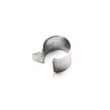
Once you confirm the model number, the next step is matching symptoms to the most common wear parts for this Kenmore direct-drive style washer, such as the coupling 285753A or agitator dog 80040.
Using the exact model number prevents wrong-part returns and speeds up repairs, especially for fit-critical items like the gear case, clutch, and water pump.
Last updated: February 2026
Is it worth repairing a Kenmore washing machine?
Yes, repairing a Kenmore washer is usually worth it when the fix restores reliable washing and spinning for far less than replacing the machine. For Kenmore model 11092282100, many common failures are straightforward (agitator, drain, coupling, clutch), so a targeted repair often delivers years of additional service.
We recommend repairing when most of these are true:
- The washer fills, drains, and powers on normally (no burning smell or repeated breaker trips).
- The problem is isolated to a wear part (agitator not moving, won’t spin, won’t drain, noisy spin).
- The tub and cabinet are in good shape (no severe rust-through or major structural damage).
- You can confirm the symptom points to one main system (drive, drain, or fill).
- The total repair cost (parts plus labor) stays well below the cost of a comparable new washer.
These parts frequently solve high-impact symptoms:
- Agitation issues: agitator dog 80040, agitator cam 285748
- Won’t spin or weak spin: clutch 285785, coupling 285753A
- Won’t drain or leaks at the pump: water pump WP3363394
- Loud banging or off-balance behavior: washer suspension spring WP63907
| Symptom | Most likely system | Part examples for this model |
|---|---|---|
| Agitator moves poorly or “ratchets” | Agitator drive | 80040, 285748 |
| Motor runs but basket won’t spin | Drive train | 285753A, 285785 |
| Water left in tub | Drain system | WP3363394 |
| Tub slams during spin | Suspension | WP63907 |
A repair decision is really about restoring safe, consistent performance. Fixing a single failed wear component (like a coupling, clutch, or pump) typically costs much less than replacing the washer, and it avoids chasing multiple “maybe” problems.
If you’re troubleshooting a spin or balance complaint, our Kenmore 110 vmax top load washer error codes resource can also help you narrow down what the washer is detecting.
Last updated: February 2026
What is the average lifespan of a Kenmore washer?
A Kenmore washer typically lasts 10 to 15 years with normal household use and basic maintenance. For your Kenmore model 11092282100, keeping the drive system and drain system in good shape is the biggest factor in reaching the upper end of that range.
- Load size and balance: frequent overloading or off-balance loads strain the clutch, gear case, and suspension.
- Drain performance: slow draining makes the pump work harder and can leave water that causes odors and corrosion.
- Agitation and spin wear: worn agitator components can reduce cleaning and increase mechanical stress.
- Water quality: hard water accelerates mineral buildup in valves and internal surfaces.
- Routine care: cleaning, leveling, and prompt repairs prevent small issues from becoming major failures.
- Loud grinding during spin, repeated slipping, or burning smell
- Persistent leaks from the tub area or recurring water on the floor
- Agitator not moving properly (common wear item: agitator dog 80040)
- Will not drain or drains very slowly (often tied to the water pump WP3363394)
- Frequent no-start or intermittent operation
| Situation | Typical approach | Why |
|---|---|---|
| Agitation weak or one-direction “ratcheting” | Repair | Small, low-cost wear parts often restore performance |
| Won’t drain, humming pump | Repair | Drain pump issues are common and usually straightforward |
| Repeated spin problems with heavy noise | Compare costs | Can involve clutch, gear case, or drive components |
| Tub or major seal leaks | Compare costs | Labor and multiple parts can add up quickly |
A washer near the end of its lifespan can still run, but efficiency and reliability drop. Fixing simple wear items early (agitator and drain components) helps your Kenmore 11092282100 avoid secondary damage to the drive system.
Last updated: February 2026