Installation guide
 Owner’s manual
 Error Codes



What is the lifespan of a GE dryer?
A GE electric dryer like model GTDS820ED0WS typically lasts 10 to 13 years with normal household use. With consistent airflow maintenance (lint removal and proper venting) and timely repairs, it commonly reaches the upper end of that range.
What affects dryer lifespan the most
- Airflow and venting: A restricted vent makes the dryer run hotter and longer.
- Lint control: Lint buildup increases heat stress and wear.
- Load size and frequency: Overloading strains the drive system and drum support.
- Installation quality: Correct electrical connection and exhaust setup reduce failures.
- Wear parts condition: Belts, rollers, and blower components wear over time.
Maintenance that helps you get the full life
Use these habits to reduce drying time and component wear:
- Clean the lint screen before every load.
- Inspect and clean the exhaust duct periodically; use 4-inch metal ducting.
- Keep the dryer area clear and avoid storing flammables near the appliance.
- Do not use an extension cord; use the correct grounded electrical connection.
- Address new noises early (thumping, squealing, scraping) before they damage other parts.
Common wear parts and what they usually cause
| Symptom | Likely wear area | Example part on this model page |
|---|---|---|
| Squealing or rumbling | Drum support and shafts | Dryer drum support roller WE03X10016 |
| Drum not turning | Belt or motor drive | Dryer drum belt WE12M37 |
| Poor airflow, longer dry times | Blower area or ducting | Dryer blower wheel WE16M24 |
Why it matters
A dryer that takes longer to dry or runs unusually hot uses more energy and puts extra stress on the heater, motor, and drum support system. Keeping venting within the installation requirements is one of the most effective ways to extend the service life.
For model-specific installation and venting requirements (including duct diameter and clearance guidance), follow the installation guide.
Last updated: February 2026
Can you plug a 220 dryer into a 110 outlet?
No. A 220V (120/240V) electric dryer like the GE GTDS820ED0WS requires a dedicated 30-amp 120/240V or 120/208V circuit; a standard 110V (120V) outlet cannot supply the voltage and amperage needed for safe operation and proper heating. See the electrical requirements in the installation guide.
What the GTDS820ED0WS electrical requirements mean
Your dryer is designed to run on a dedicated branch circuit with the correct voltage and protection. Using the wrong outlet can prevent heating, trip breakers, or create an electrical shock or fire hazard.
Key points from the installation requirements:
- Dedicated circuit required (individual branch circuit)
- 120/240V or 120/208V, 60 Hz supply
- 30-amp circuit with time-delay fuses or circuit breakers
- Proper grounding is required; do not use adapters or extension cords
Safe options if you only have a 110V (120V) outlet
If your laundry area only has a standard 120V receptacle, these are the practical paths forward:
- Have a licensed electrician install the correct 240V dryer receptacle and 30-amp circuit
- If you are moving the dryer, verify the outlet type before delivery and hookup
- Use a dryer designed for 120V only (compact or specialty units), not this full-size electric dryer
- Avoid “converter” or adapter solutions; they do not create a true 240V, 30-amp supply for the heater
3-wire vs 4-wire connections (what to expect)
The correct cord and connection method depends on your home wiring and local code.
| Connection type | Typical use | Notes |
|---|---|---|
| 4-wire | Newer installations and required in some locations | Required for mobile home installations per the guide; uses separate ground and neutral |
| 3-wire | Older installations where allowed by local code | Not for mobile homes; not for new construction in many areas |
For the exact terminal block wiring steps and grounding instructions, follow the installation guide.
Why it matters
The heating element in an electric dryer needs the full 240V supply to produce enough heat for normal dry times. Correct voltage, correct breaker size, and proper grounding protect your home and help the dryer dry efficiently.
Last updated: February 2026
What is the most common problem with a GE dryer?
The most common problems we see with GE dryers like model GTDS820ED0WS are no heat or poor drying and not starting. In many homes, the root cause is restricted airflow from lint buildup or an overly long or kinked vent, which increases drying time and can trigger safety shutoffs.
Most common symptoms and what usually causes them
- No heat or weak heat: failed heater circuit parts, or airflow restriction causing overheating
- Long drying times: clogged lint screen, blocked vent, crushed transition duct, or weak airflow
- Dryer will not start: door not fully latching, door switch/strike issues, or power supply problem
- Stops mid-cycle: overheating from poor venting, or motor protection opening
- Squealing or thumping noise: worn drum support components
Quick checks we recommend first (fast, high-impact)
- Clean the lint screen and confirm air is moving strongly at the outside vent hood.
- Inspect the vent path for kinks, crushing, lint clogs, or excessive length.
- Confirm the dryer is installed with the required 4-inch exhaust duct diameter and that the duct run is not longer than the exhaust length guidance. See the installation guide.
- If the dryer is electric, confirm the supply is on a dedicated 120/240V (or 120/208V), 60 Hz, 30-amp circuit. See the installation guide.
Parts that commonly fix these issues on GTDS820ED0WS
If airflow is good and the symptom persists, these model-matched parts are common repair paths:
- Thumping/squealing, drum not gliding smoothly: dryer drum support roller WE03X10016, dryer drum belt WE12M37
- Not starting because the door will not latch: dryer door strike WE01M10007, dryer door catch WE1M1011
- Poor airflow or rattling from the fan area: dryer blower wheel WE16M24
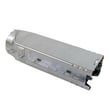
- No heat on an electric dryer: dryer heater assembly WE11M58
| Symptom | Most common root cause | Typical next step |
|---|---|---|
| Long dry times | Vent restriction | Clean/shorten vent; verify 4-inch duct |
| No heat | Heater circuit issue or overheat condition | Check airflow first; then test heater assembly |
| Won’t start | Door not closing or power issue | Inspect strike/catch; verify electrical supply |
Why it matters
Airflow problems do more than slow drying; they raise operating temperatures, waste energy, and can shorten the life of key components like the heater, motor, and drum support parts.
Last updated: February 2026