Installation guide
 Owner’s manual
 Error Codes




Can I replace water softener resin myself?
Yes, you can replace the resin yourself in a Kenmore 625384200 water softener, but it is a messy, time-consuming job and you must protect the distributor tube so resin beads do not enter your plumbing. We recommend following the safety and setup steps in the 625384200 installation guide before starting.
What to know before you start
Replacing resin usually makes sense when you have resin beads in the water, the softener no longer removes hardness even after cleaning the venturi, or the resin is fouled by iron or chlorine.
- Plan for water shutoff time; you will depressurize and drain the unit
- Expect spilled resin beads; have a shop vac and buckets ready
- Keep the distributor tube centered and capped during dumping/filling
- Replace seals you disturb; leaks after reassembly are common if old seals are reused
- Sanitize and flush the system after reassembly
Basic DIY outline (high level)
- Put the softener in bypass and unplug the transformer.
- Relieve pressure at a nearby cold faucet.
- Disconnect plumbing as needed and move the unit to a work area.
- Remove the valve head; protect the distributor tube opening.
- Dump old resin, rinse the tank, then refill with new resin.
- Reassemble, leak test, sanitize, and run a manual regeneration.
Parts that are commonly involved
If you are doing resin, we typically see customers also replace sealing parts that can cause bypassing or leaks.
| What you may need | Example compatible part for this model | Why it matters |
|---|---|---|
| Replacement resin media | Water softener resin 0502272 | Restores ion-exchange capacity |
| Valve seals (if disturbed/worn) | Kenmore water softener seal kit 7185487 | Helps prevent internal bypassing and leaks |
Why it matters
Resin is the “working media” that removes hardness minerals. If resin breaks down or becomes heavily fouled, the softener can regenerate normally but still deliver hard water, or you may see beads at faucets.
Last updated: January 2026
How much does it cost to replace resin beads in a water softener?
For the Kenmore 625384200 water softener, the exact cost to replace resin beads can’t be identified from model-specific information because pricing depends on local labor rates and how much resin your tank requires. In most homes, expect a few hundred dollars for resin plus additional labor if you hire service.
Typical cost ranges (what most customers see)
These ranges are common for residential water softeners; your total depends on resin volume, access, and whether internal parts also need service.
- DIY resin only: about $150 to $400
- Professional resin replacement: about $400 to $1,000
- Resin plus additional valve/seal work: about $600 to $1,500
| Option | You supply | You pay for | Typical total |
|---|---|---|---|
| DIY | Tools, cleanup, time | Resin and small supplies | $150 to $400 |
| Pro service | Access to unit | Resin, labor, disposal | $400 to $1,000 |
| Pro plus rebuild | Access to unit | Resin plus internal repairs | $600 to $1,500 |
What drives the price up or down
- Resin quantity (measured in cubic feet; larger tanks cost more)
- Condition of the distributor and seals (worn parts can add time and parts cost)
- Water conditions (iron, sediment, chlorine can shorten resin life)
- Cleanup and disposal (resin is messy and time-consuming)
- Trip and minimum labor charges in your area
Parts that may be involved
If you’re sourcing resin for this model, use the compatible water softener resin 0502272. If the valve is leaking or bypassing during service, a rebuild may also involve the Kenmore water softener seal kit 7185487.
Why it matters
Resin is the “working media” that removes hardness minerals. When it’s exhausted or damaged, you can get hard water, higher salt use, or even resin beads in the plumbing.
For installation and handling precautions (pressure limits, drain setup, bypass positioning), follow the 625384200 installation guide.
Last updated: January 2026
Is it worth repairing a water softener?
Yes, it’s usually worth repairing a Kenmore water softener model 625384200 when the problem is isolated to common wear parts (seals, motor, gears, venturi, or controls) and the tank isn’t leaking. If the unit is very old or has repeated major failures, replacement is typically the better value.
Quick decision checklist
We recommend repair when you have one of these situations:
- The softener still powers on and cycles, but performance is inconsistent.
- You have a leak at the valve area that points to worn seals.
- The unit is not regenerating correctly due to a drive or control issue.
- The brine system is acting up (not drawing brine, overfilling, salty water).
- You can confirm the issue with basic troubleshooting steps in the 625384200 installation guide.
Replacement tends to make more sense when:
- The resin tank or salt storage drum is leaking.
- You’re seeing frequent breakdowns across multiple systems (valve, electronics, resin performance).
- The softener no longer matches your household’s water usage or hardness needs.
Typical repair parts that often restore performance
For this model, these are common “fix the symptom” parts we see customers replace:
- Kenmore water softener seal kit 7185487 (helps stop internal bypassing and valve leaks)
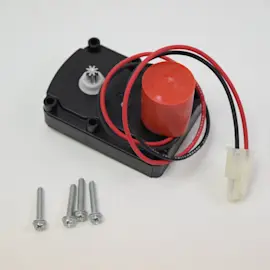
- Kenmore water softener valve motor 7286039 (restores proper cycling during regeneration)
- Water softener cam and gear 7283489 (addresses stripped gears or stalled drive)
- Kenmore water softener electronic control board 7327835 (helps with no display or erratic operation)
Repair vs. replace comparison
| Situation | Usually best choice | Why |
|---|---|---|
| Soft water stopped, but no tank leak | Repair | Often a valve, motor, or venturi issue |
| Water overflows from brine/salt tank | Repair | Commonly brine float/venturi related |
| Tank or drum is leaking | Replace | Structural leak is not a practical repair |
| Multiple expensive failures in a short time | Replace | Cost adds up quickly |
Why it matters
A working softener protects plumbing, water heaters, and fixtures from scale buildup. Repairing a targeted failure can restore soft water quickly and usually costs far less than replacing the entire system.
Last updated: January 2026
What is the average lifespan of a water softener?
A typical residential water softener lasts 10 to 15 years. For the Kenmore 625384200 water softener, lifespan is driven less by the model number and more by water hardness, regeneration frequency, and routine care outlined in the 625384200 installation guide.
What affects lifespan the most
These are the biggest factors that shorten or extend service life:
- Water hardness and iron content: harder water and iron increase workload
- Salt quality and salt bridging: poor salt or bridging can cause frequent problems
- Maintenance habits: periodic cleaning and sanitizing helps prevent valve and brine issues
- Incoming water pressure and temperature: staying within the unit’s limits reduces wear
- Regeneration settings: incorrect hardness settings can overwork the system
Maintenance that helps you reach the full lifespan
We recommend these practical habits for Kenmore water softeners like model 625384200:
- Keep salt in the brine tank; do not let it run empty
- Use pellet or nugget water softener salt (avoid dirty rock salt)
- Clean out the salt tank every 2 to 3 years
- Sanitize the system when needed (often after installation or service)
- Check for slow leaks and address them early
Quick lifespan guide (what to expect)
| Component | Typical service life | What usually ends it |
|---|---|---|
| Control/drive components | 8 to 15 years | motor wear, gear wear, electrical failure |
| Valve seals and O-rings | 5 to 10 years | wear, debris, drying/cracking |
| Resin media | 10 to 15 years | chlorine damage, iron fouling, age |
Why it matters
Knowing the expected lifespan helps you decide whether to maintain, rebuild, or replace. If your softener is near the 10 to 15 year mark and you’re seeing hard water, frequent regenerations, or leaks, targeted repairs (like seals or drive parts) can often restore performance.
Last updated: January 2026