 Owner’s manual



How to hard reset a Kenmore 79651992610 washer?
To hard reset your Kenmore Elite washer model 79651992610, unplug it (or switch the breaker off) for 1 minute, then restore power and try a normal cycle. This clears many temporary control glitches; for repeated lockups, check the troubleshooting steps in the owner's manual.
Quick hard reset steps
- Press Power to turn the washer off.
- Unplug the washer from the outlet (or turn the laundry circuit breaker off).
- Wait 60 seconds.
- Plug the washer back in (or turn the breaker on).
- Press Power, then start a Rinse/Spin or Normal cycle to confirm operation.
If the washer still will not start after a reset
These checks fix the most common “looks dead” or “won’t run” situations on Kenmore 796 top-load washers:
- Make sure the outlet has power (test with a lamp).
- Confirm the lid is fully closed; a failing lid lock can prevent starting.
- Cancel the cycle, then reselect a cycle and press Start/Pause.
- Reduce the load size; an out-of-balance condition can stop a cycle.
- If the tub will not drain, clear the drain path; a drain problem can block spin.
What a reset does (and does not) do
| What it can fix | What it will not fix |
|---|---|
| Frozen controls, random beeping, cycle not advancing | Broken lid lock, failed drain pump, bad inlet valve, wiring issues |
| Temporary error conditions after a power flicker | Repeated error codes caused by a failing part |
Why it matters
A hard reset is a fast first step because it restores the electronic control to a known state. If the problem returns, it usually points to a recurring condition (drain, lid lock, water fill, or control sensing) that needs troubleshooting using the model-specific procedures in the owner's manual.
Last updated: February 2026
How to force a Kenmore 79651992610 washer to drain?
To force-drain your Kenmore Elite washer model 79651992610, we recommend using the emergency drain method at the drain pump filter area: cut power, lower the drain point, and let the water out in a controlled way before clearing any blockage. See the owner's manual for the exact access location and steps for your unit.
Safe force-drain steps (manual drain)
- Unplug the washer (or switch off the breaker) to prevent the drain pump from running unexpectedly.
- Turn off both water supply valves to avoid additional filling.
- Place towels and a shallow pan at the lower front of the washer.
- Open the lower access area and slowly release water from the drain pump filter cap (do it gradually to control flow).
- After water stops, remove the filter and clear lint, coins, socks, or debris.
- Check the drain hose behind the washer for kinks, crushing, or a clog at the standpipe.
If it still will not drain
A no-drain condition is usually caused by a restriction, a failed pump, or a control or lock issue.
| What you notice | Most common cause | What to do next |
|---|---|---|
| Hums but no water moves | Clog in filter or hose | Recheck filter and hose path |
| No sound at all | Pump not getting power or failed | Inspect wiring connections; consider pump replacement |
| Stops mid-cycle with water left | Drain system restriction or sensing issue | Clear restrictions; run a drain/spin after reset |
| Won’t start drain with lid closed | Lid lock problem | Check the lid lock operation |
If you suspect the pump is not moving water after the filter and hose are clear, the Washer drain pump assembly is a common fix for this model; match your symptoms and wiring before ordering washer drain pump assembly AHA74453902.
Why it matters
Force-draining first prevents a flood when you open the filter, and it lets us confirm whether the problem is a simple blockage (most common) or a failed component like the drain pump, lid lock, or control.
Last updated: February 2026
What is the average lifespan of a Kenmore washer?
A Kenmore washer typically lasts 10 to 15 years. For your Kenmore Elite washer 79651992610, lifespan depends most on load size, detergent type (HE), and routine care; consistent maintenance helps you reach the upper end of that range.
Typical lifespan at a glance
| Item | Typical range | What usually shortens it |
|---|---|---|
| Kenmore washer overall | 10 to 15 years | Overloading, poor drainage, hard water buildup |
| High-use households | 8 to 12 years | Multiple loads daily, heavy items often |
| Light-use households | 12 to 15 years | Fewer cycles, good ventilation and cleaning |
What we recommend to help it last longer
- Use HE detergent and measure carefully; too much soap leaves residue that stresses the drain system.
- Avoid overloading; heavy, unbalanced loads increase wear on the tub, suspension, and drive components.
- Leave the lid open between loads when possible to reduce moisture and odor.
- Check fill and drain performance; slow filling can point to a restricted valve screen or a failing inlet valve.
- Address small leaks or unusual noises early; minor issues often become major repairs if ignored.
Parts that commonly affect “end of life” symptoms
When a washer starts stopping mid-cycle, not draining, or acting erratically, these are common repair areas we see on this model family:
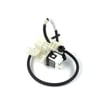
- Draining problems: washer drain pump assembly AHA74453902
- Filling problems: washer water inlet valve 5220FR1280P
- No-start or intermittent operation: washer lid lock assembly EAU63143510
- Temperature sensing issues: washer thermistor 6322FR2046G
- Control issues: washer electronic control board EBR77688006
Why it matters
Knowing the typical 10 to 15 year lifespan helps you decide whether to maintain, repair, or replace. If your 79651992610 is within that window, a targeted repair (like a drain pump or inlet valve) often restores reliable operation for years.
For model-specific care and cleaning steps, follow the maintenance guidance in the owner's manual.
Last updated: February 2026
What is the OE code on a Kenmore 79651992610?
The OE error code on your Kenmore Elite washer model 79651992610 means the washer is not draining properly within the allowed time. In most cases, clearing a drain restriction or fixing a drain pump or hose issue restores normal draining; see the owner's manual for the model’s drain and error-code guidance.
What to check first (fast fixes)
- Unplug the washer for 1 minute, then plug it back in and try Drain/Spin.
- Check the drain hose for kinks, crushing, or a tight bend behind the washer.
- Make sure the drain hose is not shoved too far down the standpipe (it can siphon or restrict flow).
- If your model has a drain filter/coin trap access, clean out lint, coins, and small items.
- Verify the standpipe or laundry sink is not clogged and can accept water quickly.
Likely causes and the most common parts involved
OE is almost always caused by a restriction (water cannot leave) or a failed drain component.
| Symptom you notice | Most likely cause | What to do next |
|---|---|---|
| Water stays in tub, pump sounds loud or “grindy” | Debris in pump or failing pump | Inspect pump area; replace the washer drain pump assembly AHA74453902 if damaged or noisy |
| Water drains slowly, no unusual noise | Partial clog in hose/standpipe/filter | Clear hose and plumbing restriction; re-test Drain/Spin |
| Drains sometimes, then OE returns | Intermittent pump or wiring issue | Check connections; inspect harness routing and plugs |
Why it matters
When the washer cannot drain, it cannot complete the rinse or spin steps. That leaves clothes wetter than normal and can trigger repeated stopping, longer cycle times, and extra strain on the drain pump.
Before you replace parts
- Disconnect power before servicing.
- Bail out water if needed so you can safely access drain components.
- After any cleaning or repair, run a short cycle and confirm the tub empties quickly.
Last updated: February 2026
Is it worth repairing a Kenmore washing machine?
Yes. Repairing your Kenmore Elite washer model 79651992610 is worth it when the failure is a single, common replaceable part and the total repair stays well under the cost of a comparable new washer. Replacement makes sense when major failures repeat or the repair is very expensive.
Quick rule of thumb
- Repair when the estimate is under about 50% of the price of a similar new washer
- Replace when the estimate is over about 50%, especially if more than one major issue is present
- Prioritize repairs that restore core functions: fill, drain, lock, and temperature sensing
Repairs that are usually worth it on model 79651992610
- Won’t drain or drains slowly: inspect the drain path; a weak or jammed pump often points to the washer drain pump assembly AHA74453902
- Won’t fill or fills slowly: a sticking valve can cause hot or cold fill problems; consider the washer water inlet valve 5220FR1280P
- Lid won’t lock or cycle won’t start: the washer lid lock assembly EAU63143510 is commonly involved
- Water temperature problems: incorrect sensing can be tied to the washer thermistor 6322FR2046G
When replacement makes more sense
- Loud roaring or grinding that gets worse (often tub or bearing related)
- Leaks from the tub area (not hoses or external connections)
- Control problems plus another major symptom (drain, spin, or fill)
Decision guide
| Situation | Repair is the better choice | Replace is the better choice |
|---|---|---|
| Cost | Under ~50% of a similar new washer | Over ~50% of a similar new washer |
| Scope | One clear failed part | Multiple major failures or repeat breakdowns |
| Results | Normal fill, drain, and spin after fix | Ongoing noise, leaks, or instability |
Why it matters
Targeted repairs on wear parts (valves, locks, pumps, sensors) extend washer life and avoid the cost and disruption of replacement.
For model-specific troubleshooting and operating checks, use the owner's manual.
Last updated: February 2026


