What is the most common cause of air compressor failure?
The most common cause of air compressor failure is poor maintenance that leads to overheating and accelerated wear. On a Craftsman air compressor model 919165080, the problems we see most often start with restricted airflow (dirty intake filter, blocked cooling fins) and small air leaks that force the pump to run longer.
Most common failure causes (and what they look like)
- Overheating: compressor runs hot, trips a breaker, or shuts off early.
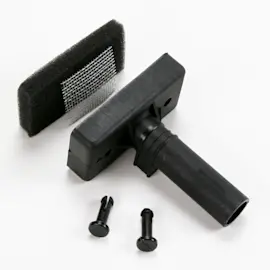
- Restricted airflow: clogged intake filter or dusty shroud reduces cooling.
- Air leaks: hissing at fittings, regulator, drain valve, or hose coupler.
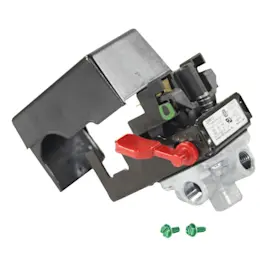
- Pressure switch or electrical issues: won’t start, won’t shut off, or cycles rapidly.
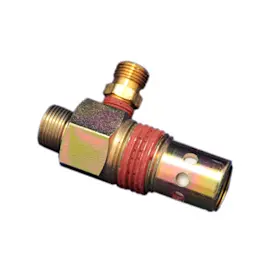
- Check valve/unloader problems: hard starting, especially with pressure in the tank.
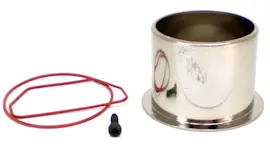
- Worn pump components: slow fill, low output, or can’t reach cut-out pressure.
Quick prevention checklist for model 919165080
- Keep the intake area and cooling fins clean so the motor and pump can shed heat.
- Drain the tank after use to reduce internal corrosion and water carryover.
- Fix small leaks early; they increase run time and heat.
- Use the compressor within its duty cycle; long continuous runs overheat pumps and motors.
- If it is oil-lubricated, keep oil at the correct level and change it on schedule.
Troubleshooting guide: symptom to likely cause
| What you notice | Most likely cause | What to check first |
|---|---|---|
| Won’t start | Power/pressure switch, unloader, motor issue | Outlet, cord, reset, pressure switch function |
| Runs but won’t build pressure | Leak, check valve, pump wear | Listen for leaks, inspect fittings, check valve |
| Builds pressure slowly | Restricted intake, worn pump | Intake filter, pump head/valves |
| Trips breaker or overheats | Poor ventilation, long run time, motor load | Airflow around unit, extension cord use, duty cycle |
Why it matters
Most “failures” begin as small efficiency losses (a dirty filter or minor leak). That forces longer run times, which raises heat and speeds up wear on the pump, seals, and electrical components.
Helpful DIY resources
- Use our troubleshooting steps for air compressor won't start.
- If pressure is low or slow to build, follow air compressor won't build tank pressure.
- For deeper mechanical wear, see how to rebuild an air compressor pump.
Last updated: February 2026
What are the 4 types of compressors?
The four common compressor types are reciprocating (piston), rotary screw, centrifugal, and axial. For a Craftsman air compressor like model 919165080, the design is typically a reciprocating (piston) style used for intermittent, tool-powered shop and home tasks.
Quick breakdown of the 4 compressor types
- Reciprocating (piston): Uses a piston and cylinder to compress air in cycles; common in portable and small stationary compressors.
- Rotary screw: Uses two meshing screws for continuous compression; common in commercial shops needing steady airflow.
- Centrifugal: Uses a high-speed impeller to move air and build pressure; common in large industrial plants.
- Axial: Uses multiple rotating and stationary blade stages; used in very high-flow applications (often aerospace and specialized industrial).
Positive displacement vs dynamic (why the list is grouped this way)
Most “4 types” lists also split compressors into two families:
| Family | Types in this family | What it means in plain terms |
|---|---|---|
| Positive displacement | Reciprocating, rotary screw | Traps air, then squeezes it smaller to raise pressure |
| Dynamic | Centrifugal, axial | Adds velocity to air, then converts that velocity into pressure |
Which type is most relevant for Craftsman 919165080 repairs?
For typical troubleshooting on model 919165080, you are usually dealing with piston-compressor systems such as:
- Pressure switch and unloader behavior
- Check valve sealing
- Pump wear (valves, cylinder, piston seal)
- Tank pressure build and air leaks
A good next step for common symptoms is our DIY help for air compressor won't start or air compressor won't build tank pressure.
Why it matters
Knowing the compressor type helps you diagnose correctly. A piston compressor that cycles on and off is expected to sound and behave differently than a rotary screw unit designed for continuous duty, and the likely failure parts and tests are different.
Last updated: February 2026
Is it worth it to repair a compressor?
Yes, repairing a Craftsman air compressor model 919165080 is worth it when the problem is limited to common service parts (pressure switch, check valve, regulator, gauges, fittings) and the tank and pump are in good shape; it is usually not worth it when the tank is compromised or the pump is severely worn.
Quick decision checklist
- Repair if it still builds pressure close to normal and only has a no-start, leak, or control issue.
- Repair if the fix is a single component (pressure switch, check valve, unloader line, regulator).
- Replace if the tank leaks, is heavily rusted, or has damage.
- Replace if the pump has low compression (runs but will not build pressure) and needs major internal work.
- Replace if it repeatedly trips the breaker after basic electrical checks.
Typical repair cost vs. value (rule of thumb)
Use this simple guideline for the 919165080: if the repair total is more than about 50% of the price of a comparable new compressor, replacement usually makes more sense.
| What’s wrong | Most common cause | Usually worth repairing? |
|---|---|---|
| Won’t start | Pressure switch, capacitor (if equipped), power cord, motor issue | Often, if not a motor failure |
| Won’t build tank pressure | Check valve, intake filter, reed valves, piston seal wear | Sometimes; depends on pump condition |
| Air leaks | Fittings, drain valve, regulator, safety valve | Often |
| Tank won’t hold air | Tank corrosion or damage | No |
How we recommend you evaluate your compressor
1) Confirm the failure type
Match the symptom first, then price the likely parts and labor.
- Air compressor won't start
- Air compressor won't build tank pressure
- Air compressor air leaks
- Air compressor tank won't hold air
2) Check the two “deal breakers”
- Tank condition: any tank leak or serious rust means replacement is the safer, smarter choice.
- Pump condition: if it runs continuously with little pressure rise, the pump likely needs a rebuild.
If a rebuild is on the table, use: how to rebuild an air compressor pump.
Why it matters
A compressor can look “dead” when the real issue is a control or air-handling part (pressure switch, check valve, regulator). Fixing those restores normal cut-in and cut-out operation and prevents repeated hard starts, overheating, and premature motor wear.
Last updated: February 2026
Is a 150 PSI air compressor good for car detailing?
Yes. A 150 PSI Craftsman air compressor like model 919165080 works well for car detailing because it provides plenty of pressure headroom; your real day-to-day performance depends on CFM at your working pressure (often 60 to 90 PSI) and tank size.
What matters more than 150 PSI
For detailing tools, we size the compressor around airflow and recovery, then regulate pressure down to what the tool needs.
- CFM at 90 PSI: Determines whether airflow stays strong during use
- Tank size: Larger tanks reduce cycling and pressure drop
- Regulator and hose size: Affects pressure drop at the tool
- Moisture control: Helps prevent water spray and spotting
- Leaks: Small leaks make the compressor run more and feel weaker
Practical guidance (typical ranges)
Use this as a quick way to match your detailing tasks to compressor capability.
| Detailing use | Typical working pressure | Typical airflow need | If undersized |
|---|---|---|---|
| Blow gun (short bursts) | 60 to 90 PSI | 2 to 4 CFM | Pressure drops on long blasts |
| Tornador-style cleaning gun | ~90 PSI | 4 to 6 CFM | Sputtering, weak cleaning |
| Light air tools (occasional) | 90 PSI | 4+ CFM | Frequent cycling, slow recovery |
Setup tips to get better results
- Set the regulator to the tool requirement, not the tank maximum
- Use a 3/8-inch hose for higher-flow tools to reduce pressure drop
- Drain the tank after use to reduce moisture carryover
- Add an inline filter/water separator near the outlet
- Check fittings and quick-connects for leaks
Why it matters
PSI is the ceiling; CFM is what keeps tools working consistently. If your compressor runs constantly or won’t recover, airflow loss from leaks or a pressure issue is usually the cause; start with air compressor air leaks or air compressor won't build tank pressure.
Last updated: February 2026