
Where is the reset button on an air compressor?
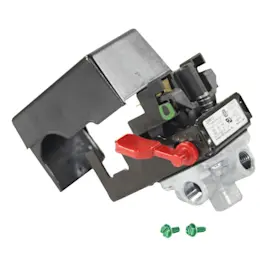
On the Campbell Hausfeld WL610002 portable air compressor, the reset is typically the motor’s thermal overload reset; it’s usually a small red or black button on or near the motor housing, often close to the power cord entry or the pressure switch cover. Press it firmly after the unit cools.
What to look for on the WL610002
Most portable air compressors place the reset in one of these spots:
- On the side or end of the electric motor (small round button)
- Near the pressure switch housing (sometimes under a small cover)
- Near the power cord connection point on the motor
- On a control box mounted to the motor/pump assembly
If you do not see a button, your compressor may use an internal overload that resets automatically after cooling.
Safe reset steps (recommended)
- Turn the compressor OFF.
- Unplug it from the outlet.
- Let the motor cool for 15 to 30 minutes.
- Reduce tank pressure if needed (open the tank drain briefly) so the motor does not restart under heavy load.
- Press the reset button once (do not hold it in).
- Plug in and restart.
If it trips again right away
A reset that keeps tripping usually means the motor is overheating or drawing too much current. Check these common causes:
- Low voltage or a long/light-duty extension cord (use a short, heavy-gauge cord or none)
- Clogged intake filter or blocked cooling airflow around the pump/motor
- Stuck check valve or unloader issue causing hard starts (motor hums, then trips)
- Worn motor start components (capacitor or centrifugal switch on some designs)
- Pump binding or low oil (if your pump is oil-lubricated)
Quick symptom guide
| What you notice | Most common reason | What to do first |
|---|---|---|
| Motor hums, won’t spin | Hard start load | Drain tank pressure, retry |
| Runs briefly, then trips | Overheating | Improve airflow, clean filter |
| Trips immediately | Power supply issue | Try a different outlet/circuit |
Why it matters
The reset protects the motor windings from heat damage. Finding and using it correctly can prevent repeated overload trips and extend the life of the motor and pressure switch.
For help identifying the correct WL610002 model tag and matching parts, use how to find your appliance model number (and what it means for parts).
Last updated: February 2026
What is the most common cause of air compressor failure?
The most common cause of failure in a Campbell Hausfeld WL610002 portable air compressor is poor maintenance that leads to lubrication problems and overheating. Dirty intake filtration, contaminated or low oil (on oil-lubed pumps), and restricted cooling airflow accelerate wear on bearings, valves, and the pump.
Most common failure drivers (what we see most often)
- Overheating from blocked cooling fins, poor ventilation, or long run times
- Lubrication breakdown (low oil, dirty oil, wrong oil type on oil-lubed units)
- Dirty or clogged intake filter that makes the pump work harder and run hotter
- Moisture and corrosion from not draining the tank, which can damage valves and fittings
- Air leaks at fittings, hose connections, or the check valve that cause excessive cycling
Quick checks you can do before assuming the pump is “bad”
- Unplug the compressor and let it cool fully.
- Inspect and clean the intake area; make sure nothing blocks airflow around the pump and motor.
- Listen for constant hissing after shutoff (often a fitting, unloader, or check valve issue).
- Drain the tank completely and look for heavy water or rust-colored discharge.
- If your WL610002 is oil-lubed, verify the oil level and condition (dark, burnt-smelling oil points to overheating).
Symptoms and likely causes
| Symptom | Most likely cause | Why it happens |
|---|---|---|
| Runs hot and trips/reset | Restricted airflow, dirty filter, long duty cycle | Heat builds up and protection opens |
| Runs but won’t build pressure | Leaks, reed/valve issue, worn seals | Air cannot compress efficiently |
| Short-cycles frequently | Air leak, pressure switch sensing issues | Tank pressure drops too fast |
| Slow recovery | Dirty intake, low voltage, worn pump | Reduced pumping efficiency |
Why it matters
Heat and poor lubrication are “multiplier” problems: once the compressor runs hot or dry, internal wear speeds up quickly, and a small issue (like a clogged filter) can turn into major pump damage.
Helpful DIY reference
If you need to test power, switches, or wiring safely, use our guide: how to use a multimeter to test electrical parts video.
Last updated: February 2026
What is the most reliable compressor brand?
For overall air-compressor reliability, the best brand depends on how you use it (portable DIY, pro shop, or industrial duty cycle). For heavy-duty industrial use, brands like Atlas Copco, Ingersoll Rand, Kaeser, and Quincy are widely trusted; for portable jobsite and shop use, reliability often comes down to correct sizing and maintenance more than the name on the tank.
Reliable brands by use case
- Industrial, continuous-duty systems: Atlas Copco, Kaeser, Quincy, Ingersoll Rand
- Professional shop, reciprocating compressors: Ingersoll Rand, Quincy, Rolair
- Portable DIY and homeowner use: Campbell Hausfeld, Craftsman, Porter-Cable (choose based on CFM needs)
- Automotive A/C compressors (different product category): Denso, ACDelco, Valeo
What matters more than brand (especially for portable units)
Even with a solid brand, reliability drops fast when the compressor is undersized or run too hard.
- Match CFM at PSI to your tool (paint, impact, nailer, sander)
- Avoid long run times; let the pump cool between cycles
- Drain tank moisture regularly to reduce internal corrosion
- Keep the intake filter clean and airflow unobstructed
- Use the correct extension cord or a dedicated circuit to prevent low-voltage motor stress
Quick comparison: how to choose “most reliable” for your needs
| Use case | What to prioritize | Typical best fit |
|---|---|---|
| Nailers, inflators, light DIY | Portability, simple maintenance | Portable oil-free or small oil-lube |
| Impacts, ratchets, small spray jobs | Higher CFM, recovery time | Larger portable or small stationary |
| Sanding, continuous spraying | High CFM, duty cycle | Stationary, belt-drive, oil-lube |
Why it matters for your Campbell Hausfeld WL610002
With a Campbell Hausfeld WL610002 portable air compressor, “reliability” is usually determined by whether the compressor can keep up with your tools without overheating or short-cycling. Correct tool matching, moisture control, and electrical supply prevent the most common failures (motor strain, valve wear, and premature pump wear).
Helpful DIY reference
If you’re troubleshooting power, switches, or motor issues, use how to use a multimeter to test electrical parts video to confirm voltage and basic electrical health before replacing components.
Last updated: February 2026
How to tell if an air compressor regulator is bad?
A bad regulator on your Campbell Hausfeld WL610002 portable air compressor shows up as unstable outlet pressure: the PSI creeps up after you stop airflow, drops hard when a tool is triggered, or will not adjust smoothly. Leaks at the knob or vent are also common signs.
Quick symptoms to look for
- Pressure creep: outlet gauge slowly rises even with the regulator “closed” and no air flowing
- Pressure droop: outlet pressure falls sharply when you pull the trigger on a blow gun or nailer
- Hunting/fluctuation: outlet PSI bounces up and down while the tank pressure stays steady
- Won’t adjust: knob turns but outlet PSI barely changes, or changes in sudden jumps
- Constant hissing: air leaks from the regulator body, knob area, or relief/vent port
- Tools act weak: tank is full but the tool starves for air or cycles inconsistently
Simple tests you can do (no special tools)
- Fill the tank to normal cut-out pressure.
- Set the regulator to a typical working pressure (many air tools run around 70 to 90 PSI).
- Creep test: stop airflow (close the outlet or release the trigger) and watch the outlet gauge for 1 to 2 minutes. Rising PSI indicates internal leakage past the regulator seat.
- Droop test: run a steady airflow (blow gun) and watch the outlet gauge. A big drop that does not recover points to a sticking valve, worn seat, or restricted regulator.
Common causes (and what to try first)
| What you notice | Most likely cause | What to do next |
|---|---|---|
| Outlet PSI rises on its own | Worn valve seat or debris | Drain tank, purge line, retest; replace regulator if it persists |
| Outlet PSI drops under load | Regulator restriction or failing internal spring/diaphragm | Confirm tank PSI is stable; replace regulator |
| Hissing at knob/body | Damaged seals or cracked housing | Replace regulator (seals are rarely serviceable) |
| Gauge reads erratically | Bad outlet gauge (not regulator) | Compare with a known-good gauge at the coupler |
Why it matters
A failing regulator can over-pressurize hoses and tools, cause poor tool performance, and make the compressor cycle more often. Stable regulated pressure protects your nailers, spray guns, and inflators and helps you get consistent results.
Helpful DIY reference
For basic electrical checks related to compressor controls (if you suspect a switch or wiring issue instead of the regulator), use our guide: how to use a multimeter to test electrical parts video.
Last updated: February 2026
Does my Campbell Hausfeld compressor need oil?
Yes, your Campbell Hausfeld WL610002 air compressor needs oil only if it has an oil-lubricated pump; oil-free pumps do not take crankcase oil. You can confirm the pump style by looking for an oil fill cap and a sight glass or dipstick on the pump.
How to tell if WL610002 needs oil
- Oil-lubricated pump: oil fill cap/breather on the crankcase, plus a sight glass or dipstick
- Oil-lubricated pump: often has an oil drain plug at the bottom of the crankcase
- Oil-free pump: no oil fill, no sight glass, and the pump body is typically sealed
- An intake air filter can be present on both designs, so it is not the deciding clue
If it is oil-lubricated: what to use and how to check it
Use non-detergent air compressor oil or the oil type specified for your pump; avoid regular automotive motor oil because additives can contribute to deposits and shorten pump life.
- Turn the compressor off, unplug it, and set it on a level surface
- Fill to the center of the sight glass or the full mark on the dipstick
- Do not overfill; overfilling can increase oil carryover into the air line
Typical oil guidance for many portable compressors
| Item | Typical recommendation |
|---|---|
| Oil type | Non-detergent air compressor oil |
| Viscosity | Commonly SAE 10W-30 (use the grade specified for your pump and climate) |
| Fill level | Mid-sight-glass or dipstick “full” mark |
If it is oil-free: maintenance to do instead
- Keep the intake filter clean and installed
- Drain moisture from the tank drain valve after use
- Check fittings, regulator, and hose connections for leaks
Why it matters
Running an oil-lubricated pump low on oil can quickly damage internal components; using the correct compressor oil helps control heat, reduce wear, and limit valve deposits.
If you need help confirming you are working with the correct model before ordering maintenance items, use how to find your appliance model number (and what it means for parts).
Last updated: February 2026