 Installation guide
 Owner’s manual



What is the 14 place setting in a dishwasher?
A “14 place setting” dishwasher capacity means the Bosch SHE3ARL5UC can hold up to 14 standardized place settings in one load, which is typically a good fit for a 4+ person household or for entertaining. It is a capacity rating, not a guarantee for every dish shape.
A place setting is a standardized bundle of dishes used for capacity testing. In most cases, one place setting includes:
- Dinner plate
- Salad plate
- Bowl
- Cup and saucer (or mug)
- Flatware (fork, knife, spoon)
Because real-world dishes vary (oversized plates, tall tumblers, bulky cookware), your usable capacity can be lower or higher than the rating.
In practical terms, 14 place settings usually works well when you:
- Load plates and bowls in the lower rack with consistent spacing
- Keep tall items from blocking the detergent dispenser or spray arms
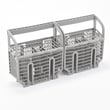
- Put flatware in the basket so pieces do not nest together
- Avoid overloading, which reduces wash coverage and drying
For loading best practices that help you get closer to the rated capacity, use the rack and loading guidance in the SHE3ARL5UC manual.
| Dishwasher capacity | Typical household fit | Typical use case |
|---|---|---|
| 9 to 10 place settings | 1 to 2 people | Smaller daily loads |
| 12 to 13 place settings | 2 to 3 people | Average family use |
| 14+ place settings | 4+ people | Family meals, entertaining |
Capacity affects how often you run cycles, how well items get cleaned, and how efficiently you use water and energy. A properly loaded dishwasher cleans better than an overloaded one, even if the rated place settings are the same.
Last updated: January 2026
How to fix Bosch dishwasher error 14?
Bosch dishwasher error 14 (often shown as E14) on the Bosch SHE3ARL5UC is typically tied to a water fill or flow-measurement problem. We fix it by confirming the dishwasher is actually getting water, then checking the inlet components and the flow sensing parts used to measure incoming water.
- Reset power: turn the dishwasher off, then restore power and try a short cycle.
- Confirm the water supply valve under the sink is fully open.
- Run hot water at the kitchen faucet until it is hot, then start the dishwasher.
- Check for a kinked or pinched supply line.
- If the dishwasher was unused for weeks, run water at a nearby faucet first to clear any trapped gas in the hot water system (a known safety step in the installation instructions).
If the quick checks do not help, these are the most common items to inspect or replace:
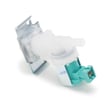
- Dishwasher water inlet valve 00622058 (controls water entering the dishwasher)
- Inlet screen at the valve (debris can restrict fill)
- Flow meter or reed switch assembly (measures incoming water; often the root cause when E14 appears)
- Wiring connections between the inlet/flow sensor and control
| Item | What it affects | Common symptom with E14 |
|---|---|---|
| Water inlet valve | Water enters tub | No fill, slow fill, intermittent fill |
| Flow measurement sensor | Confirms correct fill volume | Fills but stops, error appears early |
| Control board | Interprets sensor signals | Random errors, inconsistent behavior |
E14 is the dishwasher telling us it cannot confirm proper water flow. Fixing the water supply restriction or the flow sensing issue prevents repeated cycle stops and protects the circulation system from running without the right water level.
Before pulling the dishwasher out, follow the safety guidance in the SHE3ARL5UC installation guide; an uninstalled or partially pulled-out dishwasher can tip when the door is opened, and you can be exposed to sharp edges, electrical power, and hot water connections.
Last updated: January 2026
What is the most common problem with Bosch dishwashers?
For Bosch dishwashers like model SHE3ARL5UC, the most common service issues we see are drainage problems (standing water, not draining) and drying complaints (plastic items staying wet). Drain issues are usually caused by a clogged filter area, a blocked drain hose, or a failing drain pump.
- Standing water in the bottom: drain path restriction, drain pump issue, or drain hose routing problem
- Hums but won’t drain: debris in the pump area or a weak drain pump
- Dishes not drying well: normal for Bosch condensation drying, plus rinse aid or loading issues
- Stops mid-cycle: door not fully latched, intermittent power, or a control-related fault
- Fills when it shouldn’t: water inlet valve not sealing fully
- Cancel and drain the cycle; listen for the drain pump running.
- Check and clean the filter area and sump for food, glass, labels, or bone fragments.
- Inspect the drain hose for kinks, crushing, or a clogged air gap (if your setup uses one).
- Confirm the door closes firmly; a poor latch can interrupt operation.
- Review the self-help and care steps in the SHE3ARL5UC manual.
| Symptom | Likely area | Example model-matched part |
|---|---|---|
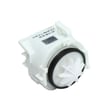
| Not draining, standing water | Drain system | Dishwasher drain pump 00611332 |
| Slow fill or no fill | Water supply | Dishwasher water inlet valve 00622058 |
| Door won’t start cycle reliably | Door latch system | Dishwasher door lock 00630783 |
| Poor cleaning with cloudy water | Soil sensing | Dishwasher turbidity sensor 00611323 |
Drain and fill problems can lead to poor cleaning, odors, and cycle interruptions. Drying complaints are often normal behavior for Bosch condensation drying, but they improve a lot with correct loading and rinse aid use.
For installation-related causes (hose routing, securing the unit, safety warnings), follow the SHE3ARL5UC installation guide.
Last updated: January 2026





