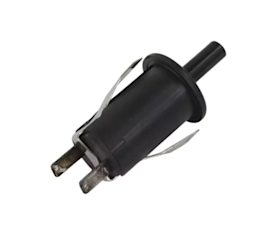
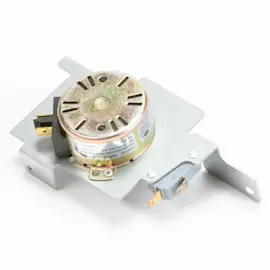
Installation guide
 Owner’s manual
 Error Codes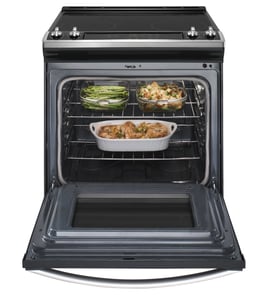



How to replace Kenmore Range oven control board?
To replace the oven control board on your Kenmore electric range model 79096004601, we shut off power, access the control area, label and move each wire one at a time to the new board, reconnect the ribbon cable fully, then reassemble and restore power. Use the 79096004601 owner’s manual for control-panel access and safety notes.
Before you start (safety and prep)
- Turn off the range breaker (240V) and confirm the display is dark.
- Let the range cool completely.
- Take a clear photo of the wire layout before disconnecting anything.
- Label connectors with tape so each wire returns to the same terminal.
- Avoid pulling on wires; grip connectors by the insulated terminal.
Replacement steps (typical for this Kenmore 790-series range)
- Disconnect power at the breaker.
- Access the control area (commonly from the backguard or rear panel, depending on configuration). Keep screws organized.
- Transfer wires one at a time from the old board to the matching spot on the new board.
- Reconnect the ribbon cable: slide it straight into the connector until fully seated, then lock the connector (if your connector has a locking tab).
- Reinstall panels and verify no wires are pinched.
- Restore power, then set the clock and test Bake and Broil.
Quick checks after installation
- Display powers up and responds to keypad presses.
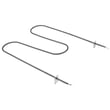
- Bake heats normally; if not, inspect the frigidaire range bake element 316075103.
- Broil heats normally; if not, inspect the frigidaire range broil element 316203200.
- No error codes appear during preheat (if an error shows, use Kenmore 790 range 4-digit error codes).
What to test (simple comparison)
| Test | What you should see | If it fails |
|---|---|---|
| Clock/timer | Display stable, buttons respond | Recheck ribbon cable seating and connector lock |
| Bake | Bottom element heats, oven preheats | Check bake element and wiring connections |
| Broil | Top element glows/heats | Check broil element and wiring connections |
| Temperature | Holds set temp reasonably | Consider the oven sensor (common cause) |
Why it matters
The control board routes power and signals to the heating circuits and keypad. A loose ribbon cable or a miswired connector can cause dead display, wrong functions, or heating problems, so careful wire-by-wire transfer prevents repeat failures.
Last updated: February 2026
What causes a Kenmore oven to stop working?
On the Kenmore 79096004601 electric range, an oven that “stops working” is usually caused by a power supply problem (tripped breaker or loose connection), a control fault (beeping with an F-code), or a failed heating component such as the bake element or oven temperature sensor. See the 79096004601 owner's manual for model-specific checks and display messages.
Quick checks we recommend first
- Confirm the range has power; check both sides of the double breaker (electric ranges typically use 240V).
- If there was a power outage, turn the range off; when power returns, reset the clock and oven function.
- If the control is beeping and showing an F-code, press STOP/CLEAR to stop cooking and clear the display.
- Try Bake and Broil separately; if one works and the other does not, a single element is often the issue.
- Watch the PREHEAT indicator; cycling on and off during Bake is normal and shows temperature regulation.
Most common failed parts (electric oven)
If power is good and the control responds, these parts are frequent causes:
- Bake element: cracks, blisters, or no heat in Bake; consider the frigidaire range bake element 316075103.
- Oven temperature sensor: erratic temps, long preheat, or shutdowns tied to temperature feedback; consider the frigidaire range oven temperature sensor 316490000.
- Control or keypad/overlay issues: random beeping, unresponsive pads, or recurring fault codes (often paired with an F-code symptom).
| Symptom | What it usually points to | What to do next |
|---|---|---|
| Entire range dead | Power supply, terminal block, cord | Check breaker, then inspect connections per the manual |
| Broil works, Bake does not | Bake element | Inspect element; replace if damaged |
| Beeping with F-code | Electronic control fault detected | Press STOP/CLEAR; if it returns, troubleshoot the code |
Why it matters
An oven can appear “dead” when it is actually protecting itself after a fault, a power interruption, or a temperature-sensing problem. Pinpointing whether the issue is power, control, or heat production prevents unnecessary parts replacement.
Helpful DIY reference
For display faults and what common codes mean on Kenmore ranges, use Kenmore 790 self-cleaning range error codes.
Last updated: February 2026
Where can I find my Kenmore electric range model number?
On the Kenmore electric range model 79096004601, the model and serial number are printed on an identification (serial) plate on the right side of the oven front frame, inside the storage or warmer drawer compartment. Pull the drawer out and look along the right-side frame.
Quick steps to locate the model number
- Turn the oven off and let it cool completely.
- Pull the storage drawer straight out (some models lift slightly, then pull).
- Look on the right side of the oven front frame for the identification plate.
- Write down both the model number and serial number for parts lookup.
- Use the location diagram in the 79096004601 owner's manual if you want the exact plate position.
Other common label locations (if the drawer area is missing or unreadable)
If the identification plate is damaged, painted over, or missing, these are the next most common places to check on freestanding electric ranges:
- Behind the oven door, along the front frame (door jamb area)
- On the lower front panel (some models use a front lower cover panel instead of a drawer)
- On the back of the range near the vent area
What you should record (and why)
Recording the full model number helps us match the correct Kenmore 790-series parts, wiring, and control components.
| What to record | Example format | Why it matters |
|---|---|---|
| Model number | 790.9600 (series) / 79096004601 (full) | Ensures correct part fit |
| Serial number | Letters and numbers | Helps confirm production variation |
Why it matters
Many parts for ranges look similar but differ by wiring terminals, element wattage, or mounting style. Using the exact model number from the identification plate prevents ordering the wrong bake element, oven temperature sensor, or control switch.
Last updated: February 2026
Where is the thermal fuse located on a Kenmore oven?
On Kenmore electric ranges like model 79096004601, the overheat safety device customers call a “thermal fuse” is typically mounted on the back of the range, attached to a rear sheet-metal panel or heat shield near the oven wiring harness. Use the 79096004601 owner’s manual for the correct panel-removal and safety steps.
Most common locations to check (electric range)
After power is off, the thermal cutoff is usually found in one of these areas:
- Upper rear area near the control compartment wiring
- Mid-rear area on a heat shield where oven temperature is monitored
- Lower rear area where bake-element wires route through the back
- In some designs, behind the control panel instead of the lower back
How to access it safely
Follow these steps for a Kenmore range like 79096004601:
- Turn OFF the breaker (240V) or unplug the range.
- Pull the range forward to reach the rear.
- Remove the rear access cover screws; keep screws organized.
- Look for a small, flat device with two wires on spade terminals.
- If you see heat-damaged connectors, repair the terminals and wiring, not just the device.
Confirm you are chasing the right part
Many “no heat” complaints are caused by a failed heating component or sensor, not a thermal cutoff. These parts are common on this model family:
| Symptom | More likely cause | Example part to check |
|---|---|---|
| Oven will not bake but broil works | Failed bake element | Frigidaire range bake element 316075103 |
| Oven temperature is inaccurate | Failed temperature sensor | Frigidaire range oven temperature sensor 316490000 |
| Broil does not heat | Failed broil element | Frigidaire range broil element 316203200 |
Why it matters
Checking the correct rear access areas first prevents unnecessary disassembly and helps you focus on the oven’s safety and heating circuits, especially when the range stops heating or shuts down after overheating.
Last updated: February 2026
Why is my Kenmore electric oven not getting hot?
If your Kenmore electric range model 79096004601 isn’t getting hot, the most common causes are a failed bake element, a bad oven temperature sensor, or a control issue that is stopping heat. Start by checking for an error code, then test the heating and sensing parts.
Quick checks we recommend first
- Make sure the oven is actually set to BAKE (not just the clock or timer).
- Let the oven fully preheat before judging temperature (preheat affects baking results).
- If the control is beeping and showing an F code, press STOP/CLEAR to stop the beeping and clear the display (a stored fault can prevent normal heating).
- Avoid lining the oven bottom or walls with aluminum foil; it disrupts heat distribution and can cause poor baking results.
- Review operating and troubleshooting notes in the 79096004601 owner's manual.
Parts that most often cause “no heat” or “not hot enough”
1) Bake element (most common)
A bake element can look blistered, cracked, or may fail with no visible damage.
- Inspect for breaks or burn spots.
- Test for continuity with a multimeter (power off).
- Replace if open.
Helpful part for this model: frigidaire range bake element 316075103.
2) Oven temperature sensor
If the sensor reads wrong, the control may limit heat or shut heating down.
- Check the sensor wiring connection at the back of the range.
- Test sensor resistance at room temperature (compare to typical oven-sensor ranges).
Helpful part for this model: frigidaire range oven temperature sensor 316490000.
What your symptoms usually mean
| Symptom | Most likely cause | What to do next |
|---|---|---|
| Oven won’t heat at all | Bake element open, control fault | Check element continuity; clear any F code |
| Heats but never reaches temp | Sensor out of range, weak element | Test sensor; inspect element for hot spots |
| Control beeps with F code | Electronic control detected a fault | Press STOP/CLEAR; then diagnose by code |
Why it matters
An oven that won’t heat correctly can undercook food and also forces longer run times, which increases wear on the bake element, sensor, and wiring connections.
Last updated: February 2026