Owner’s manual
 Error Codes




How many cubic feet is my Kenmore Elite washer?
For Kenmore Elite washer model 11045966401, the exact tub capacity in cubic feet is listed in the product specifications section of the 11045966401 owner's manual. If you need a quick estimate, most Kenmore front-load washers of this design are typically in the 3.5 to 4.5 cu. ft. range.
How to find the exact cubic feet for model 11045966401
We recommend using the manual because capacity can vary by drum design and model revision.
- Open the 11045966401 owner's manual
- Look for “Specifications” or “Capacity”
- If the manual lists drum volume in liters, convert it to cubic feet
- If it lists basket/tub dimensions, capacity is not always directly stated, but specs usually are
- Use the model number 11045966401 when comparing specs to similar Kenmore Elite washers
Quick conversion (if your manual lists liters)
| If the manual shows | Convert to cubic feet |
|---|---|
| Liters (L) | L ÷ 28.316 = cu. ft. |
Example: 110 L ÷ 28.316 = 3.88 cu. ft.
Why it matters
Washer capacity affects load size, cycle performance, and how well the washer spins out water. Overloading a front-load washer can also increase vibration and strain on components like the drive belt and suspension.
Last updated: January 2026
What is the average lifespan of a Kenmore washer?
A Kenmore washer typically lasts 10 to 15 years. For the Kenmore Elite washer model 11045966401, good care and timely repairs help you reach the upper end of that range; the 11045966401 owner's manual also outlines routine maintenance that supports long service life.
Typical lifespan by washer type
Most Kenmore washers fall into these real-world ranges:
- Top-load washers: about 12 to 15 years
- Front-load washers: about 10 to 12 years
- High-use households (daily loads): often closer to the lower end of the range
| Washer type | Typical lifespan | Common wear areas |
|---|---|---|
| Top-load | 12 to 15 years | Suspension, drive components |
| Front-load | 10 to 12 years | Door boot leaks, drain system, bearings |
What usually ends a washer’s life first
In a Kenmore Elite washer like 11045966401, these issues most often drive major repairs:
- Drain problems from a failing pump or restricted hose
- Water leaks at the door seal or internal hoses
- Fill problems from a sticking inlet valve or clogged inlet screens
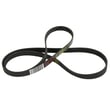
- Spin issues from a worn belt, pulley, or suspension components
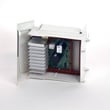
- Control failures (intermittent operation, no spin, no drain)
If you are troubleshooting a no-drain or slow-drain symptom, the water pump 280187 is a common repair part for this model.
Maintenance that extends lifespan (high impact)
The manual’s washer care section focuses on preventing buildup and protecting water connections. For long life, we recommend:
- Clean the washer regularly and leave the door ajar between loads to reduce odor and residue
- Check water inlet hoses periodically and replace aging hoses before they burst
- Avoid chronic overloading; it accelerates wear on the drive belt, pulley, and suspension
- Use the right detergent amount (too much can cause excess suds and stress the drain system)
- Address small leaks early before they damage bearings, the motor control board, or the cabinet
Why it matters
A washer that is maintained and repaired early usually costs less to keep running and is less likely to suffer secondary damage (for example, a small leak that later ruins bearings or electronics).
Last updated: January 2026
How to hard reset a Kenmore Elite washer?
A practical hard reset for the Kenmore Elite washer model 11045966401 is to power the washer off, unplug it for about 1 minute, then plug it back in and start a fresh cycle. If the controls are unresponsive, canceling the current cycle using PAUSE/CANCEL often restores normal operation; see the 11045966401 owner's manual for the exact button sequence.
Quick reset steps (safe and effective)
- Press POWER to turn the washer off.
- Unplug the washer (or switch the breaker off) for 60 seconds.
- Plug the washer back in (or turn the breaker on).
- Press POWER, select a cycle, then press and hold START for about 1 second.
- If the washer was mid-cycle, press PAUSE/CANCEL twice to fully cancel before restarting.
If you just need to clear a stuck cycle (no full reset)
The manual-supported way to stop and restart control logic is to cancel the cycle and reselect it.
| What you want to do | What to press | What should happen |
|---|---|---|
| Cancel the current cycle | PAUSE/CANCEL twice | Washer powers down; door unlocks after it is safe (it may drain first) |
| Restart with a new cycle | Select cycle and options, then hold START ~1 second | Cycle begins at the start |
| Manually drain water | PAUSE/CANCEL, select DRAIN & SPIN, then hold START ~1 second | Washer drains, then unlocks when complete |
Why it matters
A “hard reset” clears a temporary control glitch (for example, a frozen keypad or a cycle that will not advance). Canceling the cycle correctly also helps protect the door lock system and prevents water from being left in the tub.
When a reset will not fix it
A reset will not correct a mechanical or drainage problem. If the washer will not drain or unlock consistently after canceling, check common causes like a clogged drain path or a failing pump. On this model, the water pump 280187 is a common part involved in no-drain symptoms.
Last updated: January 2026
How to force a Kenmore Elite washer to drain?
On the Kenmore Elite washer model 11045966401, we force a drain by canceling the current cycle and running DRAIN & SPIN. Press PAUSE/CANCEL, select DRAIN & SPIN, then press and hold START for about 1 second to begin draining; the door unlocks after the spin completes (or after the washer drains if water is too hot/high). See the 11045966401 owner's manual.
Fast steps to drain it now
- Press PAUSE/CANCEL once to stop the cycle.
- Select DRAIN & SPIN.
- Press and hold START (about 1 second) to begin draining.
- Wait for the cycle to finish; the door unlocks when it is safe.
- If the door stays locked, let the washer finish draining; it unlocks automatically when the water level and temperature drop.
If it will not drain (common causes)
A drain problem is usually a restriction in the drain path or a failing drain pump.
- Check the drain hose for kinks, crushing, or a clog.
- Make sure the drain hose is installed correctly; do not force excess hose into the standpipe.
- Confirm the standpipe or laundry tub drain is not backing up.
- Listen for the drain pump running; loud grinding or a hum with no draining points to a pump issue.
- Inspect the pump area and hoses for debris; a sock or coin can block flow.
Quick symptom-to-cause guide
| What you notice | Most likely issue | What to check first |
|---|---|---|
| Washer hums but water stays | Pump jam or failing pump | Drain hose and pump inlet |
| Drains slowly | Partial clog | Hose routing and standpipe |
| Stops mid-cycle with water left | Drain restriction | Hose kink or blockage |
| Water returns to tub | Poor drain hose setup | Air gap and standpipe depth |
Parts that commonly fix a no-drain issue
If troubleshooting points to the drain system, these model-matched parts are common solutions:
- Water pump 280187 (drives the drain function)
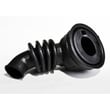
- Washer tub-to-pump hose WPW10467168 (can clog or collapse)
- Clamp WP285655 (helps prevent leaks after hose service)
Why it matters
Forcing a proper drain protects the door lock system, prevents standing water odors, and reduces the chance of leaks caused by a backed-up drain hose or standpipe.
Last updated: January 2026