Installation guide
 Owner’s manual
 Error Codes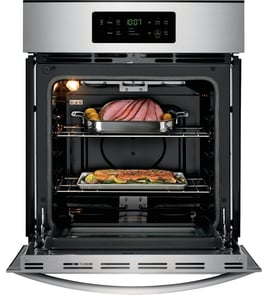




What is the life expectancy of a Bosch oven?
A Bosch electric wall oven like model HBL5651UC typically lasts 10 to 15 years with normal household use; with consistent cleaning, proper installation, and prompt repairs, it commonly reaches the upper end of that range.
Typical lifespan and what affects it
Most wall ovens wear based on heat cycles and ventilation. These factors have the biggest impact:
- How often you bake or broil (more heat cycles shortens lifespan)
- Keeping the door seal tight so heat stays in the cavity
- Avoiding heavy slams or hanging weight on the oven door
- Keeping vents clear so the cooling fan can move air
- Fixing small issues early (fan noise, weak heating, error beeps)
Parts that most often determine “end of life”
When a wall oven becomes unreliable, it is usually one of these systems:
| System | Common symptom | Typical fix |
|---|---|---|
| Heating | Slow preheat, uneven baking | Element or relay/control diagnosis |
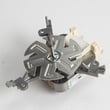
| Cooling/airflow | Fan runs loud, oven overheats | Replace cooling fan assembly |
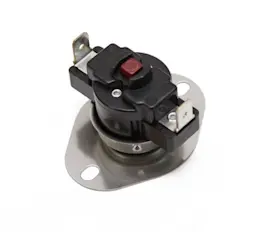
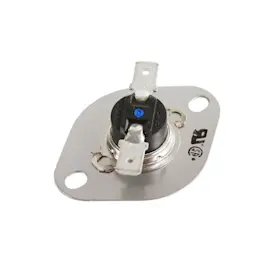
| Safety protection | Oven dead after overheating | Replace thermal fuse |
| Controls/display | Buttons unresponsive, blank display | Control or display board replacement |
Model HBL5651UC has common service parts available, including the wall oven thermal fuse 00631343 and the wall oven cooling fan assembly 00759374.
Maintenance that helps you reach 15 years
We recommend these practical habits:
- Wipe spills after the oven cools; baked-on spills trap heat and odors
- Keep the door gasket clean and seated evenly
- Use self-clean sparingly; high heat is hard on electronics and wiring
- Confirm the cabinet cutout and airflow match the HBL5651UC installation guide
- If you suspect an electrical issue, use safe testing practices from how to use a multimeter to test electrical parts video
Why it matters
A wall oven is a high-heat, high-current appliance. Good airflow, correct installation, and quick attention to heating or fan problems reduce stress on the control boards, wiring, and safety devices, which is what most often limits lifespan.
Last updated: February 2026
What are the common problems with Bosch ranges?
Bosch cooking appliances most often have heat-related and control-related issues: the oven may not heat, may heat unevenly, or may not hold temperature; you can also see display or keypad problems. For Bosch electric wall oven model HBL5651UC, start with basic operation checks in the HBL5651UC installation guide and then test common failure points like the thermal fuse, convection fan, and control boards.
Most common symptoms and likely causes
- Oven will not heat or preheat: blown thermal fuse, failed heating circuit, relay/control issue
- Uneven baking or weak convection: convection fan motor problem, convection element issue
- Oven shuts off mid-cycle: overheating condition, cooling fan problem, thermal fuse opening
- Display is blank or unresponsive: display board or control panel issue
- Self-clean will not start or door will not lock: door lock assembly problem, control issue
Quick checks we recommend first (safe, no tools)
- Confirm the breaker is on; wall ovens typically require a dedicated circuit.
- Select BAKE and verify the oven begins to preheat and the light works.
- Try SELF CLEAN briefly to confirm the door lock engages when the lock icon appears.
- Let the oven cool completely if it overheated; then retry a normal bake cycle.
Parts that commonly fix these problems on HBL5651UC
| Symptom | Part to consider | What it does |
|---|---|---|
| Dead oven, no heat | Wall oven thermal fuse 00631343 | Opens the circuit if the oven overheats |
| Poor convection, uneven cooking | Thermador wall oven convection fan motor 00642845 | Circulates hot air for even baking |
| Overheating, shuts down, hot cabinet | Wall oven cooling fan assembly 00759374 | Moves heat away from controls and cabinet |
| Blank/intermittent display | Wall oven display board 00632190 | Runs the display and user interface |
Why it matters
Heat and airflow problems can trigger over-temperature protection and cause nuisance shutdowns, weak baking performance, or control failures. Catching a failing cooling fan, thermal fuse, or convection system early helps protect the control area and keeps temperatures stable.
Last updated: February 2026
Can you fit a 20 lb turkey in a double oven?
Yes, a 20 lb turkey typically fits in the larger cavity of a Bosch double wall oven like model HBL5651UC, as long as the roasting pan and bird leave airflow space around the sides and top. For the most reliable fit, confirm your cavity and rack positions in the HBL5651UC use and care manual.
How to check fit before you buy the turkey
- Measure the oven cavity width, depth, and height at the rack position you plan to use.
- Measure your roasting pan (handles included) and compare it to the rack’s usable space.
- Plan for at least 1 inch of air space on the sides and above the turkey for even heat circulation.
- Use the lower oven for the turkey; the second cavity is usually better for sides.
- If you use convection, avoid crowding the back wall so air can move freely.
Quick sizing guide (practical rule of thumb)
These are common real-world fit guidelines for double wall ovens.
| Item | Typical size | Usually fits? |
|---|---|---|
| 20 lb turkey (roasting) | about 16 to 18 in long | Yes, in the larger cavity |
| Large roasting pan | about 16 x 13 in to 18 x 14 in | Yes, if it sits flat on the rack |
| Extra-tall roaster with lid | taller overall height | Sometimes tight; measure height at rack |
Tips to avoid “it fits but cooks poorly”
Even if the turkey fits, tight clearances can cause uneven browning or longer cook times.
- Place the rack so the turkey sits near the center of the cavity.
- Keep foil, lids, and oversized pans from blocking convection airflow.
- If the oven door gasket is worn, heat can leak and cooking can be less consistent; consider replacing the door gasket 00755053 if you see gaps, tears, or flattening.
Why it matters
Proper clearance helps the oven maintain stable temperature and lets heat (and convection airflow, if used) circulate around the bird. That improves browning, reduces hot spots, and helps the turkey cook more evenly.
Last updated: February 2026
How do you reset the temperature sensor on a Bosch oven?
On the Bosch HBL5651UC, there is no separate “temperature sensor reset” button; the practical reset is to power-cycle the oven and then confirm it heats and preheats normally. If temperature problems continue after a reset, we troubleshoot the sensor circuit and related safety parts.
Quick reset steps (safe first)
- Turn the oven off.
- Switch the oven circuit breaker OFF for 2 to 5 minutes.
- Turn the breaker ON.
- Set BAKE and start preheating; confirm the oven begins to preheat and the light works.
- If your model has SELF CLEAN, start it briefly to confirm the door lock engages when the lock icon appears, then cancel.
For model-specific operating steps and menu options, follow the HBL5651UC owner’s manual.
If the oven still reads wrong temperatures
A “bad temperature” symptom is usually caused by a failed sensor, a wiring/connector issue, or a control problem rather than a sensor that simply needs resetting.
Common checks we use:
- Compare displayed temperature vs. actual oven temperature after a full preheat.
- Inspect the sensor harness and connectors for heat damage or loose pins.
- Check for a cooling fan that is not running (overheating can cause erratic operation).
- Look for signs of overheating protection opening.
Parts that commonly relate to temperature and overheating
| Symptom | What it often points to | Example part for HBL5651UC |
|---|---|---|
| Oven shuts down, dead display, or intermittent power | Overheat protection opened | Wall oven thermal fuse 00631343 |
| Oven overheats or runs hot around the cabinet | Cooling airflow problem | Wall oven cooling fan assembly 00759374 |
| Convection bake uneven or slow | Convection airflow problem | Thermador wall oven convection fan motor 00642845 |
Why it matters
Accurate temperature control protects baking results and prevents overheating that can trip safety devices like a thermal fuse. Resetting power is a good first step, but repeated temperature errors usually mean a component or wiring issue that needs correction.
Last updated: February 2026