Owner’s manual
 Error Codes



What are the disadvantages of a bottom freezer refrigerator?
A bottom-freezer refrigerator like the GE PYE22PSHFSS keeps fresh food at eye level, but the tradeoffs are mostly about freezer access and cost. The main disadvantages are more bending for frozen items, less convenient organization in deep drawers, and typically a higher purchase price than top-freezer models.
Common disadvantages (what most owners notice)
- You bend or squat to reach frozen foods, especially items at the bottom of the drawer.
- Deep freezer drawers can hide smaller items, so food is easier to lose.
- Heavy frozen items (bulk meat, large bags) are harder to lift out from a low drawer.
- Bottom-freezer designs often cost more than comparable top-freezer refrigerators.
- Some layouts have less usable freezer space for tall boxes because of drawer rails and bins.
Organization and access: bottom freezer vs top freezer
| Feature | Bottom freezer | Top freezer |
|---|---|---|
| Access to fresh food | Easier (at eye level) | Requires more bending |
| Access to frozen food | More bending | Easier |
| Freezer organization | Drawer-based, can stack | Shelf-based, easier to see |
| Best for | Fresh-food heavy households | Freezer-heavy households |
When a bottom freezer is a poor fit
- You rely heavily on frozen foods every day.
- You have mobility limitations that make bending difficult.
- You store lots of bulky frozen items (party trays, large pizza boxes).
Why it matters
Choosing the right freezer layout affects daily comfort, food visibility, and how often you end up reorganizing. If your household uses the freezer constantly, a top-freezer layout can feel faster and easier, even if the fresh-food section sits lower.
For model-specific features and storage layout details, check the PYE22PSHFSS owner’s manual.
Last updated: January 2026
What is the life expectancy of a bottom freezer refrigerator?
A bottom-freezer (bottom-mount) refrigerator like the GE PYE22PSHFSS typically lasts 15 to 20 years. Regular maintenance (cleaning coils, keeping doors sealing, and changing filters on schedule) helps you reach the high end of that range.
Typical lifespan and what to expect
Most bottom-mount refrigerators run longer than simpler designs because they are built for daily use, but they also have more components (fans, sensors, ice maker, dispenser) that may need repair over time.
- Typical service life: 15 to 20 years
- Common mid-life repairs (years 7 to 15): ice maker, water valve, fan motor, sensors
- Best indicator of remaining life: stable temperatures and normal run times
| Appliance type | Typical life expectancy | Notes |
|---|---|---|
| Top-freezer refrigerator | 10 to 15 years | Fewer features, fewer repairs |
| Bottom-freezer refrigerator | 15 to 20 years | More features, more serviceable parts |
| Side-by-side refrigerator | 15 to 20 years | Dispenser and ice system often drive repairs |
What shortens the life of a bottom-freezer refrigerator
These issues make the compressor and sealed system work harder, which reduces overall lifespan.
- Dirty condenser coil and restricted airflow
- Door gasket leaks and frequent door openings
- Overpacked compartments blocking air vents
- Ice buildup from defrost problems
- Hard water and infrequent filter changes (dispenser and ice maker strain)
Maintenance that adds years
Use the PYE22PSHFSS owner’s manual for model-specific care intervals and cleaning guidance.
- Vacuum and brush the condenser area regularly
- Keep the refrigerator at steady, recommended temperature settings
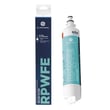
- Replace the water filter on schedule (use GE refrigerator water filter RPWFE when it fits your setup)
- Level the cabinet so doors close fully and consistently
- Address unusual noises early (fan or airflow issues)
Why it matters
A refrigerator that is running hot, leaking water, or struggling to make ice often uses more energy and puts extra wear on the compressor. Preventive care is usually cheaper than major cooling-system repairs.
Last updated: January 2026
What is the most common problem with GE profile refrigerators?
The most common issue we see with GE Profile refrigerators like model PYE22PSHFSS is cooling trouble (fresh food section warm, freezer not holding temperature, or temperatures swinging). The root cause is often airflow, frost buildup, or a failed cooling component; confirm settings and diagnostics in the PYE22PSHFSS owner's manual.
Most common symptoms and what usually causes them
- Not cooling or weak cooling: dirty condenser coil, blocked vents, evaporator fan problem, defrost system failure
- Temperature swings: sensor issue, control board logic, door not sealing
- Strange noises: evaporator fan blade hitting ice, fan motor wear, normal compressor/inverter sounds
- Ice maker not working: water supply issue, frozen fill tube, ice maker assembly failure
- Water leaking: clogged defrost drain, loose water line, inlet valve seepage
Quick checks we recommend first (no parts needed)
- Set temps to typical targets: 37°F fresh food, 0°F freezer.
- Make sure vents are not blocked by food packages.
- Clean the condenser area (dust buildup can raise temps).
- Check door closing and gasket contact all the way around.
- If the unit has a display code, look it up in GE refrigerator error codes.
Parts that commonly fix “not cooling” on this model
If basic checks do not help, these model-matched parts are frequent culprits:
| Symptom | Likely area | Example model-matched part |
|---|---|---|
| Fresh food warm, freezer OK | Airflow in fresh food section | Refrigerator evaporator fan motor WR60X25858 |
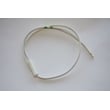
| Frost/ice buildup, warm temps | Defrost system | Refrigerator defrost heater WR51X10131 or refrigerator defrost bi-metal thermostat WR50X10108 |
| Temps inaccurate or erratic | Temperature sensing | Refrigerator temperature sensor WR55X10025 |
Why it matters
Cooling problems can quickly lead to food spoilage and can also force the compressor to run longer than normal. Catching airflow restrictions, frost buildup, or a failing fan motor early helps prevent bigger, more expensive repairs.
Related how-to help
- Use how to fix your evaporator cooling fan when you hear fan noise changes or the refrigerator section is warm.
Last updated: January 2026