Error Codes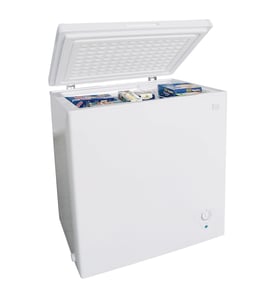



What is the average lifespan of a chest freezer?
A chest freezer typically lasts 10 to 20 years, and many units land in the 12 to 16 year range with normal use and basic upkeep. For a Kenmore chest freezer like model 2539163210, lifespan depends most on temperature control, clean airflow around the cabinet, and reliable electrical components.
Typical lifespan ranges (what to expect)
- Average: 12 to 16 years
- Common overall range: 10 to 20 years
- Shortened lifespan is more likely when: the freezer runs in extreme heat, has poor ventilation, or has power issues
| What you do | What it helps prevent | Why it matters |
|---|---|---|
| Keep the freezer in a cool, ventilated area | Overheating and long run times | Heat is the #1 enemy of compressor life |
| Defrost when frost buildup gets heavy | Poor cooling and constant running | Thick frost acts like insulation |
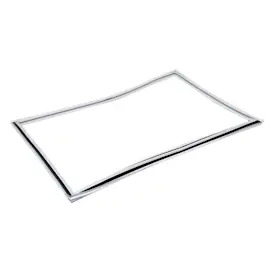
| Keep the lid gasket sealing well | Warm air leaks and moisture | Leaks create frost and extra workload |
| Use a stable outlet (no loose plug) | Electrical damage | Protects the compressor start circuit |
Maintenance that extends chest freezer life
- Vacuum dust from vents and any exposed condenser areas; keep airflow clear around the cabinet.
- Defrost before ice buildup becomes excessive (many owners use about 1/4 to 1/2 inch as a practical trigger).
- Avoid overpacking so cold air can circulate; keep items from blocking interior air paths.
- Let hot food cool before loading; warm loads force long run cycles.
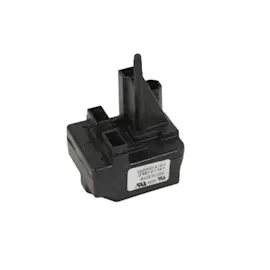
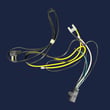
- If the freezer struggles to start, hums, or clicks repeatedly, check the start components and wiring before continued use.
Parts that commonly affect longevity
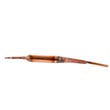
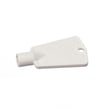
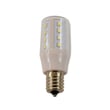
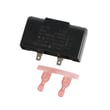
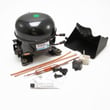
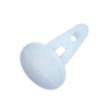
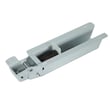
If cooling performance drops or the freezer runs constantly, these are common failure points that can determine whether the unit reaches its full lifespan:
Why it matters
A chest freezer is naturally efficient because cold air stays in when the lid opens, so it often outlasts upright designs. Keeping run time low and protecting the compressor and start components is the most direct way to reach the 10 to 20 year lifespan.
Last updated: January 2026
Where is the model number on a chest freezer?
On the Kenmore chest freezer model 2539163210, the model number is printed on a rating label that’s usually inside the cabinet. Common spots include an inside side wall near the top rim, the back exterior panel, or near the compressor area.
Most common places to check
Look for a paper or metallic label that lists the model and serial number. On chest freezers, we typically see it in one of these locations:
- Inside the freezer on a side wall (often near the top edge)
- Inside the freezer on the back wall
- On the back of the cabinet (exterior)
- Near the lower rear area by the compressor compartment
- Under the lid area along the top rim (less common)
Quick tips to find it faster
- Use a flashlight; labels can be hard to see against white liners.
- Wipe frost or moisture off the liner before reading.
- Write the model number exactly as shown (letters and numbers).
- Take a clear photo of the label for ordering parts.
- If the label is damaged, check the back panel area next.
Why the model number matters
The model number ensures we match the correct Kenmore parts and diagrams for your exact chest freezer configuration (electrical components, lid hardware, and sealed system parts).
| What you need | Where you’ll use it | Example |
|---|---|---|
| Model number | Parts lookup and diagrams | 2539163210 |
| Serial number | Date and production run identification | From the same label |
If you’re ordering a part
Once you find the model number, match it to the part listing before you buy. For example, if you’re troubleshooting a no-cool condition that points to a sealed-system repair, the compressor 5304478809 is one of the model-specific components shown for this unit.
Last updated: January 2026
How can I tell what size my chest freezer is?
To tell the size of your Kenmore 2539163210 chest freezer, we measure the outside dimensions (width, depth, height) and, if needed, estimate capacity in cubic feet from the interior. For an exact “size,” use the model number to match the correct specs and parts.
Measure the freezer’s outside dimensions (most common “size”)
Use a tape measure and record in inches:
- Width: left side to right side across the front
- Depth: front (including the lid/handle if it sticks out) to the back
- Height: floor to the top of the lid (closed)
- Clearance check: add space for airflow behind and at the sides
Quick measurement checklist
- Measure at the widest points (hinges, trim, handles can add width/depth)
- Keep the lid closed for consistent height
- Write down results as W x D x H
- If you are fitting a space, measure the doorway and turns too
Estimate capacity (cubic feet) if that’s what you mean by “size”
Capacity is the interior volume. Measure the inside:
- Interior length (left to right)
- Interior width (front to back)
- Interior depth (top opening down to the bottom)
Then estimate:
| What you have | What it tells you |
|---|---|
| Outside W x D x H | Fit in a space, moving, clearance planning |
| Inside L x W x D | Approximate storage capacity (cubic feet) |
A simple estimate is: (L x W x D in inches) ÷ 1728 = cubic feet.
Why it matters
“Size” can mean two different things. Outside dimensions help you confirm fit and ventilation; cubic feet helps you compare storage space and choose compatible baskets, lids, and other freezer parts.
Related part tip (when “size” questions come from a lid or fit issue)
If the lid is sagging or not aligning, check the door hinge hardware for your model, such as the hinge 297321900.
Last updated: January 2026