Owner’s manual
 Error Codes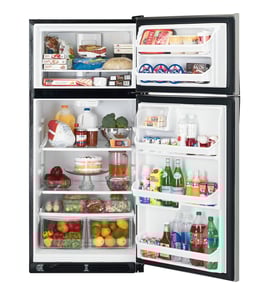


What are the disadvantages of a top mount fridge?
A top-mount (top-freezer) refrigerator like the Kenmore 79579292901 trades convenience for simplicity: the freezer is easy to reach, but you bend more for fresh-food access, and these models typically offer fewer premium features and less flexible organization than many bottom-freezer designs.
Common disadvantages to expect
- More bending for everyday items: Fresh food is below eye level, so you reach down more often.
- Less “grab-and-go” organization: Many top-mount layouts have fewer specialty drawers and door-bin configurations.
- Fewer built-in features: Water and ice dispensers are less common on top-mount models.
- Odors can transfer between sections: Because air circulates between freezer and refrigerator compartments, smells can move from one section to the other.
- Airflow can be easier to block: Overpacking vents can interrupt circulation and lead to temperature and moisture issues.
What matters most for performance (and how to avoid the downsides)
Proper airflow is a big deal in this style of refrigerator. We recommend:
- Keep packages from blocking freezer and refrigerator vents.
- Leave space around items so cold air can circulate.
- Wrap foods well to reduce odor transfer.
- Let the refrigerator run a few hours before fully loading it after setup or a long power-off.
For model-specific layout and airflow guidance, use the owner's manual.
Quick comparison: top-mount vs. bottom-freezer
| Feature | Top-mount (top-freezer) | Bottom-freezer |
|---|---|---|
| Fresh-food access | Lower, more bending | Higher, more convenient |
| Organization | Typically simpler | Typically more flexible |
| Premium features | Less common | More common |
| Efficiency | Often good | Varies by model |
Why it matters
Most “disadvantages” show up as daily-use friction: bending for produce, less flexible storage, and more sensitivity to blocked vents. If you keep airflow clear and food wrapped, a top-mount can still cool evenly and run reliably.
Last updated: February 2026
What is the upper part of a fridge called?
In a Kenmore 79579292901 top-mount refrigerator, the upper compartment is the freezer. It is the section designed to keep foods frozen, and it also supplies cold air that circulates down to help cool the fresh food (refrigerator) section.
What you will typically find in the upper (freezer) section
The freezer area commonly includes features like these (some vary by configuration):
- Freezer shelf
- Ice maker and ice bin (on some models)
- Freezer door racks
- Air vents that move cold air through the freezer and into the refrigerator section
For the full parts and features layout used across this model series, see the owner's manual.
Why the freezer matters for refrigerator cooling
On top-mount designs like the Kenmore 79579292901, the freezer is not just for frozen food; it is also the starting point for airflow. Cool air enters and circulates through the freezer, then some of that air moves into the refrigerator section through a vent.
If the refrigerator is warm but the freezer is cold
We see these common causes most often:
- Food packages blocking freezer or refrigerator vents
- Doors not closing tightly (warm air leaks in)
- Temperature controls set too warm
- Frost buildup restricting airflow
- Fan or airflow components not moving air properly
If you are troubleshooting airflow or fan noise, our how to fix your evaporator cooling fan guide is a good next step.
Quick reference: freezer vs. refrigerator section
| Section | Location on this model | Main job |
|---|---|---|
| Freezer | Upper compartment | Freezes food and supplies cold air |
| Refrigerator | Lower compartment | Keeps fresh foods cold (not frozen) |
Last updated: February 2026
Which is better, top mount or bottom mount refrigerator?
A top-mount (top freezer) refrigerator like the Kenmore 79579292901 is usually better if you want lower upfront cost, strong energy efficiency, and simpler maintenance. A bottom-mount is usually better if you want fresh food at eye level and easier day-to-day access to the refrigerator section.
Quick comparison
| Feature | Top mount (top freezer) | Bottom mount (bottom freezer) |
|---|---|---|
| Everyday access | Freezer is easiest to reach | Fresh food is easiest to reach |
| Typical cost | Lower | Higher |
| Energy use | Typically lower | Typically higher |
| Storage layout | Simple, fewer drawers | More drawers and organization |
| Repairs | Often simpler (fewer features) | Often more complex (more mechanisms) |
How to choose for your kitchen and habits
- If you use the refrigerator section most, a bottom-mount reduces bending for daily items.
- If you use the freezer often, a top-mount keeps frozen food at a comfortable height.
- If you want fewer “extras” to maintain, top-mount designs are typically more straightforward.
- If you meal prep and like bins and pull-out organization, bottom-mount layouts usually win.
- If you are tight on budget, top-mount models are usually the best value.
Performance basics that matter either way
Good cooling depends on airflow between sections. On this Kenmore top freezer design, cold air circulates from the freezer and into the refrigerator through vents; blocking vents with food packages can cause temperature swings and moisture issues. For control settings and airflow guidance, use the owner's manual.
Why it matters
“Better” depends on what you touch most often. Choosing the layout that matches your daily routine improves food visibility, reduces door-open time, and helps the refrigerator maintain steadier temperatures.
Last updated: February 2026
What is the life expectancy of a Kenmore refrigerator freezer?
A Kenmore refrigerator freezer like model 79579292901 typically lasts 12 to 15 years. Consistent cleaning, correct temperature settings, good door sealing, and proper airflow around the cabinet help the compressor and fans run less and extend overall life.
Typical lifespan and what affects it
Most top-mount (top freezer) refrigerators land in the same general range, but these factors make the biggest difference:
- Ventilation: keep condenser airflow clear so heat can escape
- Door sealing: a tight gasket prevents long run times and frost issues
- Temperature settings: stable temps reduce compressor cycling
- Defrost drainage: a clear drain prevents ice buildup and water leaks
- Usage habits: frequent door openings and overpacking increase workload
Quick maintenance checklist (high impact)
Use this as a simple routine to protect cooling performance and reduce wear:
- Vacuum dust from the condenser area and surrounding vents periodically
- Keep food from blocking interior air vents (especially in the freezer)
- Confirm doors close fully and stay aligned
- Set temps and then wait 24 hours between adjustments (the manual recommends this)
- Clear puddles or ice promptly so they do not turn into recurring drain clogs
What “normal” operation looks like
| What you notice | Usually normal | Often points to a problem |
|---|---|---|
| Compressor runs longer after loading groceries | Yes | Runs almost constantly for days |
| Small amount of frost after many door openings | Yes | Heavy frost, warm fridge section |
| Occasional water drops during humid weather | Sometimes | Repeated puddles or ice under drawers |
Why it matters
A refrigerator that runs longer than necessary wears the compressor, control board, and fans faster, and it also raises energy use. Following the airflow and control-setting guidance in the owner's manual helps keep temperatures stable and reduces strain.
Last updated: February 2026
What are the most common problems with Kenmore refrigerators?
The most common problems we see on Kenmore top-mount refrigerators like model 79579292901 are warm temperatures (fresh food or freezer), the compressor running too much, frost or ice crystals, doors not sealing or closing, and water leaks. Many issues start with airflow, settings, or dirty condenser coils.
Most common symptoms and likely causes
- Refrigerator section too warm: door opened often, large food load, room is very warm, vents blocked
- Freezer too warm or ice is slow: heavy ice use, door opened often, vents blocked
- Compressor runs a lot: dirty condenser coils, warm room, frequent door openings, unit recently plugged in (allow up to 24 hours)
- Frost or ice crystals: door not closing properly, frequent door openings
- Doors will not close: refrigerator not level, packages blocking, bins or shelves out of position, sticky gaskets
Quick checks we recommend first
- Clear packages away from interior air vents; keep airflow paths open.
- Clean condenser coils; dirty coils make the compressor work harder.
- Confirm doors close fully and shelves or bins are seated correctly.
- Adjust temperatures in the right order: adjust refrigerator first, wait 24 hours, then adjust freezer.
Temperature adjustment guide (manual-based)
| Condition | Adjustment | Re-check time |
|---|---|---|
| Refrigerator too warm | Turn refrigerator control to next higher number | 24 hours |
| Refrigerator too cold | Turn refrigerator control to next lower number | 24 hours |
| Freezer too warm or ice slow | Turn freezer control to next higher number; unblock vents | 24 hours |
Parts often involved when checks do not solve it
| Symptom | Part to consider |
|---|---|
| Temperature swings | Refrigerator sensor 6500JB2001B |
| Puddles from defrost drain issues | Refrigerator drain tube 5251JA3003D |
| Odd operation or control issues | Refrigerator electronic control board EBR41531306 |
Why it matters
Correct airflow, clean coils, and proper temperature adjustments prevent food spoilage and reduce compressor run time.
For model-specific troubleshooting charts and control-setting steps, use the owner's manual.
Last updated: February 2026