


How much does an AC unit cost for a 1500 sq ft house?
For a 1,500 sq ft home, a new central AC system typically lands in the $5,000 to $9,000 installed range, with the outdoor condenser and indoor coil equipment often making up about $2,500 to $4,000 of that total. Your final price depends most on sizing (tons/BTUs), efficiency (SEER2), and installation scope.
- System size: Many 1,500 sq ft homes use about 2 to 3 tons (actual load can vary by insulation, windows, and climate).
- Efficiency level (SEER2): Higher SEER2 usually costs more up front but can reduce cooling costs.
- Ductwork condition: Leaky, undersized, or damaged ducts can add significant labor and materials.
- Electrical and pad work: Disconnect, whip, breaker sizing, and condenser pad leveling can add cost.
- Indoor coil and refrigerant line set: Reusing an old line set or mismatching coil and condenser can create performance issues.
| Cost item | Typical share of total | Notes |
|---|---|---|
| Equipment (condenser + indoor coil) | 35% to 55% | Brand, capacity, SEER2, and refrigerant type affect price most |
| Labor and installation materials | 30% to 45% | Includes evacuation, charging, brazing, and startup checks |
| Ductwork repairs or replacement (if needed) | 0% to 30%+ | Not always required, but can be the biggest swing factor |
| Permits, disposal, misc. | 2% to 10% | Varies by location and job complexity |
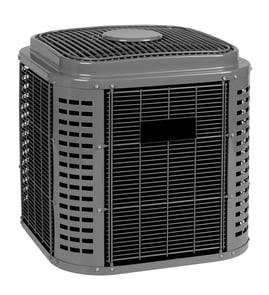
Your York H1DB060S06A is a split-system cooling model; replacement cost depends on whether you are replacing only the outdoor unit, or matching it with a compatible indoor coil and updating refrigerant piping and electrical to current requirements.
An AC system that is oversized or installed without proper airflow and refrigerant charging can short-cycle, struggle with humidity, and wear out faster. Getting the right capacity and a clean installation usually matters more than chasing the highest efficiency rating.
- Confirm your exact model and serial information using how to find your appliance model number (and what it means for parts).
- Note any comfort issues (hot rooms, weak airflow) that could point to duct problems.
- Check whether your indoor coil is accessible and if the line set route is straightforward.
- Ask for an itemized quote that lists equipment model numbers, SEER2, and scope.
Last updated: February 2026
How to tell AC tonnage by model number?
For the York central air conditioner model H1DB060S06A, the “060” in the model number indicates about 60,000 BTU/hr, which equals 5 tons (60,000 ÷ 12,000 = 5). This is the standard way many HVAC model numbers encode nominal cooling capacity.
Use this rule of thumb for most split-system cooling equipment:
- Find the capacity code in the model number (often 018, 024, 030, 036, 042, 048, 060)
- Treat it as BTU in thousands (060 = 60,000 BTU/hr)
- Divide BTU/hr by 12,000 to get tons
- Round to the nearest common size (1.5, 2, 2.5, 3, 3.5, 4, 5)
| Model number code | Approx. BTU/hr | Nominal tons |
|---|---|---|
| 018 | 18,000 | 1.5 |
| 024 | 24,000 | 2 |
| 036 | 36,000 | 3 |
| 048 | 48,000 | 4 |
| 060 | 60,000 | 5 |
The model number capacity code typically reflects nominal capacity. Actual delivered cooling can vary based on:
- Indoor coil match-up (evaporator coil size and design)
- Outdoor temperature and indoor humidity
- Refrigerant charge and airflow (CFM)
- Duct restrictions and filter condition
- Electrical issues (weak capacitor, contactor wear)
Getting tonnage right helps you choose compatible parts and avoid performance problems. A mismatched indoor coil or incorrect airflow can reduce cooling, raise energy use, and increase compressor stress.
When you search parts for this York H1DB060S06A unit, use the full model number exactly as shown on the data plate. Our guide on how to find your appliance model number (and what it means for parts) helps you confirm you are using the correct identifier.
Last updated: February 2026
Is 2-ton AC enough for a 1000 sq ft house?
A 2-ton central AC is typically enough for a 1,000 sq ft home when insulation is average, ceilings are standard height, and sun exposure is moderate. For a York split-system cooling setup like model H1DB060S06A, correct sizing matters as much as the equipment condition and airflow.
Most homes land in a broad range because climate and insulation change the load.
- Typical coverage: about 900 to 1,200 sq ft for a 2-ton system
- Hot climates or high sun exposure: sizing often needs to be higher
- Excellent insulation and tight windows: a 2-ton system often works well
- High ceilings (over ~8 ft): capacity needs increase
- Older ductwork with leaks: comfort drops even if the tonnage is “right”
| Home condition | 2-ton likely enough? | Why |
|---|---|---|
| Average insulation, 8 ft ceilings, mixed shade | Yes | Typical cooling load range |
| Poor insulation, lots of west-facing glass | No | Higher heat gain |
| Very tight, well-insulated home | Yes | Lower heat gain |
| Leaky ducts or weak airflow | Maybe | Delivered cooling is reduced |
These checks often explain “not cooling” complaints that look like a sizing problem.
- Confirm the air filter is clean and correctly installed
- Make sure supply registers are open and returns are not blocked
- Inspect the outdoor condenser coil for dirt and debris
- Verify the indoor coil is not icing (sign of airflow or refrigerant issues)
- Check that the thermostat settings and schedule are correct
An oversized system can short-cycle and leave humidity high; an undersized system can run constantly and still miss the set temperature. Proper sizing improves comfort, efficiency, and compressor life.
For electrical and diagnostic checks (like verifying voltage, fuses, and continuity), we use the same safe test approach shown in how to use a multimeter to test electrical parts video.
Last updated: February 2026