Owner’s manual
 Error Codes


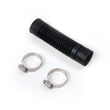
Does my Kenmore top load washer have a filter?
Yes. Kenmore washer model 11028882790 uses a self-cleaning lint filter that traps lint during wash and deep rinse, then automatically flushes it out through the drain. There is no removable, customer-cleanable lint filter on this model (see the 11028882790 owner's manual).
What “self-cleaning filter” means on this washer
This design filters lint in the wash water and sends it out with the drain water, so routine filter cleaning is not part of normal maintenance.
What you should expect:
- No access door or twist-out filter cap to remove
- Lint control happens automatically during agitation and rinse
- Lint and debris exit with the drain water
- If you see lint on clothes, it is usually a load, detergent, or water-level issue (not a clogged filter)
If the washer is not draining well (common “filter” symptom)
A slow drain is usually caused by a restriction in the drain path or a weak pump.
Quick checks we recommend:
- Make sure the drain hose is not kinked, crushed, or pushed too far down the standpipe
- Check the standpipe for clogs and confirm the laundry sink or drain flows freely
- Look for coins, socks, or debris in the tub that could migrate to the pump
- If the washer hums but will not drain, the pump may be jammed or failing
If you need a replacement pump for this model, match by model number and consider the washer drain pump WP3363394.
Troubleshooting guide: “filter” vs. drain problem
| Symptom | Most likely cause | What to do first |
|---|---|---|
| Lint on clothes | Overloading, too little water, wrong detergent, sorting issues | Reduce load size; use proper detergent; follow cycle settings in the manual |
| Water left in tub | Drain hose/standpipe restriction, pump issue | Inspect hose and standpipe; then evaluate pump |
| Won’t spin and won’t drain | Lid switch or drain system problem | Confirm lid closes and latches; then check drain path |
Why it matters
Knowing this washer has a self-cleaning lint filter prevents unnecessary disassembly and helps you focus on the real causes of lint, odors, or draining problems. Following the cycle and water-level guidance in the manual also improves cleaning and reduces residue.
Last updated: February 2026
What is the average lifespan of a Kenmore washer?
Most Kenmore washers average 10 to 15 years of service life with normal household use and basic maintenance. For Kenmore model 11028882790, keeping loads balanced, using the right water level, and addressing early symptoms (no drain, no spin, poor agitation) helps you reach the upper end of that range; see the 11028882790 owner's manual for care and operating guidance.
Typical lifespan and what affects it
- Usage volume: multiple loads per day shortens life faster than a few loads per week.
- Overloading: strains the drive system, clutch, and suspension.
- Water quality: hard water speeds mineral buildup in valves and hoses.
- Maintenance habits: periodic cleaning and leak checks prevent corrosion and bearing damage.
- Early repairs: replacing small wear parts early often prevents bigger failures.
Common wear items as the washer ages
These parts commonly cause “it still runs, but performance is off” complaints:
- Agitation issues: agitator dog 80040
- No spin or weak spin: clutch, drive block, gear case
- No drain or slow drain: drain pump
- Won’t start or won’t spin with lid closed: lid switch
Quick symptom-to-part guide
| Symptom | What it usually points to | Example part on this model |
|---|---|---|
| Agitator moves but clothes do not roll over well | Worn agitator dogs/cam | Agitator dog, agitator cam |
| Washer won’t drain or leaves water in tub | Pump obstruction or worn pump | Washer drain pump |
| Washer won’t spin with lid shut | Lid switch not closing circuit | Washer lid switch |
| Loud grinding or oil leak underneath | Gear case wear | Gear case |
Why it matters
A washer near the 10 to 15 year mark often becomes less efficient and more failure-prone. Catching small issues (like poor agitation or slow draining) early can extend the life of the motor, gear case, and basket drive components.
Last updated: February 2026
How to reset a Kenmore 11028882790 washer?
To reset a Kenmore 11028882790 washer, we use a simple power reset: stop the cycle, unplug the washer for a few minutes, then restore power and restart the cycle. This clears many temporary control or cycle interruptions.
Quick reset steps (most common)
- Push the Cycle selector (timer) knob in to stop the washer.
- Unplug the washer (or switch the breaker off).
- Wait 2 to 5 minutes.
- Plug the washer back in (or turn the breaker on).
- Select a cycle and pull the timer knob out to start.
For model-specific control details (including stopping and restarting a cycle), follow the 11028882790 owner's manual.
If it still will not run after a reset
These checks solve the most common “won’t start” or “stops mid-cycle” complaints on direct-drive Kenmore top-load washers:
- Confirm the lid closes firmly; a failed lid switch can prevent agitation or spin.
- Listen for drain pump operation during drain; a clog or failed pump can stall the cycle.
- If the motor runs but the tub does not move, inspect the motor coupling.
- If it drains but will not spin, inspect the clutch and drive block.
- If it will not fill, check the water supply valves and inlet valve.
Helpful model-matched parts to consider when symptoms point to them:
| Symptom | Common cause | Part to check |
|---|---|---|
| No spin/agitate with lid closed | Lid safety circuit not closing | Washer lid switch WP3949238 |
| Motor runs, no agitation/spin | Broken drive connection | Coupling 285753A |
| Will not drain or drains slowly | Pump jammed or failed | Washer drain pump WP3363394 |
Why it matters
A reset is fast and safe, and it often clears a stuck timer position or a momentary power interruption. If the problem returns, the washer is usually reacting to a real condition (lid switch, drain issue, or drive components) that needs repair.
Last updated: February 2026
How to identify a Kenmore washer model?
Your Kenmore washer model number is printed on the model and serial number plate. On Kenmore model 11028882790, that plate is the reference you will use any time you order parts or request service; record both the model and serial numbers from the plate in your 11028882790 owner's manual.
Where to look on the washer
Most Kenmore washers place the model and serial number plate in one of these common spots:
- Under the lid near the tub opening (top-load washers)
- Along the rim of the lid opening
- On the back panel near the power cord
- Behind the control panel or on the cabinet frame (less common)
What the model number looks like
Kenmore washer model numbers are often numeric and commonly start with 110 (as in 11028882790). The serial number is different; it identifies your specific unit.
| What you need | Example | Why we ask for it |
|---|---|---|
| Model number | 11028882790 | Matches the correct diagrams and parts list |
| Serial number | Varies by unit | Helps confirm production details when needed |
Tips to avoid ordering the wrong part
Use these checks before you buy a replacement part like a lid switch, drain pump, or inlet valve:
- Copy the model number exactly as shown (all digits, no spaces)
- Write down the serial number too (it can matter for revisions)
- Match the part by name and ID when possible (example: washer lid switch WP3949238)
- Compare symptoms to the troubleshooting section in the manual
- If the plate is hard to read, take a clear photo and zoom in
Why it matters
Kenmore washers can look similar across multiple model series, but internal components (like the timer, gear case, clutch, or motor coupling) can differ. Using the exact model number keeps your repair accurate and prevents returns.
Last updated: February 2026
How to fix fe code kenmore washer?
On Kenmore washer model 11028882790, an FE code is typically tied to an overfill condition; the washer may keep running the drain pump to protect against flooding. The most common fix is correcting the water fill shutoff problem by servicing the inlet valve and related fill controls; see the 11028882790 owner's manual.
Quick checks we recommend first
- Turn the Cycle Selector (Timer) knob to OFF (push in) and unplug the washer.
- Verify both hot and cold faucets are fully open and hoses are not kinked.
- Check the tub for continuous filling or slow dripping when the washer is off.
- If the washer is draining constantly, confirm the drain hose is installed correctly (not shoved too far into the standpipe).
- Run a short fill and listen for water continuing to flow after the tub reaches the selected water level.
Most likely causes and the right repair
In most cases, FE happens because the washer is filling when it should not.
| Symptom | Most likely cause | What we do next |
|---|---|---|
| Water keeps entering with power off | Inlet valve stuck open | Replace the washer inlet valve 285805 |
| Water stops, then starts again unexpectedly | Fill control issue or valve intermittently sticking | Inspect hoses/screens; replace inlet valve if debris cleaning does not help |
| Drain pump runs a lot during/after fill | Washer senses overfill | Fix the fill problem first; then check the washer drain pump WP3363394 only if it will not pump out |
Replacing the inlet valve (common FE fix)
- Unplug the washer and shut off both water supplies.
- Remove the console/back panel access as shown in the manual.
- Move hoses to a towel or bucket; transfer one hose at a time to avoid mix-ups.
- Install the new valve, reconnect wiring, and check for leaks.
Why it matters
An FE overfill condition can lead to water on the floor, repeated pump operation, and poor wash results. Fixing the water shutoff at the inlet valve protects the washer, the motor coupling, and your laundry area.
Last updated: February 2026
How many cubic feet is a Kenmore Model 11028882790?
Kenmore washer model 11028882790 is a classic top-load, agitator-style washer; models in this design family are typically about 3.2 to 3.5 cu. ft. capacity. For the exact rated capacity for your specific unit, confirm it in the 11028882790 owner's manual.
How to confirm the exact capacity for your washer
We recommend checking the model-specific literature first because capacity can vary by tub and basket configuration.
- Look for “capacity” or “basket volume” in the specifications section
- Check the model and serial number plate to ensure you are matching the correct unit
- If your manual lists only load size guidance (small, medium, large), use that as the intended capacity reference
- Compare your basket style to the parts list; different baskets can indicate different capacities
Typical capacity range (what it means in real use)
Even when the manual does not call out a single cubic-foot number, these ranges help you choose load sizes and avoid out-of-balance spinning.
| Capacity (cu. ft.) | Typical load examples | What to watch for |
|---|---|---|
| 3.0 to 3.2 | Mixed everyday load | Avoid packing items tightly around the agitator |
| 3.2 to 3.5 | Towels or jeans load | Distribute weight evenly for best spin |
| 3.6 to 4.0+ | Bulky items (varies by model) | Bulky loads may need extra space to circulate |
Why it matters
Knowing the approximate cubic feet helps prevent overloading, improves cleaning performance from the agitator action, and reduces strain on drive components like the clutch and gearcase.
Related parts that affect “usable space”
If the basket or tub has been replaced in the past, usable capacity can change.
- Basket: basket W10389328
- Outer tub: 3361596 (outer tub)
- Suspension components: WP63907 (washer suspension spring)
Last updated: February 2026