Owner’s manual
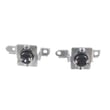


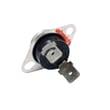
How do I know if my Kenmore dryer thermal fuse is blown?
On Kenmore dryer model 79691382410, a blown thermal fuse usually shows up as a dryer that will not start or a dryer that runs but does not heat. The sure way to confirm is a continuity test with a multimeter after unplugging the dryer; an open (no continuity) reading means the fuse is blown.
Quick symptoms to look for
- Dryer does not turn on even though the outlet has power
- Motor hums briefly, then stops (some failures present this way)
- Dryer tumbles but there is no heat (more common on some designs)
- Drying times suddenly get much longer (often points to vent restriction, which can lead to overheating)
- CHECK VENT light blinking (indicates restricted exhaust, not a failed fuse)
How we recommend testing the thermal fuse (continuity)
- Unplug the dryer (or switch off the breaker).
- Access the fuse location using the disassembly steps in the 79691382410 owner's manual.
- Pull the wires off the fuse terminals (note their positions).
- Set a multimeter to continuity or lowest ohms.
- Touch a probe to each terminal.
- Good fuse: continuity (beep or near 0 ohms)
- Blown fuse: no continuity (no beep, OL, or very high resistance)
What to check before replacing parts
A thermal fuse usually opens because the dryer overheated. Fix the cause first so the new fuse does not blow again.
- Clean the lint screen and lint chute
- Inspect and clean the entire vent run to the outside
- Confirm the outside damper opens freely
- Avoid crushed, kinked, or extra-long ducting
- If CHECK VENT is blinking, treat it as an airflow warning and clean the ductwork
Thermal fuse vs. other common “no heat” causes
| Symptom | More likely cause | What to check next |
|---|---|---|
| Runs but no heat (gas model) | Gas supply off | House and dryer gas shutoff valves fully open |
| Runs but no heat (electric model) | House power issue | Breaker/fuse issue can allow tumbling without heat |
| Long dry times | Vent restriction | Duct length, turns, lint buildup, outside damper |
Why it matters
The thermal fuse is a safety device; when it opens, it stops heating (and on some dryers can stop operation) to prevent overheating. Restoring proper airflow is the key to reliable drying and preventing repeat failures.
Last updated: February 2026
How much does it cost to replace a heating element in a Kenmore dryer?
For a Kenmore dryer like model 79691382410, replacing a heating element typically costs about $20 to $100+ for the part (more if it’s sold as a complete heater housing assembly) and about $100 to $350 total when professional labor is included. Confirm your exact heater style in the 79691382410 owner's manual.
What you usually pay (part vs. total repair)
Typical pricing breaks down like this:
- Heating element part only: $20 to $100+
- Element sold as an assembly (element + housing): often higher than element-only
- Service call + labor: commonly the biggest portion of the bill
- Total installed cost: about $100 to $350
- DIY cost: usually the part cost only (plus basic supplies)
| Scenario | What you pay for | Typical total |
|---|---|---|
| DIY replacement | Part only | $20 to $100+ |
| Pro replacement | Part + labor | $100 to $350 |
What changes the price the most
These factors drive the final cost on Kenmore dryers:
- Electric vs. gas dryer design (electric models use a heating element; gas models heat with an igniter and gas valve)
- Whether the heater is sold as element-only or a full assembly
- Airflow problems (restricted venting can overheat and damage heating components)
- Extra parts needed (thermal fuse, thermostats, wiring repairs)
- Access time (some installations take longer due to layout or stacking)
Before you buy parts: quick checks that prevent repeat failures
We recommend these basics first because poor airflow is a common reason dryers stop heating:
- Clean the lint screen and lint duct area
- Inspect and clear the exhaust vent run to the outside
- Make sure the vent is not crushed behind the dryer
- Run a timed dry cycle and verify strong airflow at the exterior hood
Why it matters
A heating element can fail from normal wear, but overheating from restricted venting can also take out thermostats and other safety devices. Fixing airflow first helps the new heater last longer and improves drying performance.
Last updated: February 2026
How to check Kenmore dryer model number?
For Kenmore dryer model 79691382410, we check the model number on the identification plate located inside the dryer door (open the door and look on the cabinet frame area). This same label also lists the serial number for service and parts matching.
Where to look on the dryer
Check these common label locations first:
- Inside the dryer door opening on the cabinet frame (most common)
- Along the door opening edge where the door closes
- Just inside the front panel area near the lint screen opening
- If the label is missing or unreadable, confirm the model from your paperwork and then verify in the 79691382410 owner's manual
How to read the label (and what to write down)
Record these items exactly as shown:
- Model number (for example, 79691382410)
- Serial number (used to identify production details)
- Brand (Kenmore)
- Fuel type (gas or electric, if listed)
Quick reference
| Item on label | What it’s used for | When you need it |
|---|---|---|
| Model number | Matching parts diagrams and compatible parts | Ordering parts like a belt, roller, or thermostat |
| Serial number | Service history and production run details | Tech support, warranty, service calls |
Why it matters
Using the exact model number prevents ordering the wrong dryer parts. Kenmore model families can look similar, but components like the drum belt, idler pulley, thermistor, and control board can vary by model.
If you’re ordering common wear items for this model, the dryer drum belt 4400EL2001F is one example where the correct model match is critical.
Last updated: February 2026
How to hard reset a Kenmore dryer?
To hard reset your Kenmore dryer model 79691382410, we turn the dryer off and remove power long enough for the electronic control to fully reboot. This clears many temporary control glitches and restores normal button response after a cycle is canceled.
Hard reset steps (79691382410)
- Press POWER to turn the dryer off.
- Unplug the dryer (or switch the breaker off).
- Wait 5 minutes.
- Restore power.
- Press POWER, select a cycle with the cycle knob, then press START/PAUSE.
For control-panel behavior and normal operation details, follow the steps in the 79691382410 owner's manual.
If the reset does not fix the problem
A reset helps when the control is “confused”, but it will not correct airflow restrictions, overheating, or a failed safety device. Check these common causes next:
- Clean the lint screen and confirm the lint screen housing is seated correctly.
- Inspect the exhaust duct behind the dryer for crushing, kinks, or loose connections.
- Run a timed dry cycle and confirm the dryer heats and the drum tumbles.
- If the drum will not turn or you hear squealing, inspect the belt and idler system.
- If the dryer shuts down or overheats, check venting first, then thermostats and sensors.
Helpful references for fault codes and indicator behavior include Kenmore 796 model dryer error codes.
Quick symptom guide
| What you see after reset | Most likely cause | What we check first |
|---|---|---|
| Powers on, won’t start | Door not sensed closed | Door switch and latch alignment |
| Runs, no heat | Heating system issue | Gas ignition parts or thermostats |
| Long dry times | Restricted airflow | Vent ducting and lint buildup |
| Drum won’t tumble | Drive issue | Belt, idler pulley, rollers |
Why it matters
Hard resetting restores the control board’s normal logic, but dryers still rely on airflow and safety controls to prevent overheating. If venting is restricted, the dryer can heat poorly, stop mid-cycle, or trigger indicators even after a reset.
Last updated: February 2026
How to open Kenmore dryer control panel?
On Kenmore dryer model 79691382410, we open the control console by removing the top panel first, then removing the console mounting screws so the control panel can tilt forward for access to the control board and wiring. Follow the handling and safety notes in the 79691382410 owner's manual.
Before you start (safety and prep)
- Unplug the dryer or switch off the breaker.
- If your 79691382410 is gas, close the gas shutoff valve.
- Pull the dryer forward enough to avoid crushing the exhaust duct.
- Keep screws in a cup and take a photo of wire routing.
- Use a 1/4-inch nut driver or Phillips driver (most consoles use one of these).
Steps to open the control panel (typical for this Kenmore 796 platform)
- Remove the top panel: Take out the rear screws, lift the back edge of the top, slide it back about 1 inch, then lift it off.
- Locate console screws: With the top off, find the screws securing the console or the control bracket.
- Tilt the console forward: Support the console as you remove the last screw; plastic tabs can crack if it drops.
- Access the electronics: The user interface and control board sit behind the console; disconnect harness plugs only if needed.
What you may be accessing
| Component | What it controls | When you typically open the console |
|---|---|---|
| Dryer electronic control board EBR76542928 | Cycle logic, sensor inputs, motor/heater commands | No start, stops mid-cycle, erratic operation |
| User interface/control panel | Buttons, display, cycle selection | Buttons not responding, display issues |
If you are opening it due to an error code
Use the error-code chart that matches the 796-series platform: Kenmore 796 model dryer error codes.
Why it matters
Opening the console correctly prevents broken console tabs, pinched wire harnesses, and loose connectors that can create new problems like intermittent power or a dead display.
Last updated: February 2026
What are common problems with Kenmore dryers?
Common problems on the Kenmore 79691382410 dryer include long dry times from restricted venting, no heat from failed temperature-safety parts, and a drum that will not tumble due to worn drive components. We start with airflow and lint maintenance because poor exhaust venting is the most frequent root cause.
Most common symptoms and what usually causes them
- Long drying times or “CHECK VENT” light: lint buildup, crushed/too-long duct, blocked vent hood, or wrong vent material (plastic or foil)
- No heat or overheating: failed thermostat or temperature sensor, or airflow restriction causing high temperatures
- Drum not turning: worn belt, idler pulley, drum rollers, or motor issue
- Loud thumping/squealing/grinding: worn drum support rollers, idler pulley, or belt
- Poor efficiency: restricted exhaust airflow increases run time and energy use
Quick checks we recommend first (fast, high impact)
- Clean the lint filter and confirm strong airflow at the outside vent hood.
- Inspect the entire exhaust duct for kinks, crushing, lint buildup, or damage.
- Avoid plastic or foil venting; use proper rigid or semi-rigid metal duct.
- If performance drops, clean the vent system; most ducts need cleaning at least yearly.
- Use the troubleshooting steps and indicator explanations in the 79691382410 owner's manual.
Parts that commonly fix “no tumble” and noise complaints
If the drum will not turn or the dryer is noisy, these model-matched parts are frequent fixes:
| Symptom | Common wear part | Example model-matched part |
|---|---|---|
| Drum will not tumble | Drum belt | Dryer drum belt 4400EL2001F |
| Thumping or rumbling | Drum support roller | Dryer drum support roller 4581EL2002H |
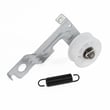
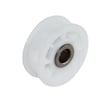
| Squealing | Idler pulley | Dryer idler pulley 4560EL3001A |
Why it matters
Restricted venting does more than slow drying; it can trigger the CHECK VENT indicator, reduce energy efficiency, and increase drying times. Fixing airflow first prevents repeat failures of thermostats and other heat-related components.
Last updated: February 2026
Why does my dryer keep saying check lint screen?
On Kenmore dryer model 79691382410, the Check lint filter light is designed to blink every time you start a cycle as a reminder to clean and reinstall the lint filter. If you are also seeing long dry times, treat it as an airflow issue and clean the filter, housing, and venting.
What this message usually means
In most cases, it is normal operation, not a failure.
- The reminder blinks when the dryer is turned on or before a cycle starts.
- A clogged lint filter increases drying time and reduces airflow.
- Running with a loose or missing lint filter can damage the dryer.
For the exact wording and control-panel behavior, use the 79691382410 owner's manual.
Quick fixes to try (in order)
- Clean the lint filter: pull it straight up, roll lint off with your fingers, and reinstall it firmly.
- Deep-clean the lint filter (if it looks filmy or “dark” when held to light): wash with hot soapy water and a stiff brush; reinstall only when completely dry.
- Clean the lint screen area: vacuum lint from the lint filter opening and the duct path you can reach.
- Check the venting: make sure the transition duct behind the dryer is connected, not crushed, and not damaged.
- Clean the exhaust ductwork: check for lint buildup and obstructions; vent ducts should be cleaned at least yearly (more often if airflow drops).
Lint reminder vs. vent restriction: how to tell
| What you notice | Most likely cause | What to do next |
|---|---|---|
| Light blinks at start, drying is normal | Normal reminder | Clean filter each load |
| Light blinks and loads take longer | Restricted airflow | Clean filter, housing, and venting |
| Dryer feels hot, clothes still damp | Serious vent restriction | Inspect and clear ductwork immediately |
Parts that can contribute to lint buildup or airflow problems
If the lint filter area is damaged or not sealing well, airflow can suffer.
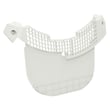
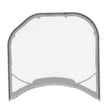
- Lg dryer lint screen housing MCK49049101 (lint filter sits here; cracks or gaps can leak lint)
- Check the lint filter itself for tears or warping (replace if damaged)
- Inspect the blower area for lint accumulation (clean carefully with power disconnected)
Why it matters
Good airflow protects the heater system, improves drying performance, and helps prevent overheating. A clean lint filter and clear venting also reduce energy use and cycle time.
Last updated: February 2026