 Owner’s manual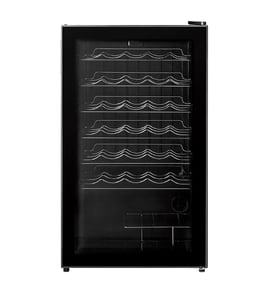

What is the difference between a wine cooler and a beverage cooler?
A wine cooler is built to hold wine at stable, wine-friendly temperatures with minimal vibration and bottle-focused storage, while a beverage cooler is built to chill a wider mix of drinks quickly with more flexible shelving. Your Edgestar CWR1101DZ is designed for wine and beverage storage with two temperature zones.
Key differences that affect performance
- Temperature range and precision: Wine storage needs steady, moderate temps; beverage storage often targets colder “ready-to-drink” temps.
- Humidity and cork care: Wine coolers are designed to be gentler on corked bottles; beverage coolers typically prioritize fast chilling over long-term bottle conditioning.
- Shelving and layout: Wine coolers commonly use racks sized for 750 ml bottles; beverage coolers use adjustable shelves for cans and mixed bottle sizes.
- Vibration and light: Wine coolers typically focus more on reducing vibration and limiting light exposure to protect flavor.
- Use case: Wine coolers support longer storage; beverage coolers support convenience and variety.
How this applies to the Edgestar CWR1101DZ
This model is a dual-zone unit, so you can keep different drinks at different setpoints:
| Zone | Set temperature range | Best for |
|---|---|---|
| Upper zone | 41°F to 54°F | Whites, sparkling, ready-to-serve beverages |
| Lower zone | 54°F to 64°F | Reds, long-hold serving temps |
For exact control-panel steps and operating notes (including how ambient room temperature affects cooling), use the owner's manual.
Quick buying and setup guidance
- Choose a wine cooler if you mainly store wine and want stable serving or short-term storage conditions.
- Choose a beverage cooler if you mainly store cans, mixers, and assorted bottles and want colder temps.
- Choose a dual-zone wine and beverage cooler (like this one) if you want flexibility for reds and whites, or wine plus canned drinks.
- Install in a well-ventilated indoor location and keep it level for best cooling.
- Avoid placing hot items inside; let them cool to room temperature first.
Why it matters
Using the right cooler helps drinks taste the way they should. Wine is more sensitive to temperature swings, vibration, and light; mixed beverages are usually more about fast chilling and flexible storage.
Last updated: February 2026
What is the life expectancy of a wine cooler?
Most wine coolers last 10 to 15 years. For the Edgestar CWR1101DZ, you typically reach the longer end of that range by keeping it well ventilated, running it in the correct room temperature range, and minimizing door openings (all of which reduce compressor and control wear). See the CWR1101DZ owner's manual for the installation and operating limits.
Typical lifespan and what changes it
A wine and beverage cooler’s lifespan is driven by heat load and run time. These factors have the biggest impact:
- Ambient temperature: Run the cooler where the room stays above 50°F and below 95°F.
- Ventilation/clearance: Built-in installs still need airflow, including some ventilation room at the back.
- Door gasket condition: A poor seal makes the unit cycle more often.
- Door opening habits: Frequent or long openings increase run time and frost risk.
- Leveling and placement: An unlevel unit can vibrate and sound louder, and it can stress components.
Quick care checklist (best ROI)
Use this routine to extend service life and keep temperatures stable:
- Keep the door closed as much as possible; avoid “browsing” with the door open.
- Confirm the door closes fully and the gasket seals all the way around.
- Maintain clearance so warm air can escape; do not trap the unit behind a closed cabinet door.
- Defrost and wipe down the interior when frost builds up.
- Keep the unit indoors and protected from moisture.
What “normal aging” looks like
These symptoms often show up as a cooler gets older; they do not always mean it’s at end-of-life:
| Symptom | Common cause | What to check first |
|---|---|---|
| Turns on and off frequently | Warm room, door openings, poor seal, low ventilation | Ambient temp, gasket seal, clearance |
| Won’t reach set temperature | Heat source nearby, insufficient ventilation, frequent openings | Move from heat, improve airflow, reduce openings |
| Strange noises | Normal operating sounds or unit not level/touching something | Leveling feet, clearance from adjacent appliances |
Why it matters
Short cycling and poor ventilation make the compressor work harder and longer. That extra heat and run time is the fastest way to shorten the life expectancy of a wine cooler.
Last updated: February 2026
What is the most common problem with wine coolers?
The most common wine cooler problem is inconsistent temperature (running too warm, too cold, or cycling on and off). On the Edgestar CWR1101DZ, this is most often tied to installation and airflow issues, frequent door openings, or a door gasket that is not sealing well; all of these prevent stable cooling.
Most common causes to check first
- Ventilation is restricted: the unit lacks the recommended clearance, especially at the back.
- Room is too warm: high ambient temperature makes the cooler run more and struggle to hold set temperature.
- Door use is heavy: frequent or long door openings quickly raise internal temperature.
- Door is not fully closed: even a small gap causes temperature swings.
- Door gasket is leaking: a poor seal lets warm air in and moisture in (which can also lead to frost).
Quick troubleshooting steps (in order)
- Confirm the cooler is upright, level, and on a flat surface.
- Verify you have adequate ventilation and you did not install it behind a closed cabinet door.
- Reduce door openings for a day and check whether temperatures stabilize.
- Inspect the door gasket for gaps, debris, or deformation; clean the sealing surfaces and recheck the seal.
- Move the unit away from heat sources (ovens, grills, direct sunlight) and re-test.
What symptoms usually mean
| Symptom | Most likely cause | What to do |
|---|---|---|
| Turns on and off frequently | Warm room, door opened often, poor ventilation | Improve airflow, reduce door openings |
| Will not reach set temperature | Heat source nearby, insufficient ventilation | Relocate for cooler ambient conditions, add clearance |
| Frost forming | Humid environment, door opened often | Limit openings, confirm gasket seal |
| Strange noises | Normal operating sounds, unit not level | Level the unit; ensure it is not touching other appliances |
Why it matters
Wine and beverages store best when temperature stays steady. Poor ventilation, heat exposure, and air leaks force longer run times and wider temperature swings, which can affect taste and increase wear on the cooling system.
For model-specific placement, clearance, and operating guidance, follow the CWR1101DZ owner's manual.
Last updated: February 2026