 Installation guide
 Owner’s manual



What is the average lifespan of a GE dishwasher?
A GE dishwasher typically lasts 10 to 12 years. For your specific GE GSD2200G02BB, that same 10 to 12-year average is a solid expectation; consistent cleaning, correct detergent use, and avoiding chronic leaks can help it reach the upper end of that range. See the care and cleaning guidance in the GSD2200G02BB owner’s manual.
- Water quality (hard water speeds mineral buildup)
- How often you run it (daily use wears moving parts faster)
- Detergent and rinse aid habits (wrong soap can cause suds and stress seals)
- Drain and fill health (clogs and slow fills strain the pump and motor)
- Door sealing and leaks (small leaks can lead to bigger failures over time)
- Run hot water at the sink first so incoming water is hot enough for cleaning.
- Use only automatic dishwasher detergent (not hand dish soap).
- Keep the spray arm holes clear and load racks so arms can rotate freely.
- Clean the air gap (if your setup has one) when draining slows.
- Address leaks early; a worn door seal is a common cause.
| Usage pattern | Typical lifespan | Notes |
|---|---|---|
| Light (2 to 3 loads/week) | 12 to 15 years | Less wear on pump, motor, and seals |
| Average (4 to 7 loads/week) | 10 to 12 years | Most common household use |
| Heavy (1 to 2 loads/day) | 7 to 10 years | Faster wear on wash system and door components |
Knowing the expected lifespan helps you decide whether to invest in repairs (like a door seal or drain component) versus planning for replacement, especially if multiple issues show up close together.
Last updated: January 2026
How to do a hard reset on a GE dishwasher?
For the GE GSD2200G02BB dishwasher, a hard reset is done by cutting power to the unit for a few minutes, then restoring power and starting a new cycle. If your model uses a START/RESET pad, you can also cancel and reboot the cycle using that control as described in the GSD2200G02BB owner’s manual.
- Turn the dishwasher OFF.
- Switch OFF the circuit breaker (or unplug the dishwasher if it’s corded).
- Wait 2 to 5 minutes.
- Restore power.
- Close and latch the door, then start a cycle.
On many GSD2200-series control panels, pressing START/RESET cancels the current cycle and the dishwasher drains, then you can reprogram and restart.
- Close and latch the door.
- Press START/RESET to cancel.
- Wait for the drain to finish (often about 90 seconds on models that support this behavior).
- Select your cycle and press START/RESET again.
These checks are especially common on GE dishwashers after a power interruption:
- Confirm the door is fully latched.
- Check for a wall switch (often near the disposer switch) and make sure it’s ON.
- Reset the house breaker again if it tripped.
- If the control panel goes dark between button presses, touch pads within about 30 seconds.
| Reset type | What it does | When to use |
|---|---|---|
| Power reset | Clears control memory and reboots | Glitches, stuck cycle, odd behavior |
| START/RESET cancel | Stops current cycle and lets you restart | Wrong cycle selected, needs drain and restart |
Resetting is a safe first step that can clear a temporary control issue without replacing parts. If the dishwasher repeatedly needs resets, we typically move next to diagnosing power, door latch, or control-related problems.
Last updated: January 2026
What is the most common problem with a GE dishwasher?
For the GE GSD2200G02BB dishwasher, the most common issues we see are draining problems (water left in the tub), not starting or stopping mid-cycle (often related to the door latch or door switch), and leaks around the door. Many of these start with a clog, a misload, or a worn seal.
- Won’t drain: check the sink/disposer connection, drain path, and any air gap (if your setup uses one).
- Won’t start: confirm the door is fully latched and power is on (some installs use a wall switch).
- Poor cleaning: verify water temperature is hot enough, use the right cycle, and avoid blocking the wash action.
- Leaks: inspect the door seal and make sure dishes are not preventing a full door close.
- Wet dishes: use rinse aid and select heated dry when needed.
The GSD2200G02BB series uses standard GE troubleshooting steps such as verifying incoming water temperature (for best results, at least 120°F) and checking for drain restrictions. We also recommend following the loading guidance so tall items do not interfere with spray and detergent dispensing. See the GSD2200G02BB owner’s manual for cycle and troubleshooting details.
Drain complaints are extremely common because a partial clog can still let some water out, but not enough.
| Symptom | Most likely cause | What we recommend |
|---|---|---|
| Water standing in bottom | Drain restriction or air gap clog | Clear air gap (if present) and check drain routing |
| Hums but won’t drain | Drain path blocked | Inspect hose and connection under sink |
| Drains slowly | Kinked hose or disposer plug left in | Correct routing and confirm disposer inlet is open |
If you suspect a damaged or split hose, the compatible replacement for this model is the dishwasher drain hose WD24X10014.
Drain, start, and leak issues can look like “big failures,” but they often trace back to a simple restriction, a door not fully latching, or a seal problem. Catching those early helps prevent repeat cycles, standing water odor, and water damage.
Last updated: January 2026
Does a GE dishwasher have a filter that needs to be cleaned?
Yes. GE dishwashers either use a removable filter system or a self-cleaning sump area. For GE model GSD2200G02BB, the care focus is typically the sump area at the tub bottom and the drain path, not a modern twist-out fine filter; see the GSD2200G02BB owner’s manual.
This model uses a center wash tower area in the lower rack. The key is to keep that center area unobstructed so water can circulate properly during wash and rinse.
- Remove the lower rack and check the tub bottom for labels, glass, bones, seeds, or other debris
- Keep the center area around the wash tower clear; do not load tall items next to it that can block water flow
- If draining is slow, clean the sink air gap (if your installation has one)
- Run hot water at the sink before starting; incoming water should be 120°F to 150°F
- Use only automatic dishwasher detergent (hand dish soap creates suds and can cause poor cleaning)
| Design type | What you maintain | Common symptoms when dirty or restricted |
|---|---|---|
| Removable fine filter (common on newer models) | Remove and rinse filter | Grit on dishes, odors, slow drain |
| Self-cleaning sump (common on many older GE designs) | Clear debris from tub bottom and keep drain path open | Standing water, debris left in tub, poor cleaning |
If the tub bottom is clear and it still will not drain or clean well, a drain component may need inspection.
- Check for kinks, clogs, or a sagging drain line under the sink
- Inspect the dishwasher drain hose WD24X10014 for blockage, cracking, or soft spots
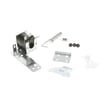
- If draining is intermittent, the drain solenoid system can be involved; the dishwasher drain solenoid kit WD21X10060 is the related service part for this model
When the sump area or drain path is restricted, dirty water can stay in the tub and spray pressure can drop. That leads to residue on dishes, odors, and inconsistent cycle results.
Last updated: January 2026





