Installation guide
 Owner’s manual
 Error Codes




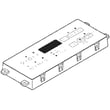
How do I tell what model Kenmore stove I have?
Your Kenmore stove’s model number is printed on the model and serial plate. On many Kenmore ranges (including model family 790), that plate is on the oven front frame behind the oven door or behind the storage drawer; use that exact model number when ordering parts or service. See the 79046781902 owner's manual for the model and serial number location details.
Check these common spots in this order:
- Oven front frame: open the oven door and look along the frame edge
- Behind the storage drawer: pull the drawer out and look on the frame behind it
- Back panel: sometimes the label is on the rear of the range
- Side frame: occasionally on a side panel near the bottom
Kenmore model numbers are typically a string of numbers (sometimes with a prefix). For this page’s range, the model number format is 79046781902.
Use these tips when you read the tag:
- Look for labels like Model, Model No., MOD, or M/N
- Write down the full model number exactly as shown
- Also record the serial number and any lot number/letter on the same plate
The model number identifies the exact Kenmore electric range design so we can match the correct parts, wiring, and control components. Even small model changes can affect fit and electrical connections.
| What you find | What to do with it | Why we need it |
|---|---|---|
| Model number | Use it to look up diagrams and parts | Ensures correct part fit |
| Serial number | Keep for service history | Helps identify production details |
| Lot number/letter (if shown) | Provide when ordering parts | Improves parts matching |
Last updated: February 2026
Why is my Kenmore electric oven not getting hot?
If your Kenmore electric range model 79046781902 isn’t getting hot, the most common causes are a failed bake element, a bad oven temperature sensor, or a control issue. Start with a quick visual check, then confirm the problem with basic electrical tests and calibration steps in the 79046781902 owner's manual.
- Confirm the range has full power (electric ovens typically need 240V; a tripped breaker can leave you with partial power).
- Make sure you are using Bake, not Broil.
- Allow a full preheat; the manual notes preheating matters for proper results.
- Check that the oven door closes fully and the gasket is sealing.
- If the oven recently had a power outage, turn the oven off and restart (the manual warns not to operate during a power failure).
| Symptom | Most likely cause | What to check |
|---|---|---|
| Oven won’t heat at all | Bake element open | Look for blisters, cracks, or a break; test continuity |
| Heats but won’t reach temp | Temperature sensor out of range | Compare sensor resistance to typical values; inspect wiring |
| Temperature swings, odd behavior | Control or wiring issue | Check harness connections, burned terminals, error codes |
If you suspect the sensor, the model-compatible part is the range oven temperature sensor 5304504897.
- Cut power at the breaker before removing panels or testing parts.
- Inspect the bake element for visible damage; a failed element is the top reason an electric oven won’t heat.
- Test the bake element for continuity with a multimeter (no continuity means replace it).
- Test the oven temperature sensor; many sensors read about 1,080 ohms at room temperature (typical range guidance).
- If both test good, check for loose/burned wiring at connectors and the control area.
An oven that does not heat correctly can undercook food and waste energy. Fixing the heating circuit (element, sensor, wiring, or control) restores accurate baking and helps prevent repeated overheating or long preheat times.
For fault displays and what they mean on Kenmore ranges, use the Kenmore 790 range 4-digit error codes guide.
Last updated: February 2026
What is the average lifespan of 79046781902?
A Kenmore electric range like model 79046781902 typically lasts 13 to 15 years with normal household use. Regular cleaning, avoiding overheating events, and replacing wear items (like elements or sensors) on time helps you reach that lifespan.
- Heat stress from frequent self-clean cycles or running the oven at high temps for long periods
- Power quality issues (loose cord connections, voltage problems) that can damage wiring and controls
- Door seal condition; heat leaks make the oven work harder and can overheat nearby components
- Surface element wear; radiant elements and switches wear faster with heavy daily cooking
- Maintenance habits; keeping vents clear and cleaning spills promptly reduces corrosion and failures
These are normal wear or heat-exposed parts that often determine whether a range feels “worn out” before the cabinet does:
| Symptom | Common part to check | Example part for this model |
|---|---|---|
| Oven temperature is inaccurate | Oven temperature sensor | Range oven temperature sensor 5304504897 |
| Oven not heating or heats unevenly | Bake or broil element | Crosley range bake element 318254906 |
| Cooktop burner not heating correctly | Surface element or control switch | Range surface element control switch 318293830 |
| Oven light not working | Bulb or light socket | Appliance light bulb, 40-watt 316538904 |
- Use self-clean only when necessary; wipe out heavy spills first
- Keep the oven door closing tightly; replace the gasket if it is torn or flattened
- Avoid foil on the oven bottom; it can trap heat and damage the liner
- If you smell hot wiring or see flickering display lights, stop using the range and inspect connections
- Follow the care and operating guidance in the owner's manual
Knowing the 13 to 15 year lifespan helps you decide whether to repair or replace. On a range that is still within that window, replacing a failed heating element, sensor, or switch is often the most cost-effective way to restore safe, even cooking.
Last updated: March 2026