Owner’s manual
 Error Codes




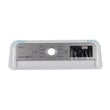
How to hard reset LG sensor dryer?
To hard reset your LG DLE7300WE dryer, we power it completely off, cut power at the breaker (or unplug it) for 1 minute, then restore power and start a new cycle. This clears many control glitches and restores normal Sensor Dry operation.
- Press POWER to turn the dryer off.
- Unplug the dryer, or switch the dryer circuit breaker OFF.
- Wait 60 seconds (this lets the control board fully discharge).
- Restore power (plug back in, or switch breaker ON).
- Press POWER, select a cycle, then press START/PAUSE.
- If the dryer was paused mid-cycle, reselect the cycle and options before starting.
These checks fix the most common “sensor” complaints (stopping early, long dry times, damp loads):
- Clean the lint filter; the dryer will not run without it seated correctly.
- Run the built-in Flow Sense installation test to check for vent restriction (the dryer should be cool first); see the DLE7300WE owner’s manual.
- Make sure the exhaust duct is not crushed, kinked, or packed with lint.
- Avoid overloading; split extra-large loads so the moisture sensors can read correctly.
- If you see an error code, match it to the LG chart; use LG dryer error codes for quick code lookups.
| Action | What it helps | What it will not fix |
|---|---|---|
| Power reset (unplug/breaker) | Frozen display, unresponsive buttons, odd cycle behavior | Failed sensors, heater problems, vent blockages |
| Flow Sense test | Confirms airflow restriction level | Mechanical noise, belt or roller wear |
Sensor Dry relies on stable control electronics and good airflow. A hard reset clears temporary control faults, but restricted venting can still cause long dry times and overheating protection trips.
Last updated: February 2026
How to remove front of LG dryer to clean?
To remove the front on your LG DLE7300WE dryer for cleaning, unplug the dryer first, then remove the top and front panel fasteners and lift the front panel off while supporting its weight and disconnecting any wiring (such as the door switch harness) as needed. Use the DLE7300WE owner’s manual for the exact panel and screw locations.
- Unplug the dryer to prevent electric shock.
- Let the dryer cool completely if it was recently running.
- Protect the floor with cardboard or a blanket to avoid scratches.
- Have a container ready for screws so nothing gets lost.
- Wear gloves; sheet metal edges inside the cabinet can be sharp.
- Disconnect power (unplug the cord).
- Remove the top panel (usually screws at the back, then slide the top back and lift off).
- Remove the control panel mounting screws if they block access to the front panel screws (support the panel so it does not hang by wires).
- Remove the front panel screws (commonly along the top inside edge and/or lower corners, depending on configuration).
- Support the front panel, pull it slightly forward, then disconnect the door switch wire harness if present.
- Lift the front panel up and off the lower retaining tabs/clips.
- Lint buildup around the blower inlet and cabinet base
- The door opening and seal area (wipe with a damp cloth)
- The lint duct path you can safely reach
| Area | What you’ll notice | Why it matters |
|---|---|---|
| Blower area | Heavy lint piles | Improves airflow and drying time |
| Cabinet base | Dust and lint mats | Reduces overheating risk |
| Door seal area | Lint on gasket/edge | Helps the door seal correctly |
Front access often exposes wear items that cause squealing, thumping, or a drum that feels hard to turn:
- LG dryer drum belt 4400EL2001F (cracks, glazing, slack)
- Dryer drum support roller 4581EL2002H (flat spots, wobble)
- LG dryer idler pulley 4561EL3002A (chirping, rough pulley)
Cleaning lint from inside the cabinet helps your DLE7300WE dry faster, run cooler, and reduce nuisance shutdowns caused by restricted airflow.
Last updated: February 2026
Does an LG dryer have a sensor?
Yes. The LG DLE7300WE dryer uses sensor technology in its Sensor Dry cycles; it compares moisture in the clothes and moisture in the air, then automatically adjusts drying time to help prevent underdrying or overdrying. For cycle details, see the DLE7300WE owner's manual.
LG describes a dual-sensor system for Sensor Dry cycles, plus airflow monitoring to help you spot venting restrictions.
- Dual sensor system: detects and compares moisture levels in clothes and in the air
- Automatic time adjustment: changes cycle time based on sensed dryness
- Recommended settings: dryness level and temperature are set automatically for each Sensor Dry cycle
- Flow Sense indicator: alerts when installed ductwork restrictions reduce exhaust airflow
Sensor drying depends on good tumbling action and consistent airflow. If results are inconsistent, these steps fix most complaints.
- For very small loads, add a few items or use Time Dry
- For very large loads, split into smaller loads
- For single bulky items (blanket/comforter), pause and rearrange to prevent a tight ball
- Clean the lint screen before each load; for heavy-lint loads, clean it during the cycle
- If drying takes too long, check for duct restrictions and address any Flow Sense alert
| Feature | Sensor Dry cycles | Time Dry cycles |
|---|---|---|
| How it ends | Stops when dryness is reached | Stops when time runs out |
| Best for | Mixed loads, everyday drying | Small loads, a few items, touch-ups |
| Common symptom if misused | Shuts off too soon on tiny loads | Can overdry if time is set too long |
Using Sensor Dry correctly helps protect fabrics, reduces static from overdrying, and can shorten drying time. Keeping airflow clear also improves efficiency and helps prevent long dry times.
Last updated: February 2026
Why is my LG dryer showing D?
On LG dryer model DLE7300WE, a “D” message is almost always the Flow Sense venting warning shown as d80, d90, or d95. It means the dryer detected restricted airflow in the exhaust duct; the dryer can still run, but dry times increase and efficiency drops. See the DLE7300WE owner's manual.
These codes indicate how restricted the venting is:
| Display | What it indicates | What to do now |
|---|---|---|
| d80 | Significant restriction (about 80%) | Clean lint filter and check venting soon |
| d90 | Severe restriction (about 90%) | Stop and clean/repair the exhaust system |
| d95 | Very severe restriction (about 95%) | Do not use until venting is cleared |
- Clean the lint filter before every load; if it looks “filmy,” wash it to remove fabric softener residue.
- Check the outside vent hood while the dryer runs; airflow should feel strong and steady.
- Inspect the vent hose behind the dryer for kinks, crushing, or sagging.
- Remove lint buildup at the vent hood and any accessible duct sections.
- If the duct run is long or has many elbows, shorten or straighten it where possible.
Restricted exhaust airflow makes the heater and blower work harder, increases cycle time, and raises energy use. With severe restriction (d90/d95), clearing the ductwork is the priority before continued drying.
If airflow is clear but drying is still slow, a failed temperature sensing component can contribute to poor performance. For this model, one common sensor-related part is the dryer thermistor AGM30045804.
Last updated: February 2026