Error Codes



Can you still get parts for Kenmore refrigerators?
Yes. We still carry replacement parts for many Kenmore refrigerators, including model 1068469410. The key is matching parts to your exact model number so the electrical connectors, mounting points, and fit are correct for your refrigerator.
How to find the right part for Kenmore model 1068469410
Use your model number (1068469410) and shop by the symptom or the part category. For this model, common replacement parts we see customers order include:
- Door sealing parts such as a refrigerator door gasket 2188404A
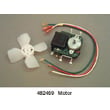
- Cooling and airflow parts such as a refrigerator fan motor 482469
- Compressor start components such as a capacitor WPW10662129
- Temperature control parts (thermostat/control)
- Small hardware (screws, covers) used during repairs
What “still available” usually means
Availability varies by part type. Wear items and common service parts tend to remain available longer than cosmetic panels or specialty insulation.
| Part type | What it affects | Typical reason to replace |
|---|---|---|
| Door gasket | Temperature stability, frost, energy use | Warm air leaks, condensation, frost buildup |
| Fan motor | Cooling performance | Fridge warm, freezer cold, noisy fan |
| Capacitor | Compressor starting/running | Clicking, hard starting, intermittent cooling |
| Thermostat/control | Temperature regulation | Temps swing, runs too long or not enough |
Why it matters
Using the correct Kenmore 1068469410 part helps restore proper cooling, reduces frost and moisture issues, and prevents repeat failures caused by poor fit or incorrect electrical ratings.
Quick tips before you order
- Confirm the full model number from the refrigerator’s ID tag (inside the fresh food section).
- Match the symptom first (cooling, leaking, door not sealing, lights not working).
- Replace gaskets when they are torn, warped, or no longer sealing evenly.
- If you are chasing a cooling problem, check airflow and fan operation before replacing major sealed-system parts.
Last updated: February 2026
How to tell what model Kenmore refrigerator?
To tell what model Kenmore refrigerator you have, find the model and serial tag on the cabinet (not on a removable drawer). For Kenmore model 1068469410, the tag is typically inside the fresh food section on a side wall, inside the door area, behind the lower crisper area, or near the front kickplate.
Where to look first (fastest checks)
- Inside the refrigerator compartment on the left or right side wall
- On the ceiling of the fresh food compartment near the light
- On the inside frame near the door gasket sealing surface
- Behind or just above the lower crisper drawers (on the cabinet wall)
- Near the front base grille or kickplate area
What the model tag looks like
Most Kenmore refrigerators use a small sticker or metal plate that lists:
- Model number (example: 1068469410)
- Serial number
- Electrical ratings (volts/amps)
- Sometimes a manufacturing date code
How to write it down correctly
Use this quick checklist so we can match the right refrigerator parts:
- Copy the full model number exactly as shown (all digits)
- Copy the serial number exactly
- Take a clear photo of the tag before ordering parts
- If the tag is worn, try a flashlight at an angle to make printing readable
Why it matters
Kenmore model numbers that start with 106 often share similar styling, but internal components (like a thermostat, fan motor, or door gasket) can vary by revision. Using the exact model number helps ensure the replacement part fits and works correctly.
Common part examples that depend on the exact model
| Part type | What it affects | Example part for this model |
|---|---|---|
| Door gasket | Warm air leaks, frost, sweating | Refrigerator door gasket 2188404A |
| Evaporator fan motor | Cooling airflow, temperature stability | Refrigerator fan motor 482469 |
| Light switch | Interior light operation | Light switch W11384469 |
If you cannot find the tag
- Check the freezer compartment side walls and door frame area
- Look behind the kickplate with a flashlight
- Remove the crisper drawers to inspect the cabinet wall behind them
Last updated: February 2026
What's the average lifespan of a Kenmore refrigerator?
A Kenmore refrigerator like model 1068469410 typically lasts 10 to 15 years. Reaching the high end depends most on steady airflow (clean condenser area), tight door seals, and keeping the cooling system from running nonstop due to warm air leaks.
What affects lifespan the most
- Condenser cleanliness and airflow (dust buildup makes the compressor work harder)
- Door gasket condition (air leaks cause long run times and temperature swings)
- Fan performance (poor airflow can lead to warm sections and frost issues)
- Temperature settings and loading habits (overpacking blocks vents)
- Room conditions (hot garages and tight enclosures shorten life)
Quick maintenance schedule (simple and effective)
| Task | How often | What you’re preventing |
|---|---|---|
| Vacuum/brush condenser area | Every 6 months | Overheating, long run times |
| Check door seal for gaps | Monthly | Warm air leaks, moisture, frost |
| Keep vents clear inside | Weekly | Warm spots, poor circulation |
| Listen for fan noise changes | Ongoing | Cooling loss, uneven temps |
When a “shorter lifespan” is really a fixable issue
If your Kenmore 1068469410 is warm, noisy, or running constantly, these are common repair paths that often restore normal operation:
- Replace a worn door seal such as the refrigerator door gasket 2188404A (if it matches your door position)
- Diagnose evaporator airflow problems using how to fix your evaporator cooling fan
- If the interior light stays on with the door closed, test the light switch W11384469
- For cooling-system start issues (clicking, hard starts), a run capacitor like the capacitor WPW10662129 can be part of the repair, depending on the symptom
Why it matters
A refrigerator’s compressor and sealed system last longest when the unit can cool efficiently. Small issues like a leaking gasket or blocked airflow can add hours of run time every day, which accelerates wear on the compressor, fan motor, and controls.
Last updated: February 2026