Owner’s manual
 Error Codes


What is the life expectancy of a Kenmore water heater?
Most Kenmore electric water heaters, including model 153320893HT, typically last 8 to 12 years in normal residential use. Regular maintenance (especially checking the anode rod and flushing sediment) helps you reach the upper end of that range; neglected tanks often fail sooner.
- Water quality (hard water and high sediment shorten tank life)
- Anode rod condition (a depleted anode accelerates tank corrosion)
- Thermostat setting (higher temps increase stress and scale)
- Installation quality (leaks at fittings and poor electrical connections cause early issues)
- Maintenance frequency (periodic draining and inspection reduces buildup)
Use the 153320893HT owner’s manual for the exact access-panel locations and service guidance for your Kenmore Power Miser 12.
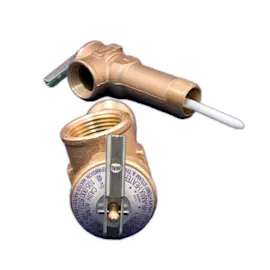
- Test the temperature-pressure relief valve periodically
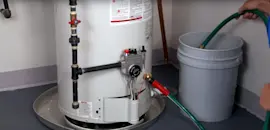
- Drain a few gallons from the tank to reduce sediment (more often with hard water)
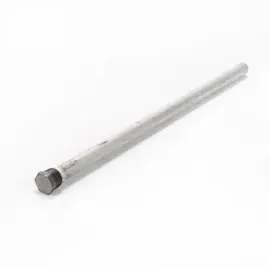
- Inspect and replace the anode rod when significantly worn
- Watch for moisture at the element gasket and drain valve
- Keep access panels and thermostat covers properly installed after service
| Symptom | Often means | Typical next step |
|---|---|---|
| Rusty water, popping noises | Sediment buildup or anode wear | Flush tank; inspect anode rod |
| Not enough hot water | Element or thermostat issue | Test components; replace failed part |
| Water around base of tank | Tank leak | Replacement is usually required |
| Drips at element area | Gasket seepage | Replace gasket and reseat element |
Knowing the typical 8 to 12 year lifespan helps you decide whether to invest in parts (like a heating element or thermostat) or plan for replacement, especially if the tank is already near the end of its expected service life.
Last updated: January 2026
Can you replace a thermostat on an electric water heater?
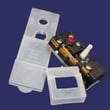
Yes. On the Kenmore 153320893HT electric water heater, you can replace a thermostat as long as you shut off power first, keep the thermostat tight (flush) to the tank, and reinstall the terminal cover and insulation before restoring power. See the 153320893HT owner's manual.
- Turn OFF power at the junction box or breaker before removing any access panel.
- Confirm power is off with a meter before touching wires.
- Never energize the heater until the tank is completely full and water flows from a hot faucet.
- Keep the thermostat flush against the tank for accurate temperature sensing.
- Reinstall the terminal cover and insulation block before closing the panel.
- Turn OFF electrical power.
- Remove the access panel and insulation block.
- Take a photo of wiring, then disconnect wires.
- Remove the old thermostat and install the new one so it sits flat against the tank.
- Reconnect wiring and reinstall the terminal cover.
- Reinstall insulation block and access panel.
- Fill the tank completely, then turn ON power.
We recommend setting the water temperature to about 120°F for most homes.
| Setting goal | Typical result | Notes |
|---|---|---|
| ~120°F | Comfortable hot water with reduced scald risk | Common factory set point |
| Higher than 120°F | Hotter water | Keep upper setting aligned with lower setting |
If you are already inside the access panels, these parts are often involved in related “no hot water” or overheating symptoms:
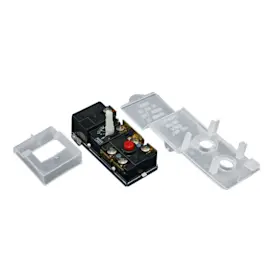
- Water heater thermostat 100108683 (upper thermostat)
- Water heater adjustment knob 100108781 (dial that fits the thermostat shaft)
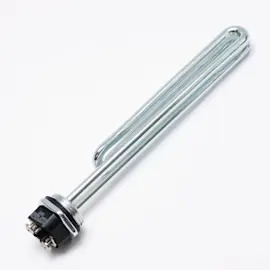
- Element 100108346 (if heating is weak or rumbling from scale)
A thermostat that is not mounted correctly or is missing its insulation and cover can cause inaccurate temperature control and unsafe operation. Proper reassembly also helps protect wiring and keeps the heater operating efficiently.
Last updated: January 2026
What temperature should a 40 gallon water heater be set at?
Set a 40-gallon water heater to about 120°F for the best balance of comfort, energy use, and scald protection. On Kenmore model 153320893HT, our 153320893HT owner's manual shows the thermostats are factory set to the lowest position, which is approximately 120°F (Hot).
We use these targets for typical household hot water needs:
- 120°F for everyday use and lower scald risk
- 130°F to 140°F when you need hotter water for cleaning or higher demand
- Avoid unnecessarily high settings because scald risk rises quickly
| Stored water temp | Best for | Tradeoff |
|---|---|---|
| 120°F | Most homes | Lowest scald risk, most economical |
| 130°F | Slightly higher demand | Higher scald risk |
| 140°F | Some dishwashers and heavy use | Much higher scald risk |
The manual lists approximate thermostat dial temperatures as:
- Hot: ~120°F
- A: ~130°F
- B: ~140°F
- C: ~150°F
- Very hot: ~160°F
Follow the safety steps in the manual; these are the basics:
- Turn OFF power at the breaker or junction box
- Remove the access panel and insulation carefully
- Use a screwdriver to turn the thermostat adjuster (clockwise raises, counterclockwise lowers)
- Reinstall insulation and the access panel before restoring power
- Let the tank reheat fully, then recheck temperature at a hot tap
Water heater temperature affects energy cost, available hot water, and burn risk. 120°F is the manual’s economical baseline for the Kenmore 153320893HT, while higher settings increase scald risk and should be used only when needed.
Last updated: January 2026