Owner’s manual
 View engine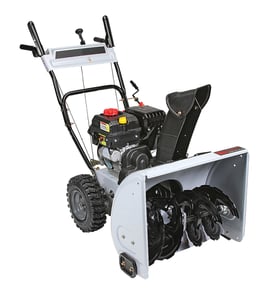



Should I spray my snowblower with WD-40?
Yes, you can use WD-40 on your Craftsman snow thrower model 247881722 as a light protectant and to help reduce snow sticking in the chute area, but apply it only to cold, clean metal surfaces and keep it off belts, friction-drive parts, and hot engine components. For model-specific maintenance points, use the owner's manual.
Where it is OK to spray (and where it is not)
Use a light coat and wipe off excess so it does not attract grit.
- OK: inside the discharge chute (light coat), chute ring, auger housing interior (light coat)
- OK: exposed painted metal for off-season rust protection (wipe thin)
- Avoid: belts, pulleys, and any drive surfaces (slip risk)
- Avoid: friction wheel and friction plate area (loss of drive)
- Avoid: hot muffler, cylinder, and any area near ignition sources
Best practice for non-stick performance
Silicone spray is typically the better choice for a non-stick surface because it is less likely to leave a residue that grabs dirt.
- Clean packed snow and ice first
- Let all surfaces cool completely
- Spray a thin film; do not soak
- Cycle the auger and chute controls by hand (engine off) to spread the film
- Reapply only when sticking returns
Quick comparison
| Option | Best use | Main caution |
|---|---|---|
| WD-40 | Light rust protection; short-term slicking | Can attract dirt; keep off drive parts |
| Silicone spray | Best non-stick for chute and housing | Still keep off belts and friction drive |
| Dedicated snowblower non-stick spray | Longest-lasting non-stick | Follow label; avoid overspray |
Why it matters
Overspray on the drive system can cause slipping, poor traction, and premature wear. Keeping sprays limited to the chute and auger housing helps performance without creating a drive problem.
Last updated: February 2026
How to find snowblower model number?
For a Craftsman snow thrower, the model number is typically on a product ID label or metal tag on the rear frame (between the wheels), near the engine mounting area, or on the auger housing. For this parts page, the model number you need is 247881722; confirm it on the machine before ordering parts.
Where to look on Craftsman model 247881722
Check these common label locations first:
- Rear frame between the wheels (most common)
- Near the engine mounting area on the frame
- Side or rear of the auger housing
- Under or behind the handlebar area (near the control panel)
- On the engine itself (engine model is separate from the snowblower model)
If the label is dirty or worn, wipe it clean and use a flashlight; stamped tags can be faint.
What number you actually need (and what to ignore)
Snowblowers often have multiple numbers. Use this quick guide:
| Number you see | What it identifies | Use it for |
|---|---|---|
| Snowblower model number (example: 247881722) | The Craftsman unit | Finding correct diagrams and parts |
| Serial number | Your specific unit | Age tracking and service records |
| Engine model/type/code | The engine | Engine-specific tune-up parts |
Why it matters for ordering parts
We match parts by the snowblower model number, because components like belts, cables, and skid shoes vary by build.
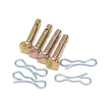
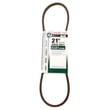
For example, once you confirm model 247881722, you can confidently choose model-matched items such as the mtd snowblower auger drive belt, 1/2 x 35-1/4-in 256963 or a replacement shear pin.
Helpful next steps
- Compare the label on your machine to the model shown on the owner's manual
- Write the model and serial number down before the label gets harder to read
- If the auger stops turning after hitting ice or a newspaper, inspect the shear pins first
- If the auger engages but slips, inspect belt condition and tension
Last updated: February 2026
What is the typical lifespan of a gas snowblower?
A gas snowblower like the Craftsman 247881722 typically lasts 10 to 15 years with normal residential use and routine maintenance. With consistent upkeep (oil changes, clean fuel, belt and skid shoe service), many machines reach 15 to 20 years.
Typical lifespan ranges (what to expect)
Lifespan depends most on how often you use it, how hard the snow is, and whether wear items are replaced before they cause bigger damage.
- Light use (a few storms per season): 12 to 20 years
- Moderate use (regular winter use): 10 to 15 years
- Heavy use (long driveway, wet snow, frequent storms): 8 to 12 years
- Poor storage or stale fuel: shortened lifespan (carburetor and starting issues show up early)
Maintenance that extends life the most
These actions prevent the most common “end of life” failures on a gas snow thrower.
- Change engine oil on schedule (and at end of season if hours are high)
- Use fresh fuel and stabilize fuel before storage
- Keep the auger and drive systems adjusted and responsive
- Replace worn belts before they slip and overheat
- Inspect and replace shear pins after jams to protect the gearbox
- Keep skid shoes and scraper blade set correctly to reduce housing wear
Common wear parts that affect longevity
Replacing normal wear items keeps the machine from overworking and reduces strain on the auger gearbox, friction wheel, and drive system.
| Wear item | What happens when it’s worn | Example part for this model |
|---|---|---|
| Auger drive belt | Auger slows, squeals, or stops under load | Mtd snowblower auger drive belt, 1/2 x 35-1/4-in 256963 |
| Shear pin | Auger stops after impact; protects gearbox | (See parts list for shear pins) |
| Skid shoes / scraper blade | Poor scraping, housing wear, uneven clearing | (See parts list for skid shoes and scraper blade) |
Why it matters
A snowblower that is maintained and repaired as wear shows up clears faster, throws farther, and is less likely to suffer expensive failures (like gearbox damage). Following the service intervals in the owner's manual also helps you plan parts replacement before a storm hits.
Last updated: February 2026
Is a 2 stage or 3 stage snowblower better?
A 2-stage snowblower is the better choice for most homeowners because it clears typical driveway snow efficiently with fewer moving parts. A 3-stage is better when you regularly face deep, heavy, wet, or icy snow and want faster intake and throwing performance; check your owner's manual for the stage and operating limits of Craftsman model 247881722.
Quick comparison: 2-stage vs 3-stage
| Feature | 2-stage snowblower | 3-stage snowblower |
|---|---|---|
| Snow intake | Auger feeds snow to impeller | Accelerator pulls snow in faster, then auger and impeller |
| Best for | Most driveways; moderate to heavy snow | Deep, wet, packed, or icy snow; large areas |
| Complexity | Simpler drivetrain | More components to maintain |
| Weight and maneuvering | Typically lighter | Typically heavier |
| Cost to own | Usually lower | Usually higher |
How to choose for your driveway
We recommend matching the machine to your worst 5 to 10 storms each season, not the average snowfall.
- Choose 2-stage if you clear a standard driveway and want a strong balance of power and simplicity.
- Choose 3-stage if you often hit plow berms, heavy slush, or frequent ice chunks and want faster clearing.
- If storage space is tight, a 2-stage is usually easier to park and handle.
- If you prefer fewer adjustments and less maintenance, 2-stage is typically the easier ownership experience.
- If you already own a 2-stage and it struggles, first check wear items like belts and shear pins.
Why it matters (performance and repairs)
Stage design affects how quickly snow is pulled in and how much stress the auger system sees. When a machine is overloaded (especially in wet snow), the most common “savers” are shear pins and belts.
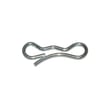
- If the auger stops turning under load, inspect and replace the Craftsman snowblower shear pin 738-04124A.
- If the auger drive slips or squeals, a worn auger belt is a common cause; replace the mtd snowblower auger drive belt, 1/2 x 35-1/4-in 256963.
Practical tips that help either stage
- Clear in smaller passes in wet snow to prevent clogging.
- Keep skid shoes and scraper set correctly so you are not digging into gravel.
- Maintain traction and drive performance by keeping the drive system clean and adjusted.
Last updated: February 2026