Owner’s manual
 Error Codes



How many cubic feet is the Kenmore Elite?
The Kenmore Elite model 59676263701 is a bottom-mount refrigerator, but cubic-foot capacity is not listed in the manual excerpts we have for this model. Most Kenmore bottom-mount refrigerators are typically about 18 to 25 cu. ft.; confirm the exact capacity for your unit in the 59676263701 owner's manual.
How to confirm the exact capacity for model 59676263701
- Check the specifications section in the 59676263701 owner's manual.
- Look for a rating label inside the fresh food compartment (often on a side wall).
- Compare the listed “total capacity” to “refrigerator” and “freezer” capacities.
- If you are measuring space for installation, use the cabinet dimensions, not capacity.
- If you are shopping for replacement bins or drawers, match by model number, not cu. ft.
Typical capacity ranges (for context)
| Refrigerator style | Typical total capacity range |
|---|---|
| Bottom-mount (freezer drawer) | 18 to 25 cu. ft. |
| Side-by-side | 20 to 28 cu. ft. |
| French door | 22 to 30+ cu. ft. |
Why it matters
Capacity helps when planning food storage and comparing refrigerator styles, but it does not reliably identify parts. For Kenmore Elite 59676263701, parts fit is determined by the model number and component design, not the cubic-foot rating.
Last updated: February 2026
What are the common problems with Kenmore Elite refrigerators?
Common problems on the Kenmore Elite 59676263701 bottom-mount refrigerator include warm temperatures from airflow restrictions, frost buildup from defrost issues, noisy operation from fan problems, and ice maker complaints (no ice, bad-tasting ice, or slow production). Our 59676263701 owner's manual troubleshooting section helps you match symptoms to the right checks.
Most common symptoms and what usually causes them
- Not cooling or weak cooling: dirty condenser coils, blocked air vents, failing start components, or control issues
- Freezer cold but fresh food warm: restricted airflow, evaporator fan problem, or frost-packed evaporator
- Frost buildup or ice on the back wall: defrost system problem (heater, sensor, control)
- Noisy refrigerator: evaporator fan blade rubbing ice, worn fan motor, or vibration from mounting points
- Ice maker not working: shutoff arm position, temperature too warm, water supply issue, or failed ice maker components
- Bad taste, odor, or gray ice: new plumbing, old stored ice, food odor transfer, or minerals in water (filter recommended)
Quick checks we recommend first (fast, no parts guessing)
- Confirm controls are set to normal temps (about 37°F fresh food and 0°F freezer).
- Make sure vents are not blocked by food packages.
- Clean condenser coils and verify the condenser area has good airflow.
- Listen for the evaporator fan; if it is loud or intermittent, inspect for ice contact.
- For ice issues, dump old ice and wash the bin; allow 24 hours for fresh ice production.
Parts that commonly solve these problems
| Symptom | Part that often relates | Example part for this model |
|---|---|---|
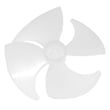
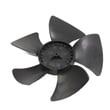
| Warm temps, poor airflow | Evaporator fan blade damage or rubbing | Refrigerator evaporator fan blade WP2169142 |
| Temps swing, odd readings | Temperature sensor issue | Refrigerator temperature sensor 12002355 |
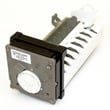
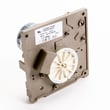
| Ice maker not making ice | Ice maker assembly failure | Refrigerator ice maker D7824706Q |
| Clicking, won’t start cooling | Start device problem | Start device WPW10197426 |
Why it matters
Cooling and ice maker problems often start as simple airflow, temperature, or maintenance issues; catching them early prevents food spoilage and reduces strain on the sealed refrigeration system.
Last updated: February 2026
How to raise a refrigerator off the floor?
On Kenmore Elite refrigerator model 59676263701, we raise the front of the cabinet by adjusting the front roller adjustment screws behind the base grille; turning the screws to the right raises the refrigerator and helps the doors close properly.
How to raise and level it (model 59676263701)
- Unplug the refrigerator if you will be working near wiring or moving the unit.
- Remove the base grille (grasp firmly and pull toward you).
- Use a screwdriver or 3/8-inch hex driver on each roller adjustment screw.
- Turn the roller adjustment screw to the right to raise that side.
- Turn both sides the same amount to keep the cabinet level.
- Set the brake foot clockwise until it is firmly against the floor to prevent rolling when the freezer drawer opens.
For the exact locations and illustrations, use the 59676263701 owner's manual.
Quick direction guide
| What you want to do | What to turn | Result |
|---|---|---|
| Raise the refrigerator | Roller adjustment screw to the right (clockwise) | Front lifts up |
| Lower the refrigerator | Roller adjustment screw to the left (counterclockwise) | Front drops down |
| Keep it from rolling | Brake foot clockwise until it contacts floor | Stabilizes cabinet |
If you need more height than the rollers allow
Most bottom-mount refrigerators only have limited adjustment travel. If you need to raise the refrigerator more than the built-in rollers can provide, use a solid, level platform that supports the full footprint (for example, a properly built plywood base) and keep ventilation clearances open.
Why it matters
Correct height and a slight rearward tilt help the doors seal and close on their own, and the brake foot keeps the refrigerator from creeping forward when you pull out the freezer drawer.
Last updated: February 2026
What model is my Kenmore Elite refrigerator?
Your Kenmore Elite refrigerator’s model number is printed on the appliance’s rating label; for model 59676263701, the manual shows it in the 596.76xx series. Check the label inside the fresh food compartment or freezer, then match it exactly to the format shown in the 59676263701 owner's manual.
Where to find the model number label
On most Kenmore Elite bottom-mount refrigerators like 59676263701, the rating label is typically in one of these spots:
- Inside the refrigerator compartment on a side wall near the crisper drawers
- Inside the refrigerator compartment on the ceiling near the light area
- Inside the freezer compartment on a side wall
- Behind the lower toe grille (kick plate) area
- Along the door frame edge (visible when the door is open)
What the model number looks like (and why it matters)
Kenmore model numbers are usually a 3-digit prefix plus additional digits. For this refrigerator family, the manual lists models in the 596.76059_701 to 596.76269_701 range, which corresponds to the 59676263701 style you see on the parts list.
Quick check table
| What you see on the label | What it means | What to do next |
|---|---|---|
| 596.76263701 (with or without a dot) | Model number | Use it to look up diagrams and parts |
| Serial number (letters and numbers) | Production identifier | Keep it for service and warranty |
| 596.76263701 + extra suffix characters | Variant/revision | Enter the full model exactly as shown |
Tips to avoid ordering the wrong part
Using the exact model number is the difference between a correct fit and a return.
- Copy the model number character-for-character (including any dots or suffixes)
- Take a clear photo of the label before shopping
- Match parts by model first, then confirm by part ID
- If you are replacing a cooling-system component, confirm the exact part listing for your model
Why it matters
Kenmore Elite refrigerators share similar styling across many 596-prefix models, but internal components (ice maker, control board, sensors, drawer hardware) can vary by revision. The correct model number ensures the parts diagrams and compatible replacements match your exact build.
Last updated: February 2026
What does DH mean on Kenmore Elite refrigerator?
On Kenmore Elite refrigerator model 59676263701, DH commonly indicates a defrost heating problem (the unit is not sensing the expected temperature rise during defrost). We start by checking for heavy frost on the evaporator cover, then testing the defrost circuit and controls using the 59676263701 owner's manual.
What to check first (fast, no tools)
- Confirm the doors fully close and the gaskets seal all the way around.
- Look for a thick frost layer on the rear freezer panel (a strong defrost-system clue).
- Set temperatures to typical targets: 0°F freezer and 37°F fresh food.
- Power reset: unplug for 5 minutes, then restore power and monitor for 24 hours.
- Make sure vents are not blocked by packages or bins.
Likely causes of a DH/defrost heat issue
A DH message usually points to one of these conditions:
- Defrost heater not heating (open heater, failed connection)
- Defrost sensor or thermostat not reading correctly
- Control not sending power during defrost
- Wiring issue in the defrost circuit
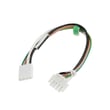
If you find damaged wiring or a loose connector, the refrigerator wire harness WPD7813010 is a common repair part for electrical connection problems.
Quick symptom-to-check table
| What you notice | Most likely area to check | Why it matters |
|---|---|---|
| Freezer warms, frost builds up | Defrost system | Frost blocks airflow, so cooling drops |
| Fan noise changes, weak airflow | Evaporator area | Air cannot move through an iced coil |
| Temps swing after power outage | Controls and sensors | Defrost timing and sensing can be affected |
Why it matters
When defrost heat is not working, frost can blanket the evaporator coil and restrict airflow. That leads to warm temperatures, poor ice production, and longer compressor run times.
When to stop and get service
- You see burned wires, melted connectors, or repeated tripping of a breaker
- The freezer panel is solid ice again within a few days after a manual defrost
Last updated: February 2026
Why does my Kenmore fridge have water pooling inside the bottom?
Water pooling inside the bottom of your Kenmore Elite 59676263701 refrigerator is usually caused by a clogged defrost drain that forces meltwater to overflow into the fresh food section. Less commonly, a door not sealing fully or a water supply connection issue can create excess moisture and dripping. See the 59676263701 owner's manual for model-specific use and troubleshooting guidance.
Most common cause: clogged defrost drain
During normal defrosting, you can hear water running or dripping as it melts and drains away. If the drain path is blocked, that water backs up and ends up on the refrigerator floor.
What we recommend checking first:
- Unplug the refrigerator before any inspection or cleaning.
- Look for a thin sheet of ice or standing water under the crisper drawers.
- Check for food debris or ice blocking the drain opening at the back of the fresh food compartment.
- Flush the drain with hot water (a turkey baster works well) until it flows freely.
- Verify the drain pan underneath is positioned correctly and not cracked.
Other causes that also lead to water inside
Door not closing or sealing completely
If the door is held open by a bin, shelf, or food package, warm air enters and creates heavy condensation that can drip and pool.
- Move packages away from the door
- Reseat bins and shelves fully
- Make sure the crisper cover is pushed in so the back rests on the supports
Water line or ice maker related moisture
If your unit has an ice maker, water line connections at the back can sweat or drip if they are loose or routed poorly. The manual notes to allow extra space at the back for water line connections.
Quick symptom-to-cause guide
| What you see | Most likely cause | What to do first |
|---|---|---|
| Water under crispers, recurring | Defrost drain clogged | Clear and flush the drain |
| Water after door was ajar | Door not sealing/closing | Reposition items, check closure |
| Water near back/bottom, intermittent | Water line sweating/dripping | Inspect tubing and fittings |
Why it matters
Standing water can freeze into a floor-of-fridge ice sheet, cause odors, and lead to repeated temperature swings that stress the cooling system.
Last updated: February 2026
What is the average lifespan of a Kenmore Elite refrigerator?
A Kenmore Elite refrigerator typically lasts 10 to 15 years. For your Kenmore Elite 59676263701 bottom-mount refrigerator, consistent care (cleaning, stable temperatures, and good door sealing) is what most directly determines whether it reaches the high end of that range.
Typical lifespan and what to expect
Most modern refrigerators fall into a predictable window when they are installed correctly and maintained.
| Appliance type | Typical lifespan | What usually ends the run |
|---|---|---|
| Bottom-mount refrigerator (like 59676263701) | 10 to 15 years | Sealed system or compressor wear, control issues |
| Refrigerator ice maker system | 5 to 10 years | Module/thermostat wear, water quality issues |
| Electronic controls and sensors | 7 to 12 years | Heat, moisture, power events |
What extends the life the most
These are the highest-impact habits we recommend for Kenmore Elite refrigerators:
- Keep condenser/airflow areas clean so the compressor runs cooler and shorter.
- Confirm doors close and seal fully; warm air intrusion drives longer run times.
- Set stable temps (avoid frequent adjustments); target about 37°F fresh food and 0°F freezer.
- After power interruptions, let temperatures stabilize before judging performance.
- If ice tastes off or looks gray, discard old ice and address water quality; the manual notes new plumbing connections and minerals can affect ice.
Parts that commonly affect “how long it lasts”
When a refrigerator seems to be “wearing out,” it is often a serviceable part causing poor cooling or heavy run time.
- If cooling is inconsistent, a control or sensor can be involved (example: refrigerator electronic control board WPW10503278, refrigerator temperature sensor 12002355).
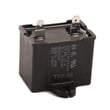
- If the compressor struggles to start or clicks, the start components can be involved (example: start device WPW10197426, refrigerator run capacitor WPW10662129).
- If ice production is the main complaint, the ice maker assembly and related parts are common wear items (example: refrigerator ice maker D7824706Q).
Why it matters
Knowing the normal 10 to 15 year lifespan helps you decide when maintenance and targeted part replacement make sense versus planning for a full replacement, especially if multiple systems (cooling, controls, and ice maker) start acting up at the same time.
For model-specific care and troubleshooting steps, follow the 59676263701 owner's manual.
Last updated: February 2026