Owner’s manual




Do LG washers have a filter that needs to be cleaned?
Yes. The LG WM2450HRA is a front-load washer and it uses a drain pump filter that should be cleaned periodically to help the washer drain properly and prevent slow draining, odors, and drain-related error conditions. The steps and safety notes are typically outlined in the WM2450HRA user manual.
What filter we mean on this model
On front-load LG washers like WM2450HRA, the user-cleanable filter is part of the drain pump system (often accessed behind a small lower front access panel).
Common signs the drain pump filter needs cleaning:
- Water drains slowly or not completely
- The washer stops mid-cycle during drain
- You hear the drain pump running longer than normal
- Musty odor after loads
- Small items (coins, hairpins) go missing from pockets
How to clean the drain pump filter (safe, typical process)
We recommend following the exact steps in the WM2450HRA user manual, but the usual process is:
- Unplug the washer (or switch off power at the breaker)
- Place a shallow pan and towels under the lower front access area
- Drain residual water slowly (if your model uses a small drain hose)
- Unscrew the filter cap, remove debris, and rinse the filter
- Reinstall the filter cap firmly (hand-tight), then run a quick rinse and drain
If the drain hose or plug is damaged while doing this, the compatible replacement is the washer drain pump filter drain hose plug 5006EN3015A.
Cleaning frequency (what we recommend)
How often you should clean depends on usage, but these intervals work well for most homes:
| Usage pattern | Filter cleaning interval |
|---|---|
| Normal loads, emptied pockets | Every 2 to 3 months |
| Pet hair, heavy lint items | Monthly |
| After a “won’t drain” event | Clean immediately |
Why it matters
A clogged drain pump filter makes the drain pump work harder, increases drain time, and can lead to leaks at the filter cap if debris prevents a good seal. Keeping it clean is one of the simplest ways to protect the drain system and improve wash results.
Related help if you see an unbalanced spin issue: LG front load washer ue error code.
Last updated: January 2026
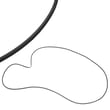
How much does it cost to replace a rubber seal on an LG washing machine?
For LG model WM2450HRA, the rubber door seal (door boot) part typically costs about $50 to $150, and total replacement cost is usually $200 to $500 when you include professional labor. For model-specific disassembly and access steps, use the WM2450HRA washer manual.
What “rubber seal” usually means on this model
Most customers mean the door boot on a front-load washer: the large rubber gasket between the front panel and the tub opening. On WM2450HRA, a compatible option in our parts list is LG washer door boot 4986ER0004H.
Common reasons it needs replacement:
- Visible tears, pinholes, or a warped lip
- Persistent leaks at the door during fill or tumble
- Heavy mold or odor that returns quickly after cleaning
- Items getting caught between the drum and boot
Cost breakdown (parts vs. labor)
Typical ranges for a front-load LG washer like WM2450HRA:
| Cost item | Typical range | Notes |
|---|---|---|
| Door boot (rubber seal) part | $50 to $150 | Price varies by exact part and supplier |
| Spring clamp(s) / small hardware | $10 to $40 | Sometimes reusable, sometimes not |
| Professional labor | $150 to $350 | Depends on local rates and access |
| Typical total (installed) | $200 to $500 | Most common real-world range |
Why the price varies
A door boot replacement can be straightforward or time-consuming depending on what has to come apart.
Factors that change the total:
- Whether the washer needs partial front-panel removal
- Condition of clamps and whether they must be replaced
- If the leak is actually from a hose, pump, or tub gasket instead
- Local service rates and minimum trip charges
Why it matters
A leaking door boot can cause water damage, corrosion, and repeated mold growth. Replacing the seal promptly often prevents bigger repairs and keeps the washer door area sanitary.
Last updated: January 2026
Is it worth repairing an LG washer?
Yes, repairing an LG washer is usually worth it when the fix is limited to a common service part and the tub and drive system are in good shape. For LG model WM2450HRA, we use the WM2450HRA manual to confirm basic operation and safe access steps before deciding whether a repair makes sense.
Quick way to decide (repair vs replace)
Repair is typically the better choice when most of these are true:
- The washer completes cycles but has one clear symptom (won’t drain, won’t fill, won’t lock, leaks).
- The problem points to a single replaceable component (pump, valve, door lock, hose).
- The cabinet and tub are not rusted, cracked, or heavily leaking.
- The washer isn’t excessively loud in spin (a common sign of bearing or tub wear).
- You can do the repair safely (power off, water off, proper tools).
Common WM2450HRA repairs that are often “worth it”
These are typical front-load washer fixes that can restore normal operation without replacing the whole machine:
- Draining problems: check the drain path and consider the drain pump motor (4681EA2001T) - washer part by LG electronics 4681EA2001T.
- Slow fill or no fill: inspect inlet screens and consider the LG washer single-solenoid water inlet valve 5220FR2006H.
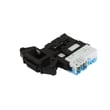
- Door won’t lock or won’t start: inspect the latch area and consider the washer door lock switch EBF49827801.
- Leaks at the front opening: inspect the door boot and clamps.
When replacement is usually the smarter move
Some failures tend to be labor-heavy or indicate major wear:
- Loud roaring or grinding in spin (often tub bearing or basket-related)
- Repeated leaks from the tub area after multiple seal or hose fixes
- Multiple unrelated failures at the same time (for example, draining plus filling plus control issues)
Cost and effort comparison
| Scenario | Typical direction | Why |
|---|---|---|
| Single symptom, single part | Repair | Lower cost, faster turnaround |
| Leak from a hose/valve/pump | Repair | Common wear items, straightforward access |
| Bearing or tub-related noise | Replace or pro repair | High labor, major disassembly |
Why it matters
A targeted repair can extend the useful life of your WM2450HRA and avoid the cost and hassle of replacing a washer. The key is confirming the failure is isolated to a serviceable part, not a major tub or drive-system issue.
Last updated: January 2026
What is the capacity of the LG wm2450hra?
The LG WM2450HRA washer has a 3.7 cu. ft. capacity. That size is considered large for a front-load washing machine and is designed to handle bigger loads while still using high-efficiency wash action (see the WM2450HRA owner’s manual for cycle and loading guidance).
What “3.7 cu. ft.” means for everyday loads
Capacity is the volume of the wash basket, not a weight limit. For the WM2450HRA, 3.7 cu. ft. typically supports:
- Full family loads (mixed cottons) without packing the drum tight
- Bulkier items (like a comforter) when loaded loosely
- Better tumbling action when you leave space at the top of the drum
Loading tips that help you get the best results
To get the most out of the WM2450HRA’s capacity and protect the door boot and suspension, we recommend:
- Load items loosely; do not compress laundry to “make it fit”
- Keep the top of the load around the upper drum holes (not stuffed to the door glass)
- Mix large and small items to balance the spin
- Use HE detergent and measure carefully to reduce oversudsing
- Run periodic maintenance cleaning to prevent odor and residue
Quick reference: capacity and what to watch
| Item type | Usually OK in 3.7 cu. ft. | Best practice |
|---|---|---|
| Everyday mixed load | Yes | Leave room for tumbling |
| Bulky bedding | Often | One bulky item at a time |
| Small heavy items (towels/jeans) | Yes | Balance the load for spin |
Why it matters
Using the correct capacity expectations helps the WM2450HRA clean better, spin out more water, and reduce vibration. Overloading is a common cause of poor cleaning, long cycle times, and out-of-balance spinning.
Last updated: January 2026
What is the lifespan of an LG washing machine?
An LG washing machine typically lasts about 10 years with normal household use and basic maintenance. For your LG WM2450HRA, the exact lifespan depends most on load size, detergent use, installation (leveling), and how well the washer is kept clean; see the care guidance in the WM2450HRA user manual.
Typical lifespan and what it assumes
A 10-year lifespan generally assumes:
- Average use (several loads per week, not constant daily heavy loads)
- Proper leveling and stable flooring to reduce vibration
- Correct detergent type and amount (especially for HE washers)
- Routine cleaning to prevent odor, residue, and drain restrictions
What shortens washer life fastest
These are the most common “life reducers” we see across LG washers:
- Chronic overloading (stresses bearings, suspension, and motor components)
- Too much detergent or non-HE detergent (causes buildup and poor rinsing)
- Ignoring slow-drain symptoms (can overwork the pump)
- Repeated unbalanced spins and excessive vibration
- Letting moisture sit in the door boot area (mildew and odor issues)
Maintenance that helps you reach (or beat) 10 years
Use these habits to protect key systems like the drain pump, inlet valve, and door seal:
- Run a monthly cleaning routine; follow the steps in the WM2450HRA user manual
- Leave the door slightly open between loads so the tub and boot can dry
- Clean the drain pump filter periodically; a clogged filter can lead to no-drain problems
- Check inlet screens if fill is slow; sediment can restrict water flow
- Keep the washer level; re-level if it starts walking or banging
Quick “wear item” expectations
| Component area | What you may notice first | Typical fix type |
|---|---|---|
| Drain system | Slow drain, standing water, pump noise | Clean filter or replace pump-related part |
| Fill system | Long fill times, fill errors | Clean screens or replace inlet valve |
| Door/lock | Door won’t lock/unlock, cycle won’t start | Inspect latch/lock components |
Why it matters
Knowing the typical lifespan helps you decide whether to invest in maintenance and targeted repairs (like a drain or fill issue) versus planning for replacement. Many “washer is dying” symptoms are actually fixable wear items.
Last updated: January 2026
What is the most common problem with the LG washing machine?
For the LG WM2450HRA washing machine, the most common service issue we see is a drain and spin problem: the washer won’t drain fully, won’t spin, or stops with water left in the tub. A clogged drain pump filter is a top cause, followed by a restricted drain hose or a failing drain pump.
Quick checks we recommend first
- Unplug the washer for safety.
- Check the drain pump filter area for coins, lint, socks, or debris (follow the steps in the WM2450HRA user manual).
- Confirm the standpipe or sink drain is not backing up.
- Make sure the drain hose is not kinked, crushed, or pushed too far down the standpipe.
- Run a Drain/Spin cycle after clearing the restriction.
Parts that commonly relate to “won’t drain / won’t spin”
If cleaning the filter and correcting the drain setup doesn’t fix it, these model-compatible parts are often involved:
- Washer drain pump filter 383EER2001A (clogs can block draining)
- Washer drain hose 5215ER2002G (kinks or internal restrictions can slow draining)
- Drain pump motor (4681EA2001T) - washer part by LG electronics (pump motor can fail or get noisy)
How symptoms point to the likely cause
| What you notice | Most likely issue | What to do next |
|---|---|---|
| Water drains very slowly | Filter or hose restriction | Clean filter, inspect hose routing |
| Hums but won’t drain | Pump jam or failing pump | Check for debris, then test/replace pump |
| Won’t spin and door stays locked | Drain problem preventing high-speed spin | Resolve draining first |
| Intermittent drain/spin | Partial clog or weak pump | Recheck filter, consider pump motor |
Why it matters
A drain restriction can prevent the WM2450HRA from reaching high-speed spin, leaving clothes soaking wet and putting extra strain on the drain pump system. Clearing the filter early can prevent repeat clogs and reduce the chance of a pump failure.
Last updated: January 2026