Owner’s manual
 Error Codes



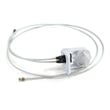
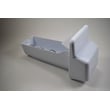

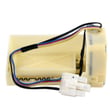
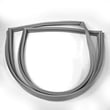
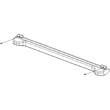
How to remove bottom grille on GE refrigerator?
On the GE GFSS6KKYESS bottom-mount refrigerator, the bottom grille (base grille) typically comes off by releasing its retaining clips or removing any mounting screws, then pulling the grille straight out from the front. For model-specific handling and safety notes, follow the steps in the owner's manual.
Before you start
- Unplug the refrigerator or switch off power at the breaker if you will be working near wiring.
- Protect the floor; pulling the refrigerator sideways can damage flooring.
- If you need to move the unit, raise the front leveling legs first.
- Keep the water supply line and power cord from getting pinched when repositioning.
How we remove the bottom grille (base grille)
- Look along the top edge and corners of the grille for screws.
- If screws are present, remove them with a Phillips screwdriver.
- Grip the grille at both ends and pull straight outward to release the clips.
- If it feels stuck, pull evenly from both sides; do not twist hard (twisting can crack the grille or break tabs).
Reinstalling the grille
- Line up the grille tabs with the slots.
- Push straight in until it snaps into place.
- Reinstall any screws you removed.
What to check while the grille is off (why it matters)
The base grille area is where dust buildup and airflow issues often start. A blocked intake can reduce cooling performance and make the refrigerator run longer.
- Vacuum dust from the front intake area.
- Confirm the grille is not warped and that all tabs are intact.
- Make sure the grille sits flush after reinstalling so airflow is not restricted.
Quick troubleshooting table
| What you see | Most likely cause | What we do next |
|---|---|---|
| Grille will not budge | Hidden screws or tight clips | Check for screws first, then pull straight out evenly |
| Grille pops out on one side | Broken tab or misalignment | Re-seat tabs; replace grille if tabs are damaged |
| Cooling seems worse after reinstall | Grille not fully seated | Push until fully snapped in and flush |
Parts and help for this model
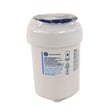
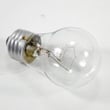
If you discover a damaged grille, loose hardware, or you need other replacement parts for GFSS6KKYESS (like a light bulb or water filter), order from the parts list for this model or search by model number on Sears PartsDirect.
Last updated: February 2026
What is the advantage of a bottom mount fridge?
A bottom-mount refrigerator like the GE GFSS6KKYESS keeps the fresh-food section at eye level, so you reach everyday items with less bending. The freezer sits below, which can make daily meal prep and grocery unloading more comfortable and efficient.
Key advantages you will notice day to day
- Fresh food is easier to see and grab: shelves and bins are higher, so you spend less time searching.
- Less bending for common tasks: you access the refrigerator compartment more often than the freezer.
- Better organization for produce and leftovers: eye-level storage helps reduce forgotten items.
- Freezer capacity is still strong: the lower drawer typically holds bulky frozen foods well.
- Good fit for families: frequent fridge access means less strain over time.
Bottom-mount vs top-freezer: quick comparison
| Feature | Bottom-mount (like GFSS6KKYESS) | Top-freezer |
|---|---|---|
| Most-used items | At eye level | Lower shelves require more bending |
| Freezer access | Lower drawer | Upper door |
| Best for | Heavy fresh-food use | Heavy freezer use |
Why it matters
Most households open the refrigerator compartment far more than the freezer. Putting fresh food up top reduces bending and makes it easier to keep temperatures stable by minimizing long door-open times.
Tips to get the most from a bottom-mount layout
- Keep everyday drinks and snacks on the middle shelves.
- Store raw meats on a lower refrigerator shelf to help prevent drips.
- Avoid blocking air vents with tightly packed items.
- Confirm recommended clearances and leveling steps in the GFSS6KKYESS owner's manual.
- If you are shopping for replacement bins, slides, or filters for this model, start with the parts list for GFSS6KKYESS, or search by model on Sears PartsDirect.
Last updated: February 2026
What is the life expectancy of a bottom freezer refrigerator?
A bottom-freezer (bottom-mount) refrigerator like the GE GFSS6KKYESS typically lasts 15 to 20 years. Real-world lifespan depends most on compressor run time, door-seal condition, condenser cleanliness, and how quickly small issues (like warm temps or leaks) get corrected.
Typical lifespan and what affects it
Most bottom-freezer refrigerators land in the 15 to 20 year range because they have more features and airflow components than basic top-freezer models.
Common factors that shorten or extend life:
- Dirty condenser coil causing longer run times and higher heat load
- Worn door gasket letting warm, humid air in (more frost, more compressor cycling)
- Ice maker and water system issues (valves, filters, dispenser door) creating leaks or low ice output
- Temperature control problems from sensors or dampers
- Frequent door openings and overpacking that blocks vents
Quick “is it worth repairing?” guide
Use this simple rule of thumb for the GE GFSS6KKYESS: if cooling is still strong and the cabinet is in good shape, replacing common wear parts is usually worthwhile.
| Refrigerator age | What we typically recommend | Why |
|---|---|---|
| 0-5 years | Repair | High remaining service life |
| 6-12 years | Repair common parts | Best cost-to-life balance |
| 13-20 years | Repair selectively | Focus on targeted fixes, avoid repeated major repairs |
Parts that commonly impact performance over time
If you are trying to extend lifespan, these are frequent “maintenance or repair” items for this model:
- Replace the water filter on schedule (see refrigerator water filter MWFP)
- Fix water supply issues that can stress the ice maker (see refrigerator water inlet valve WR57X10091)
- Address temperature swings tied to sensing (see refrigerator temperature sensor WR23X10582)
- Stop air leaks that increase run time (see refrigerator door gasket WR24X10201)
You can order these replacement parts from the parts list for your model, or search by model number on Sears PartsDirect.
Why it matters
A refrigerator that runs longer and hotter to maintain temperature wears out the sealed system faster. Keeping airflow clean, doors sealing tightly, and water and ice components working correctly reduces compressor workload and helps you reach the full 15 to 20 year lifespan.
For model-specific use and care steps (cleaning, controls, and troubleshooting), use the GFSS6KKYESS owner’s manual.
Last updated: February 2026
What is the most common problem with GE refrigerators?
Cooling problems are the most common issue we see on GE refrigerators like model GFSS6KKYESS; they usually show up as warm fresh-food temps, soft ice, or slow ice production. The most frequent causes are restricted airflow, dirty condenser coils, door seal leaks, or a problem in the ice and water system.
What “most common” looks like in real symptoms
- Fresh food section not cold enough but freezer seems OK
- Freezer not cold enough and ice cubes are slow to freeze
- Ice maker stops making ice or makes hollow/small cubes
- Moisture or frost from doors not sealing tightly
- Odors or taste transferring to ice (often tied to cleaning and food storage)
Quick checks we recommend first (no parts needed)
- Confirm doors close fully: make sure no package is holding a door open (this is a common cause of warm temps and slow ice). See the owner's manual.
- Check airflow: do not block vents with food containers; keep space around items.
- Clean condenser coils: dusty coils reduce cooling efficiency and can mimic bigger failures.
- Verify temperature settings: after changes, allow about 24 hours for temps to stabilize.
- Reset habits that cause swings: frequent or long door openings can cause moisture and temperature issues.
Parts that commonly solve the underlying cause
If the quick checks do not fix it, these parts are frequent “next steps” for cooling and ice maker complaints on this model:
| Problem area | Common culprit | Example part for GFSS6KKYESS |
|---|---|---|
| Ice maker not filling or slow fill | Water supply/valve issue | Refrigerator water inlet valve WR57X10091 |
| Poor temperature control | Sensor reading wrong | Refrigerator temperature sensor WR23X10582 |
| Ice tastes bad or flow is weak | Clogged filter | Refrigerator water filter MWFP |
Why it matters
Cooling and ice maker issues are often connected; weak cooling or restricted airflow slows ice freezing, and water supply problems can stop ice production entirely. Fixing the root cause protects food safety, reduces frost and moisture, and helps the compressor run less.
Ordering the right part
We list model-matched replacement parts for GE GFSS6KKYESS on this page; for broader part searches by model number, use Sears PartsDirect.
Last updated: February 2026