Error Codes




How do I reset the error code on my Whirlpool oven?
On your Whirlpool electric range model WEE745H0FH1, we reset most error codes by power-cycling the range at the breaker for 1 minute, then restoring power. If the code returns right away, the control is detecting an active problem that needs troubleshooting, not just a reset.
- Press Cancel/Off once to stop the current cycle.
- Turn OFF the range circuit breaker for 60 seconds.
- Turn the breaker ON and wait 30 to 60 seconds for the control to reboot.
- If the code reappears, write it down exactly (letters and numbers).
- If the oven will not respond, avoid repeated resets; focus on the likely failed circuit or component.
Most recurring codes point to a specific system such as oven temperature sensing, keypad input, or the electronic control.
| What you see | What it usually means | What we recommend next |
|---|---|---|
| Code clears and stays gone | Temporary control glitch or power interruption | Monitor; no parts needed |
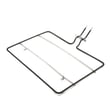
| Code returns during preheat/bake | Heating or temperature feedback issue | Check wiring connections; inspect the bake circuit; consider bake element W10779716 |
| Code returns when pressing keys | Keypad or user interface input problem | Inspect for stuck keys; consider keypad W11025616 |
| Display acts erratic or multiple codes | Control or harness connection issue | Check harness plugs; consider control W10884488 |
Resetting clears the display, but it does not fix the underlying cause. If the code returns, the range is protecting cooking performance and safety by flagging a problem in the heating system, sensor feedback, or electronic control.
- Use the code list to match the exact fault and next checks: Whirlpool error codes
- If your oven will not heat or heats poorly, follow a proven diagnostic path: oven wont heat troubleshooting electric range problems video
Last updated: February 2026
How to fix oven temperature sensor Whirlpool?
On your Whirlpool electric range model WEE745H0FH1, fixing an oven temperature sensor issue usually means testing the sensor circuit and replacing the sensor if its resistance is out of range or the wiring is damaged; a bad sensor commonly causes wrong temperatures, long preheat, or error codes.
- Cut power at the breaker (240V range circuits can seriously injure you).
- If the oven is overheating or underheating, run a simple bake test with an oven thermometer to confirm the symptom.
- If the control is showing an error code, use our Whirlpool freestanding range error codes guide to identify whether the fault points to the sensor circuit, wiring, or control.
- Make sure the oven is not in Sabbath or a special mode that changes behavior.
- Inspect the sensor harness connection for loose plugs, corrosion, or heat damage.
- Look for pinched or burned wires near the rear panel and where the harness routes along metal edges.
- If the oven will not heat at all, also check the bake element W10779716 because a failed element can mimic “sensor” symptoms.
Most Whirlpool-style oven sensors are RTD sensors that measure about 1,080 ohms at 70°F (room temperature). With power off:
- Disconnect the sensor connector.
- Measure resistance across the sensor leads with a multimeter.
- Compare your reading to the typical RTD range.
| Sensor reading (room temp) | What it usually means | What to do next |
|---|---|---|
| ~1,000 to 1,150 ohms | Sensor is likely OK | Check wiring and control inputs |
| Very high or OL | Open sensor or broken wire | Replace sensor or repair harness |
| Very low (near 0) | Shorted sensor or shorted wiring | Inspect harness; replace sensor if wiring is good |
The oven control relies on the sensor signal to regulate bake and broil. When the sensor circuit is open, shorted, or drifting, the control can misread temperature and cause uneven baking, long preheat, or shutdowns.
- Inspect the main harness connections at the control area.
- If error codes persist and wiring checks good, the issue can be in the electronic control (intermittent sensor input processing).
Last updated: February 2026
What does F9 mean on an electric stove?
On a Whirlpool electric range like model WEE745H0FH1, an F9 error typically points to a door lock or latch system problem (often during or after self-clean) or a related control/communication issue that prevents the lock from operating correctly. We focus on safely resetting power, checking the lock operation, and then testing the likely components.
- Cancel the cycle and let the oven cool completely if the error appeared during self-clean.
- Power reset: turn the range off at the breaker for 1 minute, then restore power.
- If the door is locked, do not force it; wait for cooling, then retry Cancel/Off.
- If the code returns, note when it happens (start of bake, start of self-clean, after preheat).
- If the display is unresponsive or keys do not register, the issue can be in the user interface.
Most F9 situations come down to one of these:
- Door lock motor or latch mechanism binding
- Wiring connection issue in the lock circuit
- Oven control not sensing the lock switches correctly
- User interface input problem (less common, but possible)
If troubleshooting points to a control or keypad problem on WEE745H0FH1, these page-listed parts are common suspects:
- Control W10884488 (oven control board that interprets lock feedback and runs self-clean)
- Keypad W11025616 (if buttons do not respond or commands misfire)
| What you notice | Most likely direction | What we check next |
|---|---|---|
| F9 appears during self-clean and door stays locked | Door lock system | Latch movement, lock switch feedback |
| F9 appears immediately when starting self-clean | Lock not engaging | Lock motor circuit, control output |
| Random F9 plus odd display behavior | Control/UI issue | Keypad response, control board |
| F9 after moving the range | Connection issue | Harness plugs, pinched wires |
The self-clean door lock is a safety system. When the control cannot confirm the lock position, it stops the cycle and posts an F9-type fault to prevent unsafe operation.
For code lookups and related steps, use our Whirlpool freestanding range error codes.
Last updated: February 2026
What is the life expectancy of a Whirlpool oven?
A Whirlpool oven typically lasts 13 to 16 years with normal household use. For your Whirlpool WEE745H0FH1 electric range, regular cleaning, avoiding overheating events, and fixing heating or control issues early are the biggest factors in reaching (or beating) that lifespan.
- Heat stress and spills: Boilovers and heavy soil can damage surface elements, switches, and wiring.
- Power quality: Loose connections or voltage issues can shorten the life of controls and terminal connections.
- Door use and slamming: Repeated impact can wear hinges, door parts, and the door liner.
- Self-clean frequency: High-heat cycles add stress to electronics and wiring.
- Repair timing: Replacing a failing part early often prevents secondary damage.
If performance drops, these are some of the most common repair paths for WEE745H0FH1:
| Symptom | Most likely area | Example part on this model |
|---|---|---|
| Oven will not bake or bakes unevenly | Bake heating circuit | Bake element W10779716 |
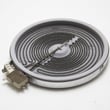
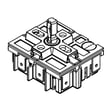
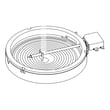
| Cooktop element not heating correctly | Surface element or switch | Range dual radiant surface element W11517959 or range infinite switch W10917724 |
| Range seems dead or power cuts in and out | Power connection point | Range terminal block WPW10245259 |
| Display issues or erratic operation | Electronic control | Control W10884488 |
- Keep the oven cavity and cooktop clean and dry; wipe up spills after the surface cools.
- Use cookware that matches the element size to reduce cycling and overheating.
- Avoid using aluminum foil on the oven bottom unless your instructions specifically allow it.
- If you smell burning insulation, see arcing, or lose power intermittently, stop using the range and inspect the power connection area.
A range that is maintained and repaired promptly usually reaches the full expected lifespan; ignoring early symptoms (slow preheat, weak bake, intermittent power) often turns a simple part replacement into a larger electrical or control repair.
Last updated: February 2026