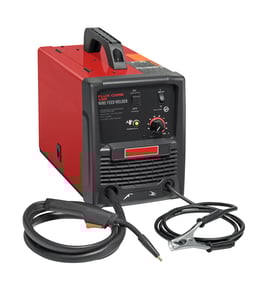

What kind of oil does a Lincoln Welder take?
For the Lincoln WPG8000 weld-on power unit, we use a high-quality 4-stroke engine oil that matches the engine’s operating temperature range; most units of this type run best on SAE 10W-30 for general use. Check the dipstick level with the engine off and add oil only up to the full mark.
Recommended oil type (what to use)
Use these as the practical starting point for most Lincoln engine-driven welders:
- SAE 10W-30: best all-around choice for typical temperatures
- SAE 5W-30: better for cold-weather starting
- SAE 10W-40: common option for consistently hot conditions
- Choose an oil labeled for 4-cycle/4-stroke engines
- Use a reputable oil that meets common gasoline-engine service ratings (for example, modern API service categories)
How to check and add oil correctly
We recommend this quick routine before welding sessions:
- Shut the unit down and let the engine sit a few minutes
- Keep the welder on level ground
- Pull the dipstick, wipe it, reinsert, then recheck
- Add small amounts of oil and recheck the level
- Stop at the upper/full mark; do not overfill
- Tighten the fill cap or dipstick securely
| What you see on the dipstick | What we do | Why it matters |
|---|---|---|
| Below add/low mark | Add oil in small amounts | Prevents low-oil shutdown and engine wear |
| Between marks | Leave it alone | Correct level for safe operation |
| Above full mark | Drain to the full mark | Overfill can cause smoking and leaks |
Why it matters
Correct oil viscosity and level protect the engine that powers welding output. Low oil can trigger shutdowns or damage; overfilling can cause foaming, smoking, and seal leaks.
Helpful DIY reference
If you are troubleshooting oil-related electrical symptoms (shutdowns, no output after a stall), we use basic electrical checks alongside engine maintenance; see how to tell if a fuse is blown.
Last updated: February 2026
What are the specs of the Lincoln WPG8000 welder generator?
The Lincoln WPG8000 weld-on power unit is a welder-generator designed to provide welding output plus onboard generator power for tools and jobsite loads. For exact output ranges and receptacle ratings, match the specs to the data plate on your specific WPG8000 and use basic electrical tests to confirm performance.
Key specs to confirm on your WPG8000
Because welder-generators are often configured by code number/variant, we recommend verifying these items directly on the machine:
- Generator output: continuous watts and surge (peak) watts
- Generator voltage and phase: typically single-phase 120/240V on many jobsite units
- Welding output type: AC, DC, or AC/DC (depends on configuration)
- Welding amperage range: minimum to maximum output amps
- Duty cycle: percent duty cycle at a stated amperage
- Receptacles/breakers: outlet types and breaker sizes
Quick “what to look for” table
Use this as a checklist while reading the nameplate and front panel labels.
| Spec area | Where to find it | What you’re confirming |
|---|---|---|
| Generator watts | Data plate, panel label | Continuous vs peak rating |
| Voltage | Receptacle labels | 120V, 240V, or both |
| Welding amps | Data plate, control panel | Output range and max amps |
| Duty cycle | Data plate | How long you can weld at a given output |
How we recommend verifying generator performance
If the generator power seems weak or unstable, confirm the basics before assuming a major failure:
- Check engine speed under load (low RPM reduces voltage and frequency)
- Inspect receptacles for heat damage or loose terminals
- Reset and test breakers/GFCI (if equipped)
- Test output voltage with a meter at idle and at weld RPM
- Load-test with a known resistive load (work light, heater) to see if voltage sags
For safe, step-by-step electrical testing, use our guides: how to use a multimeter to test electrical parts video and how to tell if a fuse is blown.
Why it matters
Welder-generator “specs” are not just marketing numbers; they determine whether you can run sensitive tools, start motors, and weld without nuisance breaker trips or poor arc performance. Confirming the exact WPG8000 ratings helps you size extension cords, loads, and welding settings correctly.
Last updated: February 2026
Can Lincoln welders be repaired?
Yes. Lincoln welders, including the Lincoln WPG8000 weld on power unit, are repairable in most cases. Common repairs involve power input issues, blown fuses, damaged wiring, worn connections, or failed switches; the right fix depends on what the welder is doing (no power, weak arc, or intermittent output).
What we check first (fast triage)
- Verify the correct input power source and outlet/breaker condition
- Inspect the power cord, plug, and strain relief for cuts, heat damage, or looseness
- Check for a blown fuse (if your unit uses one) and look for signs of overheating
- Inspect internal wiring for rubbed-through insulation, loose terminals, or corrosion
- Confirm all external leads and clamps are tight and clean (poor connections mimic “bad welder” symptoms)
Safe, practical troubleshooting steps
- Disconnect power and let the unit cool before opening any covers.
- Do a visual inspection first; most failures show up as heat discoloration, melted insulation, or loose spade terminals.
- Use a multimeter to confirm continuity through the cord and switches, and to identify an open fuse.
Helpful DIY references
- How to tell if a fuse is blown
- How to use a multimeter to test electrical parts video
- How to repair broken or damaged wires video
Common symptoms and likely repair areas
| Symptom | Most common causes | Typical fix |
|---|---|---|
| Won’t power on | No input power, blown fuse, bad cord/switch | Restore power, replace fuse, repair wiring/switch |
| Cuts out while welding | Loose connection, overheated component, failing switch | Tighten/clean connections, correct airflow, replace failed part |
| Weak or unstable arc | Poor ground, worn leads, internal connection issue | Clean/tighten clamps, inspect leads, repair internal terminals |
Why it matters
A welder that “sort of works” often has a high-resistance connection (loose lug, corroded terminal, damaged wire). Fixing that early prevents overheating and repeat failures, and it restores stable output for MIG/TIG or stick welding.
Last updated: February 2026
What are the parts of a MIG welder?
A MIG welder is a wire-feed welding system made up of a power source, wire feeder, MIG gun, work clamp, and (for solid wire) shielding gas equipment. Your Lincoln model WPG8000 is a welder/generator power source, not a dedicated MIG wire-feed machine; MIG setups add a wire feeder and MIG gun to create the full system.
Core parts of a MIG welder system
- Power source: provides welding output and arc control (often constant-voltage for MIG).
- Wire feeder: drives electrode wire at a set speed.
- MIG gun (torch): delivers wire, current, and shielding gas to the weld.
- Work clamp (ground clamp): completes the electrical circuit through the workpiece.
- Electrode wire: solid wire (uses gas) or flux-cored wire (often self-shielded).
- Shielding gas system (solid wire MIG): cylinder, regulator/flowmeter, and gas hose.
MIG gun consumables (common wear items)
These are the parts most often replaced because they affect arc stability and gas coverage:
- Contact tip: transfers current to the wire; must match wire diameter.
- Nozzle: directs shielding gas and helps shield the tip from spatter.
- Gas diffuser: spreads gas evenly through the nozzle.
- Liner: guides wire through the gun cable; dirt or kinks cause feeding problems.
Wire-feed drive components and what they affect
| Component | What it does | Typical symptom when off or worn |
|---|---|---|
| Drive rolls | Grip and push wire | Slipping, birdnesting, uneven feed |
| Spool hub/brake | Prevents spool overrun | Tangles from coasting, or wire drag |
| Inlet/outlet guides | Align wire into rolls/liner | Wire shaving, erratic feeding |
Why it matters
MIG welding quality depends on steady wire feed and consistent shielding. When either one is unstable, you see spatter, porosity, and an inconsistent bead.
Quick checks we use for common MIG issues
- Match contact tip size to the wire diameter.
- Set drive-roll tension just high enough to feed without slipping.
- Keep the liner clean; replace it if kinked.
- Confirm the work clamp bites clean, bare metal.
- Verify gas flow and check hoses/fittings for leaks (solid wire MIG).
For safe electrical troubleshooting steps, use how to use a multimeter to test electrical parts video.
Last updated: February 2026