Owner’s manual
 Error Codes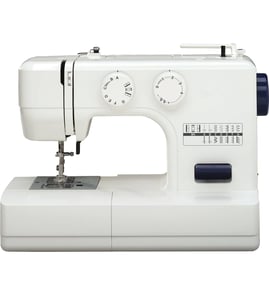

How do I know what model my Kenmore sewing machine is?
Your Kenmore sewing machine’s model number is printed on the machine’s identification plate (often called the nameplate). For this model series, the format looks like 385.16520000; once you find that number, use it to match the correct parts list and instructions in the owner's manual.
Check these common spots on Kenmore sewing machines:
- The underside (bottom) of the machine base
- The back of the machine near the power cord connection
- The right side near the handwheel area
- Inside or near the free arm area (if your machine has one)
- Near the power switch or machine power inlet
Kenmore model numbers typically start with 385 and include a longer set of digits.
| What you see | What it means | What to do with it |
|---|---|---|
| 385.16520000 | Full model number | Use it to confirm the exact manual and parts diagrams |
| 385.16520XXX | Model family range (XXX varies) | Use the full number on your machine for the best match |
| Serial number only | Production identifier | Keep it for records, but use the model number to find parts |
The model number controls which parts and settings apply to your machine, including items like the foot controller compatibility, needle system, bobbin style, and accessory fit. Using the exact model number helps prevent ordering the wrong part and speeds up troubleshooting.
- Wipe the plate gently with a dry cloth
- Use a flashlight at an angle to make stamped numbers stand out
- Take a close-up photo and zoom in to read the digits
Last updated: February 2026
How old is the Kenmore sewing machine model 38516520000?
Kenmore sewing machine model 38516520000 is part of the Kenmore 385 model family, which was produced over multiple years; most 385-prefix machines were made between 1965 and 1987, so this model is typically from that era. For the most accurate dating clues, use the identification details and documentation in the owner's manual.
We date Kenmore 385 machines by narrowing down the production window using the model family plus any identifying markings on the machine.
- Confirm the full model number is 385.16520000 (often shown with a dot on the label)
- Check the machine’s ID plate for any additional codes or revision markings
- Compare included accessories and features (presser feet, needle set, bobbins) to what’s listed in the manual
- If you still have purchase paperwork, the purchase date is the most reliable “age” reference
The documentation for this exact model confirms the model designation and that it is a household-use mechanical sewing machine.
| Item | What to look for | Why it helps |
|---|---|---|
| Model marking | 385.16520000 | Confirms you are dating the correct machine |
| Manual match | Manual cover shows the same model | Ties features and parts list to your unit |
| Electrical details | Foot controller compatibility notes | Helps confirm the correct generation/accessory set |
Knowing the approximate production era helps you choose compatible parts and accessories (needle types, bobbins, presser feet, foot controller) and sets expectations for maintenance items like cleaning, lubrication, and wiring condition.
If you are asking about age because the machine is acting up, our DIY resources can speed up diagnosis for Kenmore 385 models; see Kenmore 385 error codes.
Last updated: February 2026
How to determine the value of an old sewing machine?
The value of an older sewing machine (including Kenmore model 38516520000) depends most on condition, whether it sews correctly, and how complete it is (case, foot controller, accessories, and manual). Most common household machines sell for modest amounts, while clean, fully working, complete machines bring the best prices.
Use this quick checklist before you price it; these items are what buyers and shops look at first.
- Does it power on and run smoothly with the foot controller (speed changes as you press)?
- Stitch quality: straight stitch and zigzag form evenly without skipped stitches.
- Mechanical condition: handwheel turns freely; machine does not bind or lock up.
- Electrical condition: cord and plug are not cracked, cut, or repaired with tape.
- Completeness: foot controller, power cord, accessory tray/extension table, presser feet, bobbins, and case.
- Maintenance signs: heavy lint buildup, old oil residue, or corrosion lowers value.
For model-specific operation and safety checks (power connection, foot controller use, basic setup), follow the owner's manual.
| Factor | Usually increases value | Usually decreases value |
|---|---|---|
| Working status | Sews multiple stitches cleanly | Won’t run, runs sluggish, or locks up |
| Condition | Clean, minimal wear, no rust | Rust, cracked plastic, missing knobs |
| Completeness | Case, accessories, original paperwork | Missing foot controller or key attachments |
| Service history | Recently cleaned and adjusted | Needs timing/belt/motor work |
- Start with “as-is” vs “tested and sewing”: a verified sewing machine is worth more than an untested one.
- Compare to similar Kenmore 385 models in similar condition (working, complete, with case).
- Separate sentimental value from market value: many older machines are excellent sewists but still sell in a lower range if they are common.
Pricing based on condition and completeness helps you avoid underpricing a fully working, complete machine, and it prevents overpricing a machine that needs electrical or mechanical service (which buyers factor in immediately).
Last updated: February 2026
Is it worth repairing an old sewing machine?
Yes, repairing an older Kenmore sewing machine like model 38516520000 is usually worth it when the machine is mechanically solid and the fix is routine (cleaning, lubrication, belt, motor, switch, or adjustment). If the repair cost approaches about half the price of a comparable replacement, replacement is typically the better value.
Use this checklist before you spend money on parts or service:
- Mechanical condition: Handwheel turns smoothly; no grinding or hard lockups.
- Electrical safety: Cord, plug, and foot controller are not cracked, frayed, or overheating.
- Symptoms are common/repairable: Sluggish running, fabric not feeding, needle not moving, or intermittent power.
- Parts availability: You can still identify the part number and description you need (the manual explains what to record when ordering).
- Cost vs. value: Repair estimate is 50% to 60% or less of a comparable replacement machine.
| Situation | Usually makes sense | Why |
|---|---|---|
| Cleaning, lubrication, basic adjustment | Repair | Restores performance and prevents wear |
| Drive belt, motor, on/off switch, wiring repair | Repair if cost is reasonable | Common wear items; restores reliability |
| Repeated electrical failures or unsafe cord/plug | Replace or professional repair only | Safety risk; cost can climb |
A well-maintained mechanical sewing machine can run for decades, but safety and usability come first. The owner guidance for this model emphasizes not operating the machine with a damaged cord/plug and disconnecting power before maintenance; those points are key when deciding whether a repair is practical and safe. See the owner's manual for maintenance and safety steps.
- Unplug the machine before opening covers, cleaning lint, or lubricating.
- Start with basic maintenance: remove lint buildup around feed dogs and bobbin area.
- Match the symptom to a proven fix path using our DIY resources.
- When ordering, record model number 38516520000, plus the part number and part description.
Helpful DIY reading:
Last updated: February 2026
What is the most common problem of the sewing machine?
The most common sewing machine problem on the Kenmore 38516520000 is thread trouble, especially the needle thread breaking. In our experience, most “mystery” issues trace back to threading, tension, needle condition, lint buildup in the bobbin area, or a needle and thread mismatch (all covered in the owner's manual).
- Needle thread breaks: incorrect threading, tension too tight, bent or dull needle, needle inserted wrong, thread not under presser foot at start, pulling fabric forward at the end, thread too heavy or too fine for the needle
- Bobbin thread breaks: bobbin not threaded correctly in the holder, lint packed in the bobbin holder, damaged bobbin that does not turn smoothly
- Skipped stitches: wrong needle for fabric, needle inserted incorrectly, needle bent or dull, needle and thread not suited to the material
- Seam puckering: tension too tight, stitch length too long for the fabric, needle too heavy for the fabric
- Fabric not feeding smoothly: feed dogs lowered after drop-feed sewing, lint packed in feed dogs
- Rethread the upper thread with the presser foot up, then lower the presser foot before sewing.
- Replace the needle (bent, blunt, or wrong type causes many symptoms).
- Match needle size to thread weight and fabric type.
- Clean lint from the bobbin holder and shuttle or hook race area.
- Reduce upper thread tension if thread is snapping or seams pucker.
- Confirm the machine is plugged in and the clutch is engaged if it will not sew.
| Symptom | Most likely cause | Best first step |
|---|---|---|
| Needle thread breaks | Threading or tension | Rethread; then lower tension slightly |
| Bobbin thread breaks | Lint or bobbin issue | Clean bobbin area; try a new bobbin |
| Skipped stitches | Needle issue | Install a new needle correctly |
| Fabric not moving | Feed dogs down or clogged | Raise feed dogs; clean lint |
Thread breaks, skipped stitches, and puckering are usually setup problems, not major failures. Fixing threading, tension, needle choice, and lint buildup prevents jams in the shuttle or hook race and keeps stitch quality consistent.
For step-by-step troubleshooting by symptom, use our guides like sewing machine fabric not moving and sewing machine locks up.
Last updated: February 2026