Owner’s manual




What is the average lifespan of a Kenmore washer?
A Kenmore washer typically lasts 10 to 15 years with normal household use. For Kenmore model 79641372210, lifespan depends most on load size, leveling, water quality, and routine maintenance; following the care steps in the 79641372210 owner's manual helps you reach the higher end of that range.
Most Kenmore washers fall into these real-world averages:
| Washer type | Typical lifespan | Notes |
|---|---|---|
| Top-load washer | 12 to 15 years | Simpler mechanics often last longer |
| Front-load washer | 10 to 12 years | More sensitive to overloading and moisture issues |
We see these issues reduce lifespan more than anything else:
- Overloading (stresses bearings, suspension, and motor)
- Poor leveling (causes vibration and early wear)
- Too much detergent (leads to residue, odors, and drain problems)
- Ignoring slow drains (can overwork the drain system)
- Hard water buildup (affects valves and internal flow paths)
These habits make the biggest difference for long-term reliability:
- Keep the washer level and re-check after moving it
- Use HE detergent and measure carefully
- Leave the door/lid open between loads to reduce moisture and odors
- Run a monthly cleaning cycle (or hot cycle) to reduce residue
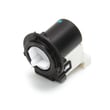
- Address draining issues early; a worn pump such as the drain pump motor 4681EA2001T can cause slow or no-drain symptoms
Washer failures often start as small symptoms (extra vibration, longer drain times, or inconsistent filling). Catching those early helps prevent bigger repairs like tub bearing wear, motor strain, or water valve problems.
Last updated: January 2026
How to hard reset kenmore washer?
For Kenmore washer model 79641372210, a hard reset is done by removing power long enough for the control to fully discharge, then restarting the washer. This clears many temporary control glitches and can restore normal operation after a power surge or a stalled cycle.
- Press Power to turn the washer off.
- Unplug the washer (or switch the breaker off).
- Wait 2 minutes.
- Plug it back in (or turn the breaker on).
- Press Power, then run a quick Rinse/Spin or Drain/Spin to confirm the controls respond.
For model-specific button sequences and any diagnostic or calibration steps, follow the 79641372210 owner's manual.
These checks solve the most common “looks dead” or “won’t run” complaints after restoring power:
- Confirm the outlet has power (test with a lamp) and the breaker is fully reset.
- Make sure the door is fully closed and latched; a door not locking can stop the cycle.
- Try a different cycle and press Start/Pause firmly (some panels need a full press).
- If the tub is full of water, run Drain/Spin; a drain problem can prevent restarting.
- If you hear draining but water stays in the tub, inspect the drain pump area and filter.
If you suspect a drain failure, the drain pump motor 4681EA2001T is a common repair part for no-drain symptoms on this platform.
| Action | What it affects | What it will not fix |
|---|---|---|
| Power reset (unplug 2 minutes) | Clears temporary control errors, reboots control | Broken door lock, failed drain pump, wiring faults |
| Test cycle after reset | Confirms basic operation | Does not diagnose the root cause by itself |
A hard reset is the fastest safe first step because it rules out a simple control-board lockup before you spend time on deeper troubleshooting (door lock, drain system, inlet valve, or motor control issues).
Last updated: January 2026
How to force a Kenmore Elite washer to drain?
To force-drain a Kenmore washer model 79641372210, we first cut power, then manually release water through the drain pump filter area and clear any blockage in the drain path. This safely gets water out even when the cycle stops mid-wash.
- Unplug the washer (or switch off the breaker).
- Place towels and a shallow pan under the lower front access area.
- Open the lower access panel and locate the pump filter cap.
- Slowly loosen the cap to let water trickle into the pan; tighten it to empty the pan, then repeat.
- Remove the filter and clear lint, coins, and debris.
- Check the tub-to-pump hose and drain hose for kinks or clogs.
- Reinstall the filter cap snugly, restore power, then run a Drain/Spin cycle.
For model-specific panel access and the exact drain procedure, follow the 79641372210 owner's manual.
Most “won’t drain” problems come from a restriction or a failing pump.
- Clogged pump filter: debris blocks the impeller.
- Kinked or clogged drain hose: especially where it enters the standpipe.
- Standpipe or sink drain issue: household plumbing backs up.
- Weak or noisy drain pump: pump hums but does not move water.
- Door lock not engaging: some cycles will not drain/spin if the door is not locked.
| Symptom | Most likely area | Example part on this model |
|---|---|---|
| Water drains slowly | Pump filter clogged | Washer drain pump filter 383EER2001A |
| Hums but no drain | Drain pump motor failing | Drain pump motor (4681EA2001T) - washer part by lg electronics 4681EA2001T |
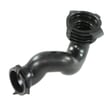
| Leaks during drain | Tub-to-pump hose loose/cracked | Washer tub-to-pump hose 4738ER1002A |
Forcing a drain the right way prevents water damage, protects the door lock and control, and helps you pinpoint whether the issue is a simple clog or a drain pump problem.
Last updated: January 2026
How to tell if a washing machine drain pump is bad?
On Kenmore washer model 79641372210, a bad drain pump usually shows up as water left in the tub, a loud humming or grinding during the drain portion of the cycle, or repeated drain errors after you have ruled out a simple clog. Confirm the correct drain and filter checks in the 79641372210 owner's manual.
- Washer won’t drain or drains very slowly
- You hear the pump hum but little or no water moves
- Grinding, rattling, or squealing noises during drain
- Water leaking near the pump area (front lower section on many front-load designs)
- Drain works sometimes, then stops (intermittent pump motor failure)
- Unplug the washer and turn off water supply.
- Check the drain hose for kinks, crushing, or a blocked standpipe.
- Clean the pump filter and look for debris (coins, lint, socks).
- Spin the pump impeller by hand (through the filter opening if accessible); it should turn with slight magnetic resistance, not free-spin loosely.
- Run a drain/spin cycle and listen: steady hum with no flow usually points to a jammed or failed pump.
| Symptom | Most likely cause | What to do next |
|---|---|---|
| Hums but won’t drain | Jammed impeller or failed pump motor | Clean filter; inspect impeller; consider replacing pump |
| Loud grinding | Debris in pump or worn impeller | Remove debris; replace pump if noise returns |
| Leaks at pump area | Cracked housing, loose clamps, torn hose | Inspect hoses and clamps; replace leaking component |
| Drains slowly | Partial clog in filter/hose or weak pump | Clear restrictions; replace pump if flow stays weak |
If cleaning the filter and hose does not restore normal draining, the pump assembly is a common repair on this model. Use the exact part match for your symptom:
- Drain pump motor (4681EA2001T) - washer part by lg electronics 4681EA2001T (motor not running, intermittent drain)
- Washer drain pump filter 383EER2001A (repeated clogs, damaged filter cap or seal)
- Washer tub-to-pump hose 4738ER1002A (blockage or leak between tub and pump)
A weak or failed drain pump can leave water in the drum, prevent high-speed spin, and cause odor or mildew from standing water. Catching it early also helps prevent leaks that can damage flooring.
Last updated: January 2026