 Installation guide
 Owner’s manual
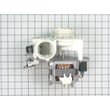


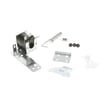

Can I replace dishwasher parts myself?
Yes. On the Hotpoint HDA3400G02WW dishwasher, we recommend DIY replacement only for parts and procedures that are specifically called out as user-serviceable; always shut off power first because turning the dishwasher off does not disconnect it from the power supply. Use the HDA3400G02WW owner’s manual to confirm what’s safe for your exact model.
What you can usually replace yourself
These are common DIY-friendly repairs when you’re comfortable with basic hand tools and careful reassembly:
- Door seal and leak checks around the tub opening
- Lower rack hardware (rollers, slides) and rack alignment
- Drain hose routing and clogs (if accessible)
- Detergent cup cover issues (binding, broken cover)
- Basic cleaning and maintenance (control panel, interior care)
Repairs that often need extra skill (or a technician)
The manual warns against repairing or replacing parts unless it’s specifically recommended; electrical and water-supply repairs raise shock and leak risk.
- Wiring, grounding, or junction box work
- Pump/motor or internal leak repairs under the tub
- Water fill problems tied to the inlet valve or supply line
- Door switch and latch circuit troubleshooting
Safety steps we follow before any repair
- Disconnect electrical power at the breaker (not just the control knob)
- Shut off the water supply valve
- Protect the floor; keep towels and a shallow pan ready
- Take photos of wire and hose routing before removal
- Restore power only after panels are reinstalled and connections are dry
Common parts customers replace on this model
| Symptom | Likely area | Example model-matched part |
|---|---|---|
| Not filling | Water supply and valve | Dishwasher water inlet valve WD15X10003 |
| Not draining | Drain path and hose | Dishwasher drain hose WD24X10014 |
| Door won’t start cycle | Door latch/switch | Interlock switch WD21X10261 |
Why it matters
Dishwashers combine water and electricity in a tight space. Following the manual’s guidance on disconnecting power and avoiding non-recommended repairs helps prevent electric shock, leaks, and repeat failures.
Last updated: February 2026
How much does it cost to run a Hotpoint dishwasher?
For a Hotpoint HDA3400G02WW dishwasher, the typical cost to run it is about $0.15 to $0.45 per cycle in combined electricity and water, depending on your utility rates, cycle selection, and options like heated dry. Most households land around $40 to $120 per year.
What changes the cost the most
- Cycle choice: Normal vs. Pots & Pans vs. Water Saver changes run time and hot water use.
- Options: Hi Temp Wash and Heated Dry increase electricity use.
- Incoming water temperature: Colder inlet water means more heating during the cycle.
- How often you run it: Daily use costs more than 3 to 4 loads per week.
- How full the racks are: Running half-loads raises cost per dish.
Quick cost estimate (use your local rates)
Use this simple method; it stays accurate even when utility prices change.
| What to estimate | Typical range for this dishwasher type | Multiply by | Example cost |
|---|---|---|---|
| Electricity per cycle | 0.8 to 1.8 kWh | your $/kWh | $0.12 to $0.32 at $0.18/kWh |
| Water per cycle | 4 to 10 gallons | your $/gal | $0.02 to $0.10 at $0.01/gal |
| Total per cycle | $0.14 to $0.42 |
How to lower operating cost on HDA3400G02WW
- Use Normal Wash for everyday loads; reserve Pots & Pans/Heavy Wash for baked-on soil.
- Turn Heated Dry off when you can; air-dry by cracking the door after the final drain.
- Skip Hi Temp Wash unless you need extra cleaning.
- Run the dishwasher only when the racks are full and loaded correctly (see the HDA3400G02WW owner's manual).
- Keep water flowing and draining properly; a restricted fill or drain can extend run time (a failing dishwasher water inlet valve WD15X10003 can cause fill issues).
Why it matters
Dishwasher operating cost is mostly driven by heating water and drying. Choosing the right cycle and limiting heat options usually saves more than changing detergent or rinse aid.
Last updated: February 2026
What are the commonly replaced parts in a dishwasher?
In a Hotpoint dishwasher like model HDA3400G02WW, the most commonly replaced parts are the water-moving parts (pump/motor, drain components), water-fill parts (inlet valve), door safety parts (latch/switch/seal), and wear items (racks and rollers). These parts fail most often from normal wear, clogs, leaks, and heat exposure.
Commonly replaced dishwasher parts (and what they do)
- Pump and motor assembly: circulates wash water through the spray system; failures show up as poor cleaning, loud grinding, or no wash action.
- Water inlet valve: controls filling; failures show up as no fill, slow fill, or overfilling.
- Door switch/interlock: confirms the door is closed so the unit can run; failures show up as “won’t start” even with power.
- Drain hose and drain components: move dirty water out; failures show up as standing water or slow draining.
- Heating system parts: help with drying and water temperature; failures show up as poor drying or cool wash performance.
- Racks and rack rollers: wear, rust, or break from heavy loads and repeated sliding.
Model HDA3400G02WW parts we see replaced often
| Symptom | Likely part category | Example part for this model |
|---|---|---|
| Not filling or fills slowly | Fill system | Dishwasher water inlet valve WD15X10003 |
| Won’t start when door is shut | Door safety | Interlock switch WD21X10261 |
| Not draining well | Drain path | Dishwasher drain hose WD24X10014 |
| Poor wash, loud motor noise | Circulation | Mechanism WD26X10013 |
| Rack won’t roll smoothly | Rack hardware | Rack roller WD12X271 |
Quick checks that prevent repeat failures
- Clean out food debris so it does not recirculate and clog the wash system.
- Load lightweight plastics so they do not drop near the heater (heat damage is common).
- If draining is weak, check and clean the sink air gap (if your plumbing has one).
- Inspect the door seal area for buildup that can cause leaks.
- Use the correct detergent amount; too much can cause residue and poor cleaning.
Why it matters
Replacing the right part the first time saves money and prevents secondary damage. For example, a restricted drain path can mimic a bad pump, and a misaligned rack can keep the door from sealing correctly.
For model-specific safety steps (like disconnecting power before service) and operating details, follow the HDA3400G02WW owner’s manual.
Last updated: February 2026
What does F03 mean on a Hotpoint dishwasher?
On a Hotpoint dishwasher, an F03 code means the dishwasher is timing out because it is not draining water fast enough (a drain failure/timeout). On model HDA3400G02WW, focus first on the drain path: filter/sump area, drain hose routing, and any air gap or disposer connection.
Quick checks that fix most F03 drain problems
- Cancel the cycle and let the unit sit 1 minute, then restart a drain portion if your control allows it
- Check the sink/disposer connection for a clog at the dishwasher drain inlet
- Inspect the drain hose for kinks, crushing, or a low spot that traps water
- If you have an air gap, remove the cap and clean out debris (food, grease)
- Verify the drain hose has a proper high loop under the counter to reduce backflow
- Remove standing water and check the sump area for broken glass, labels, or food buildup
Parts that commonly cause an F03 drain timeout
If the drain path is clear but the dishwasher still will not drain, these parts are common suspects:
| Symptom | Most likely cause | What to check next |
|---|---|---|
| Hums but little or no water leaves | Drain restriction or weak drain action | Hose, air gap, disposer inlet, sump debris |
| Drains sometimes, then stops | Intermittent drain control issue | Wiring to drain components, door switch operation |
| Water backs up into tub after draining | Backflow from sink drain | High loop, air gap, sink drain clog |
Model-matched parts we often use during drain repairs:
Why it matters
A dishwasher that cannot drain will leave dirty water in the tub, reduce cleaning performance, and can trigger repeated cycle interruptions. Clearing the drain path early prevents strain on the pump and helps the cycle finish normally.
Where to confirm control behavior for HDA3400G02WW
For cycle and control-panel details (including how to cancel or advance a cycle on your specific dial), use the HDA3400G02WW owner's manual.
Last updated: February 2026
Where is the dishwasher filter on a Hotpoint dishwasher?
On the Hotpoint HDA3400G02WW dishwasher, the filter area is accessed from inside the tub at the bottom, under the lower dishrack. We remove the lower rack first, then look around the sump area for the screen and any removable filter pieces; exact removal steps are shown in the HDA3400G02WW owner’s manual.
How to access and check the filter area
- Turn the dishwasher off.
- Pull out and remove the lower rack.
- Look at the bottom of the tub around the sump (the recessed area where water collects).
- Remove any screen or twist-lock style filter parts (if equipped), then rinse them under warm water.
What to do while you are there
- Scoop out food debris or broken glass from the sump area.
- Rinse the filter or screen until water runs clear.
- Check that the spray arm holes are not clogged.
- Make sure nothing is blocking the drain path at the bottom of the tub.
- Reinstall the filter/screen fully seated before running a cycle.
Common filter styles you may see (and what it means)
Dishwashers in this Hotpoint/GE design family typically use one of these setups:
| What you see at the bottom of the tub | What it usually is | Typical cleaning method |
|---|---|---|
| Flat screen over the sump | Main screen/filter | Lift out or unclip, rinse and brush |
| Round piece that turns | Twist-lock filter cap | Turn to unlock, rinse, reinstall tight |
| No obvious removable filter | Self-cleaning screen system | Clean visible screen area and sump debris |
Why it matters
A dirty or partially blocked filter area can cause poor cleaning, gritty residue, odors, and even draining problems. Keeping the sump and screen clean helps the wash pump move water correctly and helps the dishwasher drain at the end of the cycle.
If you are also seeing standing water, follow the steps in dishwasher not draining video to check the drain path and hose routing.
Last updated: February 2026





