 Owner’s manual
 Error Codes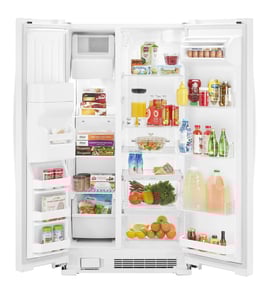



How to tell cubic feet of Kenmore refrigerator by model number?
For Kenmore Elite side-by-side refrigerator model 79551862611, the model number alone typically does not state the exact cubic-foot capacity. The most reliable way is to look up the capacity in the specifications section of the owner's manual, or calculate it from the interior compartment measurements.
- Check the specifications in the manual: Look for “capacity” or “cubic feet” in the product specs section of the owner's manual.
- Use interior measurements (best for a quick estimate): measure the usable interior space of the refrigerator and freezer compartments.
- Use the label to confirm the model: the manual notes the model and serial label is on the refrigerator; confirm you have 79551862611 before matching specs.
- Avoid guessing from the model number: Kenmore model numbers often indicate series and features, not capacity.
Measure the inside of each compartment (refrigerator section and freezer section) in inches.
- Measure height, width, and depth of the usable space.
- Multiply:
H x W x D = cubic inches. - Convert to cubic feet:
cubic inches ÷ 1728 = cubic feet. - Add refrigerator + freezer results for total capacity.
| What you measure | Formula | Result |
|---|---|---|
| Refrigerator section | H x W x D ÷ 1728 | Refrigerator cu ft |
| Freezer section | H x W x D ÷ 1728 | Freezer cu ft |
| Total capacity | Refrigerator + Freezer | Total cu ft |
- Measure usable space, not the door bins or molded curves.
- Subtract space taken by fixed components (ice maker housing, air ducts, light covers).
- Use the same depth reference point (back wall to front edge of shelves).
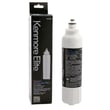
Cubic-foot capacity helps us choose correctly sized accessories and plan food storage. It also helps when comparing replacement parts that relate to the water and ice system, such as the Kenmore refrigerator water filter 9490 ADQ73613402.
Last updated: February 2026
What is the average lifespan of a Kenmore 79551862611 refrigerator?
A Kenmore Elite 79551862611 side-by-side refrigerator typically lasts 10 to 15 years. Regular maintenance (especially keeping airflow clear and doors sealing well) helps you reach the upper end of that range and reduces the chance of major cooling-system repairs.
Most refrigerators wear based on heat load, run time, and how well the sealed system can reject heat.
- Maintenance habits: cleaning condenser area, keeping vents clear, replacing the water filter on schedule
- Door seal condition: worn gaskets cause longer run times and temperature swings
- Room conditions: hot kitchens and tight built-ins increase compressor run time
- Usage patterns: frequent door openings, warm food loads, heavy ice use
- Water system upkeep: clogged filters can reduce dispenser flow and strain the inlet valve
Use these as your baseline for the 795.5186* platform described in the owner's manual.
- Keep the condenser area free of dust and pet hair
- Confirm doors close fully and stay aligned
- Replace the water filter about every 6 months; reset the filter indicator after replacement
- Avoid blocking interior air vents with food packages
- After moving the refrigerator, let it stand upright 24 hours before powering on
These symptoms do not always mean replacement; they often point to a specific repair.
| Symptom | Common cause | Example part on this model page |
|---|---|---|
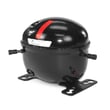
| Warm fridge/freezer, long run time | Cooling system issue or airflow problem | Refrigerator compressor TCA38091801 |
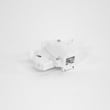
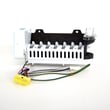
| No ice or intermittent ice | Ice maker assembly or drive issue | Refrigerator ice maker AEQ73130002 |
| Low water flow at dispenser | Filter restriction or valve issue | Kenmore refrigerator water filter 9490 ADQ73613402 |
Knowing the 10 to 15 year lifespan range helps you decide when a repair (like an ice maker or water inlet valve) makes sense versus when a major sealed-system repair may not be cost-effective.
Last updated: February 2026
How to replace an ice maker in a side by side refrigerator?
To replace the ice maker in your Kenmore Elite 79551862611 side-by-side refrigerator, we shut off power, remove the ice bin, swap the ice maker assembly, then restore power and water. After installation, allow up to 72 hours for full ice production. See the owner's manual for model-specific access and control steps.
- Unplug the refrigerator before working near the ejector mechanism or heater.
- Turn the Ice Maker button to OFF before removing parts.
- Shut off the household water supply valve if you will disconnect any water line.
- Use both hands to remove the in-door ice bin to prevent dropping it.
- Keep towels handy for any water drips.
- Remove the ice storage bin: lift slightly and pull it out.
- Remove the mounting screws holding the ice maker to the freezer wall.
- Disconnect the ice maker wiring harness plug.
- Transfer any bracket/stripper pieces from the old ice maker to the new one if they match exactly.
- Install the new ice maker, reconnect the harness, and reinstall screws.
- Reinstall the ice bin.
- Turn the Ice Maker button to ON, plug the refrigerator back in, and confirm the water supply is on.
The ice maker will not run until the freezer is cold enough (about 15°F or below). Ice production ramps up over time.
| Timing | What’s normal |
|---|---|
| First 24 hours | Temperatures stabilize; ice may start slowly |
| Up to 72 hours | Full ice production and bin fill rate |
Check these common causes first:
- Ice Maker button is set to ON.
- Water shutoff valve is fully open.
- Ice-detecting sensor area is clean and not frosted over.
- Ice shutoff arm (if equipped) moves freely.
- Water pressure is adequate; reverse osmosis systems can reduce pressure.
Correct installation and proper freezer temperature prevent false “no ice” symptoms and protect the new ice maker from running dry (which can damage it if the water line is not connected).
Last updated: February 2026
Can you still get parts for Kenmore refrigerators?
Yes. We still offer replacement parts for Kenmore refrigerators, including the Kenmore Elite 79551862611 side-by-side refrigerator. You can match parts by model number and then choose common replacements like water filters, ice maker parts, gaskets, and control boards; use the owner's manual to confirm the correct part and procedure.
- Match the full model number exactly: 79551862611
- Compare the part name and part ID, not just a description
- Check whether your symptom is in the troubleshooting section before ordering
- For water and ice issues, confirm the refrigerator is connected to the water supply correctly
- Use the diagrams and parts list for your model to avoid look-alike parts
Here are examples of parts we commonly see replaced for water, ice, and cooling symptoms:
| Symptom | Part to check first | Example part for this model |
|---|---|---|
| Bad taste/odor, slow water flow | Water filter | Kenmore refrigerator water filter 9490 ADQ73613402 |
| No ice or weak ice production | Ice maker assembly | Refrigerator ice maker AEQ73130002 |
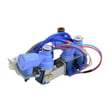
| Water dispenser not working | Water inlet valve | Refrigerator water inlet valve AJU34125555 |
| Warm refrigerator/freezer | Electronic control | Refrigerator electronic control board EBR80977533 |
| Frost or air leaks at freezer door | Door gasket | Refrigerator freezer door gasket ADX74170603 |
Kenmore refrigerators use model-specific parts. Ordering by the exact model number (79551862611) helps ensure proper fit, correct electrical connectors, and the right water line connections, which prevents repeat failures and leaks.
Last updated: February 2026
What are the common problems with Kenmore 79551862611 refrigerators?
Common problems on the Kenmore Elite 79551862611 side-by-side refrigerator include weak or uneven cooling, frost buildup, ice maker output issues, water dispenser or leak problems, doors that do not seal or close correctly, and normal but concerning noises during defrost or compressor operation. Our owner's manual troubleshooting guide covers many of these symptoms and the quickest checks.
- Not cooling well or temperature swings: dirty condenser area, airflow restrictions, fan issues, or control problems
- Freezer or fresh food section too cold: temperature controls set too cold; adjust one step at a time and allow time to stabilize
- Frost on food or inside compartments: doors opened too often, door not closing fully, or humid air entering
- Ice maker not making enough ice: demand exceeds capacity (this model’s ice maker is designed for about 100 cubes per 24 hours), water supply issues, or ice bin/shutoff problems
- Doors pop open or will not close: bins, shelves, or food packages out of position; unit not level
- Noises (clicking, whooshing, gurgling, rattling): often normal operation from defrost cycling, fans moving air, or refrigerant flow
- Confirm door closure and sealing: clear packages from door shelves; fully seat bins and drawers.
- Level the refrigerator: an unlevel cabinet can cause doors to drift open and poor sealing.
- Reduce door-open time: frequent openings drive humidity and frost.
- Adjust temperature correctly: move the control one increment at a time, then wait for temperatures to stabilize.
- Check ice maker shutoff path: make sure the shutoff arm moves freely or the sensor path is unobstructed.
| Symptom | Common part area | Example part for this model |
|---|---|---|
| Bad-tasting water, slow flow | Water filter | Kenmore refrigerator water filter 9490 ADQ73613402 |
| No water to dispenser/ice maker | Water inlet valve | Refrigerator water inlet valve AJU34125555 |
| Ice maker not producing | Ice maker assembly | Refrigerator ice maker AEQ73130002 |
| Ice clumping or dispensing issues | Ice/auger drive | Refrigerator ice maker and auger motor assembly EAU61004410 |
Cooling, ice production, and frost issues are often caused by airflow and door sealing problems first. Fixing those basics prevents food spoilage, reduces frost, and helps the ice maker keep up with normal daily demand.
Last updated: February 2026





