Installation guide
 Owner’s manual
 Error Codes


Does my Kenmore top load washer have a filter?
Yes, Kenmore top load washer model 11029622800 uses a drain pump system that can trap debris, but it typically does not have a quick-access, front clean-out filter like many front-load washers. We recommend checking the drain path and pump area when you have slow draining or leftover water; see the 11029622800 owner's manual for model-specific care guidance.
Where “filtering” happens on this washer
On this style of Kenmore top-load washer, lint and small items are usually managed by the wash action and the drain pump rather than a removable filter cartridge.
Common places debris collects:
- The drain pump inlet or pump housing
- The drain hose (especially at bends or where it enters the standpipe)
- The tub area if a small item slips between the basket and tub
- The lid switch area if the washer stops mid-cycle (not a filter issue)
What to check if it will not drain or drains slowly
Before opening anything, unplug the washer.
- Confirm the drain hose is not kinked or crushed
- Make sure the standpipe height and hose insertion are correct (to prevent siphoning)
- Listen for the pump running during drain; a loud hum with no draining points to a blockage
- Check for coins, socks, or debris in the pump
- If the pump is leaking or seized, replace the pump
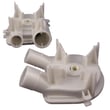
If you need the replacement pump for this model, use the washer drain pump WP3363394.
Quick comparison: top-load vs front-load “filters”
| Washer type | Typical filter access | What you usually service |
|---|---|---|
| Top-load (like 11029622800) | No front clean-out filter | Pump, hose, tub-to-pump path |
| Front-load | Front clean-out trap/filter | Filter trap and pump area |
Why it matters
A blocked drain path can cause standing water, poor spin performance, and odors. Keeping the drain hose routed correctly and the pump clear helps the washer drain at full flow and reduces repeat clogs.
Last updated: February 2026
How can I tell what model washer I have?
Your washer’s model number is printed on the appliance ID label. On Kenmore top-load washers like model 11029622800, the label is usually under the lid opening or on the back of the cabinet; match the full model number exactly when ordering parts or using the 11029622800 owner's manual.
Where to look on a washer ID label
Check these common label locations first:
- Under the lid, around the tub opening (top-load washers)
- On the underside of the lid itself
- On the back panel of the washer cabinet
- Along the control console area (rear edge or inside the console on some designs)
- Near the base frame behind the front panel (less common)
What to write down (and why)
Record the model number and serial number exactly as shown. For Kenmore models, the model number is typically a long numeric string (example: 11029622800). One missing digit can point you to the wrong diagrams and parts.
Quick ID checklist
- Copy the full model number (all digits/letters)
- Copy the serial number (helps with production variations)
- Take a clear photo of the label for reference
How the model number helps you pick the right parts
Once you have the model number, you can confirm fitment for common repair parts such as a lid switch, drain pump, or motor coupling.
| What you’re doing | Why the model number matters |
|---|---|
| Ordering replacement parts | Ensures the part matches your exact design revision |
| Using diagrams | Shows the correct cabinet, tub, and drive system layout |
| Troubleshooting symptoms | Points you to the right procedures and specs |
Why it matters
Kenmore washer platforms can look identical across multiple model numbers, but use different timers, switches, or drive components. Using the exact model number prevents wrong-part returns and speeds up repairs.
Last updated: February 2026
How to hard reset kenmore washer?
For Kenmore washer model 11029622800, the most reliable “hard reset” is a simple power reset: unplug the washer (or switch the breaker off) for 5 minutes, then restore power and start a normal cycle. This clears many stuck control states without changing any settings.
Hard reset steps (safe, works for most issues)
- Turn the washer OFF.
- Unplug the power cord (or turn the circuit breaker OFF).
- Wait 5 minutes.
- Restore power.
- Lift and close the lid once (top-loaders) and select a Normal cycle.
- Press Start and confirm the washer fills, agitates, drains, and spins.
For model-specific control behavior and cycle-start steps, follow the 11029622800 owner's manual.
If the washer still will not start after a reset
These checks solve the most common “no start” complaints on this style of Kenmore top-load washer:
- Confirm the outlet has power (test with a lamp) and the breaker is not tripped.
- Make sure the lid closes firmly; a failed lid switch can prevent agitation and spin.
- Verify both water faucets are fully open and inlet hoses are not kinked.
- If the washer drains slowly or not at all, check for a clog at the pump or drain hose.
- If the motor runs but the basket does not move, inspect the drive coupling.
Common parts related to “won’t run” symptoms
| Symptom | Likely area | Example part for this model |
|---|---|---|
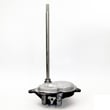
| No spin/agitate with lid closed | Lid safety circuit | Washer lid switch assembly WP8318084 |
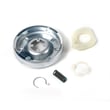
| Hums, won’t move, or intermittent drive | Motor-to-transmission connection | Coupling 285753A |
| Won’t drain or drains poorly | Drain system | Washer drain pump WP3363394 |
Why it matters
A power reset clears temporary control glitches, but it will not fix a mechanical failure (like a worn coupling) or a safety interlock problem (like a bad lid switch). Using the right next check prevents repeat shutdowns and protects the drive system.
Last updated: February 2026
What is the average lifespan of a Kenmore washer?
A Kenmore washer typically lasts 10 to 15 years with normal household use and basic maintenance. For Kenmore model 11029622800, good installation, avoiding overloads, and routine cleaning help you reach the upper end of that range; heavy use shortens it.
What affects washer lifespan most
- Load size and frequency: frequent heavy loads wear the drive system faster.
- Installation and leveling: an unlevel washer vibrates, stresses the suspension, and can “walk”.
- Water quality and temperature: hard water and very hot washes can accelerate buildup and seal wear.
- Drain performance: slow draining strains the pump and can leave residue behind.
- Small parts wearing out first: inexpensive wear items often fail long before the washer is “done”.
Common wear items vs. bigger repairs
If your washer is otherwise in good shape, replacing a wear part often restores performance.
| Symptom | Common cause | Example part for 11029622800 |
|---|---|---|
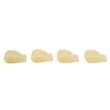
| Agitator moves poorly or “ratchets” | Worn agitator dogs | Agitator dog 80040 |
| Won’t spin or agitates inconsistently | Lid switch not sensing closed lid | Washer lid switch assembly WP8318084 |
| Won’t drain or drains slowly | Clogged or failing pump | Washer drain pump WP3363394 |
| Loud banging, off-balance movement | Suspension issues or leveling | Installation guide |
Maintenance that extends life (practical checklist)
- Keep loads balanced; mix large and small items.
- Use the right amount of detergent; too much causes residue and odors.
- Periodically run a cleaning cycle (or an empty hot cycle if your model uses a dial timer).
- Check inlet hoses for bulges or leaks; replace if worn.
- Confirm the washer sits on a level, sturdy floor and does not rock.
Why it matters
Most “washer failures” are really a few high-wear components (lid switch, drain pump, agitator drive parts) reaching end-of-life. Catching symptoms early helps you avoid secondary damage to the basket drive, motor, or gear case.
Last updated: February 2026