Owner’s manual
 Error Codes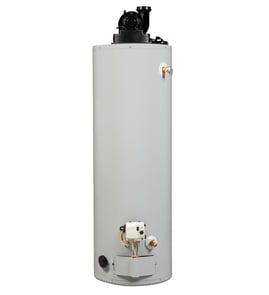



What is the typical lifespan of a gas hot water heater?
A typical gas water heater lasts 8 to 12 years. For your American FG6140S403NOV, regular maintenance (especially periodic draining and anode rod inspection) helps you reach the upper end of that range; check the maintenance schedule in the FG6140S403NOV owner's manual.
Typical lifespan ranges (what to expect)
Most residential tank-style water heaters fall into these ranges:
| Water heater type | Typical lifespan |
|---|---|
| Gas tank water heater | 8 to 12 years |
| Electric tank water heater | 10 to 15 years |
What shortens or extends lifespan
These factors have the biggest impact on tank life and reliability:
- Water chemistry: softened water is more corrosive and can shorten tank life
- Anode rod condition: a depleted anode rod speeds up tank corrosion
- Sediment buildup: reduces efficiency and can overheat the tank bottom
- Operating temperature: higher setpoints increase stress on the tank and components
- Maintenance consistency: periodic draining and inspections prevent small issues from becoming failures
Maintenance that matters most on FG6140S403NOV
The manual calls out anode rod inspection as a key longevity step. We recommend:
- Inspect the anode rod about every 3 years
- Replace the anode rod if it is more than 50% depleted
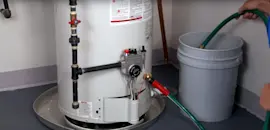
- Drain a few gallons as needed during service to reduce sediment and make inspections easier
- Watch for warning signs like water odor/discoloration (often tied to anode rod condition)
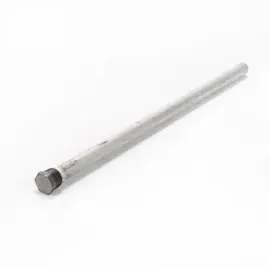
If you are planning a repair, common service parts for this model include the water heater anode rod 100109594 and the drain valve 100109106.
Why it matters
Once a tank begins corroding internally, performance and safety issues can escalate quickly. Staying ahead of corrosion (anode rod) and sediment (draining) is the most practical way to get full life from a gas water heater.
Last updated: February 2026
Why are gas water heaters being phased out?
Gas water heaters are being phased out in some areas because local and state policies aim to reduce air pollution and greenhouse-gas emissions from burning natural gas or propane in homes. For an American FG6140S403NOV gas water heater, the best next step is to confirm what fuel types and venting requirements your home supports in the owner's manual before planning a replacement.
What is driving the phase-out
Rules vary by city, county, and state, but the most common drivers are:
- Cutting nitrogen oxides (NOx) that contribute to smog
- Lowering carbon monoxide risk by reducing on-site combustion appliances
- Meeting climate goals by shifting from gas to electric options (often heat pump water heaters)
- Improving indoor and neighborhood air quality in dense areas
- Encouraging higher-efficiency equipment in new construction and during replacements
What this means for your FG6140S403NOV
A phase-out usually does not mean your existing water heater must be removed immediately. It more often affects:
- New installations (especially in new construction)
- Like-for-like replacements when the old unit fails
- Permits and allowed equipment types for your address
Common replacement paths (typical)
| Situation | Most common allowed options | What you may need to change |
|---|---|---|
| Gas replacement still allowed | New gas water heater | Venting, gas shutoff, draft hood compatibility |
| Gas restricted for replacements | Heat pump water heater | Electrical circuit, condensate drain, space/airflow |
| Gas restricted in new builds | Electric (heat pump or standard) | Electrical service planning |
Why it matters (safety and installation)
Because FG6140S403NOV is a gas model, safe operation depends on correct combustion air and venting. Our manual highlights risks like flammable vapors and potential flue-gas backdrafting near air-moving devices (exhaust fans, dryers, fireplaces). Reviewing location and clearance guidance in the owner's manual helps you avoid unsafe installation conditions.
If you are troubleshooting or keeping it running longer
If you are maintaining the current unit while you plan next steps, these parts commonly come up on gas water heaters:
- T&p valve 100108279 if the relief valve drips or will not reseat
- Drain valve 100109106 if the drain leaks or will not close fully
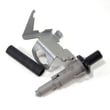
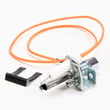
- American water heaters water heater pilot and igniter assembly 100093809 if the pilot will not stay lit
Last updated: February 2026
What brand of gas water heater is the most reliable?
For long-term reliability, we recommend choosing a gas water heater brand with a strong service network, readily available replacement parts, and a proven tank and burner design. Since you have an American Water Heaters FG6140S403NOV, the most reliable choice is often the brand you can properly install, vent, and maintain using the owner's manual.
What “most reliable” means for gas water heaters
Reliability usually comes down to fewer breakdowns and easier repairs over time. The biggest drivers are:
- Correct gas type and safe gas piping setup
- Proper combustion air supply and venting
- Stable water pressure and temperature control
- Routine maintenance (flushing sediment, checking safety devices)
- Parts availability for common wear items (pilot/igniter, gas control, valves)
Brand guidance you can use when shopping
Across the industry, these factors matter more than a single “best” brand:
| What to compare | What to look for | Why it helps reliability |
|---|---|---|
| Serviceability | Standard components, clear diagnostics | Faster, more accurate repairs |
| Parts access | Common parts stocked and easy to order | Less downtime |
| Venting design | Matches your home’s venting setup | Prevents nuisance shutdowns |
| Gas compatibility | Natural gas vs LP/propane match | Avoids ignition and combustion problems |
If you are staying with your current model family, keeping your FG6140S403NOV running reliably often comes down to maintaining ignition and gas control components and replacing them when they show wear.
Parts that commonly affect reliability on FG6140S403NOV
When a gas water heater won’t light, won’t stay lit, or has inconsistent heating, these are common suspects:
- Water heater pilot and igniter assembly 100093809 (ignition and pilot stability)
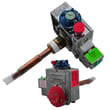
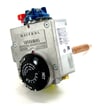
- Water heater propane gas control valve 100093749 (gas regulation and temperature control)
- Drain valve 100109106 (leaks during flushing or draining)
- T&p valve 100108279 (safety relief function)
Why it matters
A “reliable” gas water heater is one that is installed to code, matched to the correct gas type, and maintained so the burner and safety systems operate consistently. Your manual also emphasizes using the correct gas listed on the data plate and following safe lighting and installation practices.
Last updated: February 2026
What is the most common problem with gas water heaters?
The most common problem on gas water heaters, including the American FG6140S403NOV, is ignition trouble: the pilot will not light or will not stay lit, so the burner never heats the tank. Use the lighting and safety steps in the FG6140S403NOV owner's manual first.
What you will usually notice
- No hot water even though the gas supply is on
- Pilot will not light, or lights briefly then goes out
- Burner cycles off quickly and water stays lukewarm
- Clicking from the igniter with no pilot flame
- Temperature swings after short, frequent hot-water draws (stacking)
Most common causes and what to check
- Pilot/igniter components: dirty pilot, weak igniter, or a failing pilot assembly; a common replacement is the American water heaters water heater pilot and igniter assembly 100093809.
- Airflow around the burner: lint, dust, or restricted combustion air can make the pilot unstable.
- Gas supply issues: shutoff valve not fully open, low LP (propane) supply, or air in the line after service.
- Safety shutdown: some safety systems shut off gas to the burner and pilot after a flammable vapor event.
Quick, safe troubleshooting checklist
- Follow the exact lighting sequence in the FG6140S403NOV owner's manual (set temperature low, use the igniter, confirm pilot through the viewport).
- If the pilot lights but will not stay lit, let the unit cool; then clean dust and lint from the burner area.
- If the system has not been used for 2 weeks or more, run hot water at a faucet for several minutes before using electrical appliances (reduces hydrogen gas risk).
- If water is too hot after short draws, set the thermostat toward 120°F and consider an anti-scald device.
Symptom-to-next-step guide
| Symptom | Most likely area | Next step |
|---|---|---|
| Pilot will not light | Pilot/igniter, gas supply | Follow lighting steps; inspect pilot/igniter |
| Pilot lights then goes out | Pilot flame stability | Clean burner area; replace pilot assembly |
| Water too hot after short draws | Stacking, thermostat setting | Set closer to 120°F |
Why it matters
Ignition problems prevent the burner from heating water, and repeated relighting attempts increase safety risk. Correct lighting steps and a stable pilot restore reliable hot water.
Last updated: February 2026
What is the average labor cost to install a 50 gallon gas water heater?
Average labor to install a 50-gallon gas water heater typically runs $400 to $1,000 for a straightforward replacement, with higher labor when venting, gas piping, or code upgrades are needed. Your American Water Heaters FG6140S403NOV is a different model; use the FG6140S403NOV owner's manual for its installation requirements.
Typical labor ranges (what you’re paying for)
Labor pricing is driven by time on site and the amount of rework required beyond swapping the tank.
- Disconnect and remove the old heater
- Set and level the new heater, connect water lines
- Connect gas line, perform leak testing
- Connect venting and verify proper draft
- Start-up, burner check, and temperature setting
- Cleanup and haul-away (when included)
What makes labor cost go up
These items add time and usually add cost:
- Venting changes (draft hood fit, vent sizing, chimney/vent condition)
- Gas line modifications (pipe sizing, shutoff location, sediment trap)
- Combustion air and ventilation improvements
- Tight access (closets, attics, stairs, limited clearance)
- Water piping updates (shutoffs, dielectric fittings, expansion tank)
- Permit and inspection requirements
Quick comparison table
| Install scenario | Common situation | Typical labor range |
|---|---|---|
| Like-for-like replacement | Existing vent and gas line are usable | $400 to $700 |
| Moderate modifications | Minor vent or piping changes | $700 to $1,200 |
| Complex install | Significant venting or gas work, difficult access | $1,200 to $2,000+ |
Why it matters
Gas water heater installs are safety-critical. Correct venting, combustion air, and gas pipe sizing help prevent ignition problems and venting issues. The FG6140S403NOV owner's manual also emphasizes installing to applicable codes and proper location and venting practices, which directly affects labor time.
Parts sometimes replaced during an install (as needed)
Not required for every job, but commonly replaced if leaking, corroded, or out of spec:
- T&p valve 100108279 (temperature and pressure relief valve)
- Drain valve 100109106 (used for draining the tank during maintenance)
- Draft hood 100111362 (supports proper venting on many atmospheric-vent models)
Last updated: February 2026