Installation guide
 Owner’s manual
 Error Codes
How do I identify my Kenmore washer?
To identify your Kenmore washer, we recommend finding the model and serial tag on your specific unit and matching it to model 1105072011. On Kenmore top-load washers like 1105072011, the tag is commonly on the back of the control panel or on the cabinet.
Where to look on model 1105072011
Check these common label locations first:
- Back of the control panel (rear of the console)
- Along the cabinet rim under the lid (near the opening)
- On the side of the main cabinet near the bottom edge
- On the rear panel of the washer
If you recently moved the washer, also confirm the unit is installed upright and accessible as shown in the 1105072011 installation guide.
What information to write down
We suggest recording these details exactly as printed:
- Full model number (example: 1105072011)
- Serial number
- Electrical rating information (if shown)
- Any additional type or production codes
Quick reference table
| Item | What it’s used for |
|---|---|
| Model number | Ensures diagrams and replacement parts match your washer |
| Serial number | Helps identify production run details for service and compatibility |
| Type/engineering code | Can narrow down small design changes within a model series |
Why it matters
Kenmore model numbers can look similar across different washer platforms. Using the exact model number helps us match the correct parts (like a lid lock, drain pump, or drive belt) and avoid ordering a part that will not fit.
Last updated: January 2026
What is the average lifespan of a Kenmore washer?
A Kenmore washer typically lasts 10 to 15 years with normal household use. For your Kenmore 1105072011 washer, good installation, correct loading, and routine cleaning (as outlined in the 1105072011 installation instructions) help you reach the upper end of that range.
What affects lifespan the most
A washer’s service life is usually determined by wear on moving parts, water-related corrosion, and how hard the machine is worked.
- Load size and frequency: frequent heavy loads shorten life faster than moderate, balanced loads
- Leveling and vibration control: an unlevel washer stresses the suspension and drive system
- Water quality: hard water can accelerate buildup and valve wear
- Drain performance: slow draining strains the pump and can leave residue behind
- Preventive maintenance: keeping the tub, hoses, and seals clean reduces premature failures
Practical maintenance that helps your 1105072011 last longer
We recommend these habits for Kenmore top-load washers like model 1105072011:
- Keep loads evenly distributed to reduce out-of-balance spinning
- Avoid chronic overloading (it strains the drive belt, motor, and gear case)
- Use the correct amount of detergent; excess suds can cause residue and odors
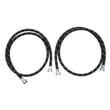
- Inspect fill hoses for bulges or cracking and replace on schedule
- Address draining issues early; a struggling pump often gets worse quickly
Quick reference: common wear items vs. typical timing
| Item | What it impacts | When it often shows up |
|---|---|---|
| Fill hoses | Leaks, flooding risk | Around every 5 years (or sooner if worn) |
| Drain pump | No-drain, slow drain | Mid-to-late life depending on debris |
| Drive belt | Weak spin/agitation | Mid-life with heavy use |
Why it matters
Knowing the typical 10 to 15-year lifespan helps you decide when a repair is worth it. If your washer is near or past that window, replacing a major component (like a pump or drive system) may be a bigger decision than replacing a smaller wear part.
Last updated: January 2026
Who makes Kenmore replacement parts?
Kenmore is a brand name, so replacement parts for Kenmore washer model 1105072011 are typically manufactured by the original equipment manufacturer (OEM) that built the washer for Kenmore. In practice, that often means you’ll see parts labeled from major manufacturers such as Whirlpool, and the correct match is based on your exact model number.
How to identify the true manufacturer for your Kenmore 1105072011
The most reliable way is to match parts by model number and the part’s OEM identifier, not by the Kenmore name on the lid.
- Use the model number 1105072011 when searching parts and diagrams.
- Compare the part ID/part number on the old part to the replacement listing.
- Expect many compatible parts to cross to Whirlpool-style numbering.
- Use diagrams to confirm fit and mounting points before ordering.
- Follow safety and access steps in the 1105072011 installation guide.
Example: what “OEM” looks like on this model
Many parts listed for this Kenmore washer are Whirlpool-manufactured components or Whirlpool-numbered replacements.
| What you see | What it usually means | What to do |
|---|---|---|
| Kenmore on the washer | Retail brand | Use model 1105072011 for lookup |
| Whirlpool-style part IDs | OEM supply chain | Match by part ID and description |
| Multiple “replaces” numbers | Updated part history | Choose the listing that fits your model |
When the manufacturer matters (and when it doesn’t)
For repairs, the key is compatibility with 1105072011, not the logo on the box. For example, if you’re fixing a no-drain issue, selecting the correct drain pump for this model matters more than who stamped the label.
- Drain problems often point to the pump, hoses, or a blockage.
- A compatible replacement example is the washer drain pump assembly WPW10276397.
- Always verify connectors, ports, and mounting style match your original part.
Why it matters
Using the correct OEM-compatible part helps ensure proper fit, correct electrical connections, and reliable washer performance after the repair.
Last updated: January 2026
Does my Kenmore top load washer have a filter?
Yes. Kenmore top-load washer model 1105072011 uses a drain-pump clean-out style filter that catches lint and small items before they reach the drain pump; it’s serviced during draining problems or routine maintenance. For safety steps and access guidance, use the 1105072011 installation instructions.
What “filter” means on this model
Many top-load washers do not have a removable lint screen like a dryer. On the 1105072011, the “filter” customers usually mean is the drain pump clean-out filter.
Common signs it needs cleaning:
- Washer drains slowly or not at all
- You find coins, hair pins, or debris in the wash basket after cycles
- You hear a rattling or grinding sound during drain
- Water remains in the tub at the end of the cycle
Where it is and how it’s typically serviced
On most Kenmore top-load designs like this, the clean-out is part of the drain pump area near the bottom of the cabinet. Cleaning usually involves removing the pump access area, placing towels or a shallow pan, and carefully opening the clean-out to remove debris.
Before you start:
- Unplug the washer (or switch off the breaker)
- Turn off both water supply valves
- Have towels and a shallow pan ready
- Expect some water to spill when the clean-out is opened
Parts that relate to the filter
If the clean-out cap is damaged, leaking, or won’t seal after cleaning, the filter component may need replacement.
| What you’re servicing | What it does | Example part for this model |
|---|---|---|
| Drain pump clean-out filter | Traps debris before it reaches the pump impeller | Washer drain pump clean-out filter WPW10215093 |
| Drain pump assembly | Moves water out of the tub during drain/spin | Washer drain pump assembly WPW10276397 |
Why it matters
A clogged pump filter can cause no-drain symptoms, standing water, odors, and extra strain on the drain pump. Cleaning it periodically helps protect the pump and keeps drain performance consistent.
Last updated: January 2026
What are the main parts of a washing machine?
For the Kenmore washer model 1105072011, the main parts include the wash basket and outer tub, the agitator system, the drive system (motor, belt, pulleys, gear case), the water fill system (inlet valve and hoses), and the drain system (pump and drain hose). For diagrams and component locations, use the 1105072011 installation guide.
Main systems and what they do
A washing machine is easiest to understand as a few connected systems:
- Wash system: basket and outer tub hold clothes and water; the agitator moves the load.
- Drive system: motor, belt, pulleys, and gear case create agitation and spin.
- Fill system: inlet valve and fill hoses bring in hot and cold water.
- Drain system: drain pump and drain hose remove water.
- Controls and safety: control board/timer functions and lid lock keep operation safe.
Examples of key parts for model 1105072011
These are common, serviceable components we see on this model’s parts list:
- Washer drain pump assembly WPW10276397 (moves water out during drain/spin)
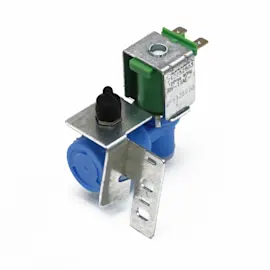
- Washer water inlet valve assembly WPW10683603 (controls water entering the tub)
- Washer drive belt WPW10006384 (transfers motor power to the drive pulley)
- Washer lid lock assembly W10404050 (helps prevent spinning with the lid open)
- Agitator 285727 and agitator dogs (help move clothes through the wash water)
Quick “system to part” map
| Washer system | What you notice when it fails | Example part on this model |
|---|---|---|
| Fill | Won’t fill, wrong temp, slow fill | Water inlet valve, fill hoses |
| Wash/agitate | Poor cleaning, no agitation | Agitator, agitator dogs |
| Spin/drive | Won’t spin, squeal, burning rubber smell | Drive belt, gear case |
| Drain | Won’t drain, water left in tub | Drain pump, drain hose |
| Safety/control | Won’t start or stops mid-cycle | Lid lock, control board |
Why it matters
Knowing which system is involved helps you troubleshoot faster and order the right Kenmore replacement part the first time, especially for common symptoms like “won’t drain,” “won’t spin,” or “won’t fill.”
Last updated: January 2026