



Can I scrap a chainsaw?
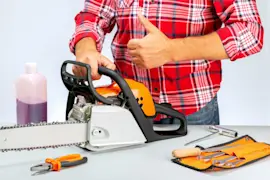
Yes. We scrap a Craftsman gas chainsaw like model 358351480 by separating recyclable metal from fuel and oil residues, then taking the metal components to a scrap or recycling facility that accepts mixed metals.
What to do before you scrap it
- Drain the fuel tank and run the engine until it stops (this helps clear fuel from the carburetor).
- Empty the bar and chain oil tank.
- Remove the bar and chain; wipe off excess oil.
- Brush off sawdust and oily debris so the load is cleaner.
- Keep small hardware together (nuts, screws, covers) so nothing gets lost.
What parts are typically scrap metal vs. not
Most of the saw’s metal can be recycled; plastics, rubber, and contaminated fluids usually cannot go in scrap bins.
| Item | Usually recyclable as scrap metal? | Notes |
|---|---|---|
| Guide bar and chain | Yes | Oil residue is common; wipe first. |
| Engine/cylinder and crankcase | Yes | Often aluminum alloy. |
| Clutch and drum | Yes | Steel parts; remove if practical. |
| Plastic housings/handles | No | Dispose per local rules. |
| Fuel lines/filters | No | Treat as waste; replaceable parts. |
Why it matters
Scrapping a chainsaw the right way reduces fire risk from leftover gasoline, keeps oil from contaminating recycling streams, and helps you recover value from steel and aluminum components.
If you are scrapping it because it won’t run
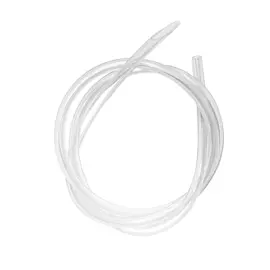
A “scrap” saw is often repairable with common maintenance parts. For the 358351480, we often start by checking the fuel system and air intake; see tips for a hard to start chainsaw and consider replacing wear items like the Craftsman lawn & garden equipment engine air filter 530037793 or fuel lines.
Last updated: February 2026
Where is the serial number on a chainsaw?
On a Craftsman gas chainsaw like model 358351480, the serial number is usually on the engine housing near the muffler area, or on a label/plate on the main body. Look for a stamped/engraved number or a sticker that includes both the model and serial.
Common serial number locations to check
- Engine housing near the muffler (often stamped into the case)
- Crankcase area on the side of the saw body
- Under the top cover near the air filter and carburetor area
- Near the rear handle on a label or molded tag
- Bottom of the saw body (less common, but worth a quick look)
How to find it quickly (and safely)
- Turn the saw off and let it cool completely.
- Wipe off oil and sawdust around the muffler side and starter side.
- Remove the top cover and check the flat plastic/metal surfaces for a sticker.
- Use a flashlight at a low angle; stamped numbers show up better.
What the serial number helps with
The serial number can matter when you are matching the correct parts list for your exact production run.
| What you have | What it’s used for | Where you’ll see it |
|---|---|---|
| Model number (358351480) | Finds the correct diagrams and parts list | Label or housing |
| Serial number | Narrows down version changes and part compatibility | Label or stamped into housing |
Why it matters
Small changes in fuel system, ignition, or chain brake components can happen across production runs. Having the serial number handy helps us match items like the poulan lawn & garden equipment fuel line, small 530069247 or the ayp lawn & garden equipment engine ignition coil 530039198 to the right configuration.
Last updated: February 2026
How do I find out what Craftsman chainsaw I have?
Your Craftsman chainsaw’s identity is the model number on its ID label; for this parts page, the model is 358351480. Find that label on the saw, write the number down exactly, then use it to match parts like the correct chain, bar, and fuel line.
Where to look for the model number label
Check these common spots on a Craftsman gas chainsaw:
- On the starter housing (recoil starter side)
- Near the rear handle or trigger handle area
- On the crankcase or engine housing near the muffler
- Under the top cover (near the air filter area)
- Along the bar mount area (near the clutch cover)
What to do once you find the number
Use the model number to confirm you are ordering parts that fit your exact saw.
- Match the full model number character-for-character (example: 358351480)
- Use the model to pick the correct cutting setup (bar and chain)
- Use the model to pick fuel system parts (fuel lines, carburetor parts)
- Use the model to pick ignition and safety parts (kill switch, chain brake)
Common parts you may need for model 358351480
| System | Example part on this model | What it affects |
|---|---|---|
| Fuel delivery | Poulan lawn & garden equipment fuel line, small 530069247 | Hard starting, fuel leaks |
| Air intake | Craftsman lawn & garden equipment engine air filter 530037793 | Rough running, poor power |
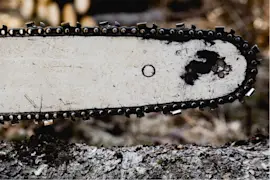
| Cutting system | Chainsaw bar, 18-in 180SDET041 | Cutting performance, chain fit |
Why it matters
Chainsaw parts are highly model-specific. Using the exact Craftsman model number prevents ordering the wrong bar, chain, carburetor parts, or fuel line sizes, and it speeds up troubleshooting when the saw will not start or runs rough.
Last updated: February 2026
What is the Craftsman 358351480 42 cc 2-cycle gas 18 chainsaw?
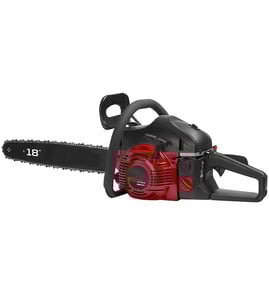
The Craftsman 358351480 is a gas-powered, 2-cycle chainsaw in the 42 cc class that’s commonly set up with an 18-inch bar and chain for homeowner cutting tasks like limbing and firewood. For maintenance and repairs, we match parts to model 358351480 so the fuel, ignition, and cutting components fit correctly.
What this chainsaw is designed to do
A 42 cc 2-cycle saw with an 18-inch setup is built for light-to-medium duty cutting. It’s a good fit when you need a balance of reach and maneuverability.
Common uses include:
- Limbing and storm cleanup
- Cutting small-to-medium logs for firewood
- Felling small trees (when conditions and skill level allow)
- General property maintenance
Key systems you’ll maintain most often
On model 358351480, most “won’t start” or “runs rough” issues trace back to fuel delivery, air intake, or ignition. These are the parts we see replaced most frequently:
- Fuel lines (cracked, soft, or leaking)
- Air filter (plugged, oil-soaked, or torn)
- Carburetor gaskets and carburetor service parts
- Ignition components (spark-related no-start)
Helpful model-matched examples from this page:
- Poulan lawn & garden equipment fuel line, small 530069247
- Ayp lawn & garden equipment fuel line, large 530069216
- Craftsman lawn & garden equipment engine air filter 530037793
Quick spec guide (typical for this class)
These are typical characteristics for a 42 cc, 2-cycle, 18-inch homeowner chainsaw; exact details vary by configuration.
| Item | Typical for this model class | Why it matters |
|---|---|---|
| Engine type | 2-cycle gas | Requires correct fuel mix and fresh fuel |
| Displacement | ~42 cc | Indicates power class and workload |
| Bar length | 18 in | Affects reach, cutting capacity, and kickback risk |
| Oiling | Automatic oiler | Keeps bar and chain from overheating |
Why it matters
Knowing the exact model number 358351480 helps us get you the right bar and chain components, fuel system parts, and tune-up items so the saw starts reliably, cuts straight, and oils the chain properly.
If you’re troubleshooting starting or running problems, our tips for a hard to start chainsaw guide is a strong next step.
Last updated: February 2026
Should I use 40 1 or 50 1 fuel for a chainsaw?
For a Craftsman 358351480 gas chainsaw, we use the fuel-to-oil ratio specified for the engine; most homeowner 2-cycle saws are designed for 50:1 with quality 2-cycle oil. Using 40:1 adds more oil (more lubrication but more smoke and deposits) and is typically reserved for older designs or special break-in guidance.
What to use (practical guidance)
- Use fresh, ethanol-free fuel when possible and a 2-cycle oil labeled for air-cooled engines.
- If your saw has been running well on 50:1, stay with 50:1.
- If you are troubleshooting a lean-running condition (surging, overheating), fix the cause (air leak, clogged fuel filter, carb issue) instead of “masking” it with extra oil.
- If you recently replaced fuel lines or rebuilt the carburetor, return to the correct ratio after confirming it runs smoothly.
Quick mix chart
| Mix ratio | Gasoline | 2-cycle oil |
|---|---|---|
| 50:1 | 1 gallon | 2.6 oz |
| 40:1 | 1 gallon | 3.2 oz |
| 50:1 | 1 liter | 20 ml |
| 40:1 | 1 liter | 25 ml |
Why 40:1 can cause problems
Running extra oil does not “add power”; it changes how the engine burns fuel.
- More smoke and odor
- Higher chance of spark arrestor and muffler deposits
- More plug fouling risk
- Carburetor may need retuning on some saws
If your saw is hard to start or runs rough
Fuel ratio is only one piece. These fixes solve most issues on the 358351480:
- Replace cracked or soft fuel lines (use the correct sizes: poulan lawn & garden equipment fuel line, small 530069247 and ayp lawn & garden equipment fuel line, large 530069216)
- Clean or replace the air filter (Craftsman lawn & garden equipment engine air filter 530037793)
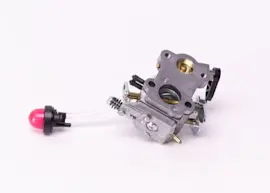
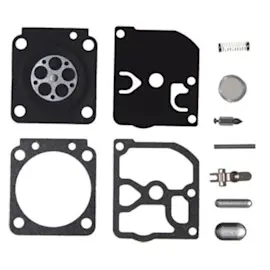
- Rebuild the carburetor if it is gummed up (ayp lawn & garden equipment engine carburetor rebuild kit 530069826)
- Follow our tips for a hard to start chainsaw
Why it matters
The correct mix ratio protects the piston and cylinder from scoring while keeping the carburetor, muffler, and spark plug cleaner. That balance is what gives the best starting, idle, and long-term engine life.
Last updated: February 2026