Owner’s manual



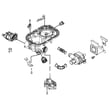
What model is KDFE104KPS0?
KDFE104KPS0 is a KitchenAid dishwasher model number. It identifies the exact version of the dishwasher so we can match the correct parts (like the door seal, fill valve, or spray arm) and the correct procedures in the KDFE104KPS0 owner’s manual.
What the model number tells you
- Confirms you have a KitchenAid dishwasher (not a similar-looking Whirlpool or Kenmore unit)
- Ensures parts fit correctly (mounting points, wiring connectors, hose routing)
- Helps match troubleshooting steps and error codes to the right control system
- Prevents ordering the wrong rack, seal, or water inlet component
Where to find the model number on the dishwasher
Most dishwashers like the KitchenAid KDFE104KPS0 list the model number on a label located:
- Along the inner edge of the door
- On the tub frame near the door opening
- Sometimes on the side of the door itself
Use the full model number exactly as printed, including the final “0”.
Common parts that must match the exact model
If you are shopping parts for KDFE104KPS0, these are examples where the exact model match matters:
| Part type | What it affects | Example part for this model |
|---|---|---|
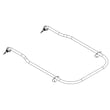
| Door sealing | Leaks at the front or corners | Dishwasher door seal W11664713 |
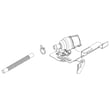
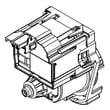
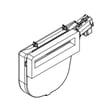
| Water fill | Not filling, slow fill, fill errors | Fill valve assembly W11434044 |
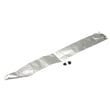
| Wash coverage | Poor cleaning, debris left behind | Dishwasher spray arm, lower W11550888 |
Why it matters
KitchenAid model numbers can look similar across different series, but small design changes affect fit and function. Using KDFE104KPS0 keeps your repair accurate, reduces returns, and speeds up troubleshooting.
Last updated: January 2026
What is the average lifespan of a KitchenAid dishwasher?
A KitchenAid dishwasher typically lasts 10 to 14 years. For your KitchenAid KDFE104KPS0, lifespan depends most on water quality, correct detergent and rinse aid use, and keeping the wash system clean; these habits reduce mineral buildup and wear.
What affects dishwasher lifespan the most
- Hard water: extremely hard water can cause mineral deposits and damage; a water softener helps.
- Rinse aid use: improves drying and helps control hard-water deposits; refill about every 1 to 3 months.
- Detergent habits: use automatic dishwasher detergent only; add it right before starting.
- Cycle choices: energy-efficient cycles run longer (often around 2 1/2 hours) and can be easier on the machine than repeated short, heavy-soil runs.
- Installation basics: correct fit and routing (especially the drain) prevents leaks and strain on components.
Maintenance checklist to help you reach 10 to 14 years
- Clean the filter area and remove debris from the sump regularly.
- Run a monthly cleaning cycle to reduce odor and buildup.
- Keep spray holes clear; remove and rinse the lower spray arm if performance drops.
- Use rinse aid consistently and keep the dispenser filled.
- If you have hard water, use a softener or adjust detergent and rinse aid to reduce deposits.
Common “wear” parts and what they do
| Symptom | Likely area | Example part for KDFE104KPS0 |
|---|---|---|
| Not filling or fills slowly | Water inlet system | Fill valve assembly W11434044 |
| Leaks at the door | Door sealing surfaces | Dishwasher door seal W11664713 |
| Won’t start or stops when door moves | Door latch/switch | Latch assembly (includes switch) W11412299 |
Why it matters
A dishwasher can run for years past the average when mineral deposits are controlled and the unit fills, washes, and drains without restriction. Following the detergent, rinse aid, and water-quality guidance in the KDFE104KPS0 owner’s manual helps prevent the most common causes of early failure.
Last updated: January 2026
What is the most common problem with the KitchenAid dishwasher?
The most common issue we see with KitchenAid dishwashers like model KDFE104KPS0 is poor cleaning or poor draining caused by buildup and debris (filters, spray arms, drain path). Leaks and “won’t start” complaints also happen, often tied to door latching, water supply, or error codes.
Most common symptoms and what they usually mean
- Dishes still dirty: spray arm holes blocked, filter area dirty, or low water flow.
- Not draining well: clogged drain hose, dirty air gap, or disposal plug not knocked out.
- Water under the dishwasher: active leak detection or a real leak at a seal, hose, or inlet.
- Won’t start or won’t resume: door not fully latched, control lock on, or a user interface fault.
- Filling problems: water supply off, debris in the inlet screen, or a valve issue.
Quick checks we recommend first (KDFE104KPS0)
Use the troubleshooting steps in the KDFE104KPS0 owner’s manual and start with these basics:
- Confirm the door is closed tightly and latched.
- Verify the water supply valve is fully open.
- Check the circuit breaker or house fuse.
- Make sure Control Lock is not turned on.
- If you have a countertop air gap, clean it if draining is slow.
Error codes that commonly point to “the real problem”
If your dishwasher is flashing an error, match it to the symptom:
| What you notice | Common code example | What it points to |
|---|---|---|
| Won’t drain | F9E1 | Drain path issue (hose, disposal connection, air gap) |
| Overfilling or stuck fill | F8E5 | Fill valve stuck on; shut off water if possible |
| Won’t start/resume | F6E1 | User interface communication fault |
| Water detected under unit | FAE5 | Leak condition; service is typically needed |
For code decoding help, use KitchenAid he dishwasher error codes.
Parts that are often involved
When symptoms match, these model-specific parts are common suspects:
- Fill valve assembly W11434044 for no-fill, slow fill, or fill-related errors
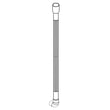
- Hose-drain,e W11414944 for drain restrictions or leaks at the drain line
- Dishwasher door seal W11664713 for leaks around the door perimeter
- Latch assembly (includes switch) W11412299 for “won’t start” due to door-latch sensing
Why it matters
Cleaning and draining problems usually get worse over time; they can lead to longer cycles, standing water, odors, and leak protection shutdowns. Catching the cause early helps protect the motor, sump area, and your kitchen floor.
Last updated: January 2026