Installation guide
 Owner’s manual
 Error Codes


How to tell if a gas valve is bad on a dryer?
On the GE GTD42GASJ2WW gas dryer, a “bad gas valve” usually shows up as a no-heat or intermittent-heat problem: the igniter may glow, but the burner will not light or it lights once and then stops heating. Because several parts work together, testing the valve coils and flame-sensing circuit is the most reliable way to confirm.
Before testing parts, we recommend these quick checks because they can mimic a failed gas valve.
- Confirm the gas shutoff valve at the dryer and the main gas shutoff are fully open.
- Make sure the dryer is vented correctly and the exhaust is not restricted.
- Clean the lint screen and check the lint chute area for buildup.
- Run a timed heat cycle (not Air Fluff/No Heat) and listen for burner ignition.
- If you smell gas at any time, stop and follow the safety steps in the GTD42GASJ2WW owner’s manual.
A common failure is weak gas valve coils that open when cold but fail once they warm up.
- Igniter glows, burner lights briefly, then heat stops and will not relight until the dryer cools.
- Igniter glows repeatedly but burner never lights (after confirming gas supply is on).
- Dryer tumbles normally but clothes stay cold and damp.
On GTD42GASJ2WW, we cannot confirm exact resistance values for the coils from the model-specific documents; however, continuity and live-operation behavior are still useful.
| What you observe | Most likely area | Why it matters |
|---|---|---|
| Igniter never glows | Ignition circuit, thermostats, wiring | Gas valve will not open without ignition sequence |
| Igniter glows, no flame | Gas valve coils/valve, flame sensor, gas supply | Valve may not open or flame is not proven |
| Flame starts then quits | Gas valve coils (heat-related) | Coils often fail when hot |
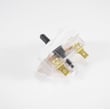
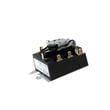
If you’re replacing the gas valve assembly, use the model-matched part dryer gas valve assembly WE03X23916.
A dryer gas valve and its coils control fuel flow to the burner. When they fail, the dryer can run without heat, overrun cycle times, and create inconsistent drying results that look like venting or thermostat problems.
For a step-by-step troubleshooting walkthrough focused on gas heat issues, use gas dryer wont heat troubleshooting video.
Last updated: January 2026
What is the life expectancy of a GE dryer?
A GE dryer like model GTD42GASJ2WW typically lasts 10 years with normal household use. Consistent airflow maintenance (lint screen and venting) is the biggest factor in reaching or exceeding that lifespan; poor venting can shorten it.
These items have the biggest impact on how long a gas dryer runs reliably:
- Venting condition and length: restricted airflow makes the dryer run hotter and longer
- Lint control: lint buildup stresses the motor, blower, and thermostats
- Load habits: frequent overloading strains the drum belt, idler pulley, and bearings
- Installation quality: crushed or plastic ducting increases heat and cycle time
- Routine cleaning: annual duct cleaning helps prevent overheating and long dry times
For model-specific care and cleaning steps, follow the GTD42GASJ2WW owner’s manual.
We recommend these habits for GE gas dryers:
- Clean the lint screen before or after every load
- Inspect and clean the exhaust duct at least once a year
- Use 4-inch rigid metal ducting where possible; avoid plastic venting
- Keep the outside vent hood flap moving freely
- Do not overload; split heavy loads (towels, jeans) into smaller loads
| What you notice | Often normal | Often needs service/repair |
|---|---|---|
| Slight increase in dry time | Seasonal vent conditions | Clogged vent, crushed duct, failing blower |
| New squeal or thump | None | Worn belt, idler pulley, drum support parts |
| Heat seems inconsistent | Load size/fabric mix | Thermostat, igniter, gas valve system issue |
If you’re seeing long dry times, our dryer takes a long time to dry guide is a good next step.
A dryer that takes longer to dry is not just inconvenient; it usually means restricted airflow or overheating, which increases wear on key components (motor, thermostats, drum support system) and can shorten the service life.
Last updated: January 2026
What is the most common problem with a GE dryer?
On the GE GTD42GASJ2WW gas dryer, the most common issue we see is long dry times or “no heat,” and the first thing to suspect is restricted airflow (lint screen, lint chute, or venting) rather than a failed gas component. Use the venting requirements in the GTD42GASJ2WW installation guide as your baseline.
- Clean the lint screen before every load; wash it with warm water if you use dryer sheets.
- Check the outside vent hood; the damper should open freely and blow strongly.
- Inspect the duct for kinks, crushing, or long runs; use 4-inch metal ducting, not plastic.
- Make sure the dryer is exhausted outdoors (not into an attic, wall, or crawl space).
- If the drum tumbles but there’s no heat, confirm the gas shutoff valves are fully open.
| Symptom | Most likely cause | What we recommend next |
|---|---|---|
| Takes too long to dry | Vent restriction or lint buildup | Clean the full vent path and verify airflow outside |
| Tumbles but no heat | Gas supply off, ignition failure, or safety trip | Verify gas supply; then check ignition and safety components |
| Won’t start | Door not sensed closed or start circuit issue | Check door closure and start switch function |
| Overheats or shuts heat off | Restricted venting or high-limit safety opening | Fix airflow first; then test the high-limit thermostat |
If airflow is strong and the problem continues, these model-compatible parts are common next steps:
- GE dryer lint screen WE03X23881 only if the screen is torn, warped, or no longer fits correctly (it’s normally cleaned, not routinely replaced)
- Dryer high-limit thermostat WE04X26138 if the dryer overheats or the burner shuts down from excessive temperature
- Igniter WE04X25996 if gas is on but the burner will not ignite
Poor venting is the number one reason dryers run hot, dry slowly, and cycle heat off. Fixing airflow first helps protect safety thermostats, the igniter, and the gas valve system.
Last updated: January 2026