 Owner’s manual
 Error Codes




What is the most common problem with whirlpool dryers?
The most common problem we see with Whirlpool electric dryers like model LEW0050PQ1 is no heat or poor drying, and the root cause is often restricted venting that overheats the dryer and trips safety components. Start by checking airflow and vent material requirements in the LEW0050PQ1 owner's manual.
Most common symptoms and what they usually point to
- Runs but no heat: heating circuit issue (often triggered by overheating from poor airflow)
- Takes too long to dry: vent restriction, crushed vent, clogged lint path, or improper vent material
- Won’t start: door not fully closed, failed door switch, or power supply issue
- Stops mid-cycle: overheating protection opening due to blocked exhaust
- Burning smell or very hot cabinet: severe airflow restriction that needs immediate correction
Venting is the #1 thing to check first (and why)
Your LEW0050PQ1 is designed to be exhausted outdoors using 4-inch (10.2 cm) heavy metal venting. Using plastic or foil venting, long runs, or clogged ducts can trap heat and lint, causing poor drying and repeated safety shutdowns.
Quick venting checklist
- Use 4-inch heavy metal vent (not plastic, not foil)
- Make sure the exhaust goes outdoors (not into a wall, ceiling, or concealed space)
- Seal joints with clamps (avoid screws that protrude into the duct)
- Clean lint buildup from the lint screen housing and vent line
| What you notice | Most likely cause | Best first step |
|---|---|---|
| Clothes still damp | Restricted exhaust airflow | Inspect and clean vent run |
| Dryer very hot | Venting not moving air | Check outside hood flap and duct |
| No heat | Overheat protection opened | Correct airflow, then test heating circuit |
Parts that commonly affect starting
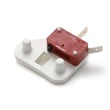
If the dryer won’t start even with proper power, a failed door switch is a common, straightforward fix. For this model, the matching part is the dryer door switch WP8182530.
Why it matters
Poor venting does more than slow drying; it can overheat the dryer and repeatedly trip safety devices, creating “no heat” complaints that come right back until airflow is corrected.
Last updated: January 2026
What is the average lifespan of a whirlpool dryer?
A Whirlpool electric dryer like model LEW0050PQ1 typically lasts 10 to 13 years with normal household use. With consistent maintenance (especially safe venting and lint control), many dryers reach 10 to 15 years before major repairs become more common.
What affects dryer lifespan the most
The biggest drivers are heat stress, airflow restriction, and how hard the motor and drum system work.
- Clean the lint screen before every load
- Keep the exhaust venting clear and properly installed (use heavy metal venting)
- Avoid overloading; it strains the drive motor, drum support, and belt system
- Use the right cycle and heat setting for the fabric load
- Address unusual noises, burning smells, or long dry times quickly
Maintenance checklist (high impact, low effort)
We recommend these habits to extend the life of a Whirlpool dryer:
- Inspect and clean the vent path periodically (dryer outlet to exterior hood)
- Confirm the dryer is exhausted outdoors and not into a wall, ceiling, chimney, or concealed space
- Use 4-inch (10.2 cm) heavy metal exhaust venting and clamps; avoid plastic and foil vent
- Keep the area around the dryer clean to reduce lint buildup
- If the dryer will not start consistently, test safety switches and thermal protection components
Common “end-of-life” symptoms and what they usually mean
| Symptom | Common cause | Typical fix type |
|---|---|---|
| Takes too long to dry | Restricted venting or airflow | Cleaning and vent correction |
| No heat | Thermostat or safety thermostat issue | Part replacement |
| Won’t start | Door switch or start circuit issue | Part replacement or wiring check |
| Loud rumbling/squealing | Drum support or drive system wear | Mechanical repair |
If your LEW0050PQ1 won’t start when the door is closed, the dryer door switch WP8182530 is a common part to check.
Why it matters
A dryer that is properly vented and kept clear of lint runs cooler and more efficiently; that reduces wear on thermostats, the drive motor, and wiring connections. The venting and safety guidance in the LEW0050PQ1 owner’s manual is especially important for preventing overheating and extending service life.
Last updated: January 2026
Is there a reset button on a Whirlpool dryer?
Whirlpool electric dryers such as model LEW0050PQ1 typically do not have a single, dedicated “reset” button. Most reset situations are handled by stopping the cycle and restarting it, or by power-cycling the dryer; the correct steps are outlined in the LEW0050PQ1 owner's manual.
How to “reset” a Whirlpool dryer (most common methods)
- Stop and restart the cycle: turn the cycle knob to STOP or open the door, then close the door, select a cycle, and press START.
- Power-cycle the dryer: unplug the dryer (or switch the breaker off), wait about 2 to 5 minutes, then restore power and try a cycle again.
- Clear a non-start condition: confirm the door is fully closed and a cycle is selected, then press START firmly.
Quick checks before you assume something needs “resetting”
These items cause many “won’t start” complaints and are faster than replacing parts.
- Power cord fully plugged into a grounded outlet
- House fuse not blown; breaker not tripped (use a time-delay fuse if applicable)
- Door fully closed (a bad door switch can prevent starting)
- Cycle selected and POWER on (indicator light on)
- START button pressed after the beep
What the manual says about stopping and restarting
The LEW0050PQ1 operating steps are essentially a built-in reset: stop the dryer (cycle knob to STOP or open the door), then close the door, choose a new cycle/temperature, and press START again. See the LEW0050PQ1 owner's manual for the exact sequence.
When a “reset” points to a part problem
If the dryer repeatedly won’t start even after a power-cycle, a failed safety device or switch is common.
| Symptom | Common cause | Example part for this model |
|---|---|---|
| Dryer won’t start when door is closed | Door switch not closing circuit | Dryer door switch WP8182530 |
| Dryer stops or won’t run after overheating | Safety thermostat opened due to restricted venting/overheat | Dryer safety thermostat W10843940 |
Why it matters
Repeatedly “resetting” without fixing the root cause (especially poor airflow from a clogged lint screen or vent) can lead to long dry times, overheating, and repeat shutdowns. A clean vent path and correct cycle settings keep the dryer running normally.
Last updated: January 2026








