Owner’s manual
 Error Codes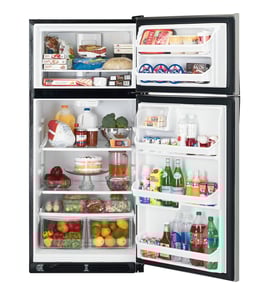




What are the disadvantages of a top mount fridge?
For the Kenmore 79568039218 top-mount refrigerator, the main disadvantages are convenience and organization: fresh-food items sit lower (more bending), the freezer is easiest to reach (which not everyone prefers), and storage features are often simpler than many bottom-freezer designs. See the 79568039218 use and care guide for layout and control details.
Common drawbacks you will notice day to day
- More bending for fresh food: the refrigerator section is below the freezer, so you reach down more often.
- Less “at-a-glance” organization: many top-mount designs have fewer specialty drawers/bins than some bottom-freezer models.
- Freezer access is great; fridge access is not: if you use fresh foods more than frozen, the ergonomics can feel backwards.
- Airflow can be easier to block: overpacking can restrict vents and lead to uneven temperatures (top-mounts rely on airflow between sections).
- Fewer built-in dispenser options on many models: some top-mount refrigerators do not include external water or ice dispensing.
How to reduce the impact (practical tips)
- Keep everyday items at eye level by adjusting shelves and using clear bins.
- Avoid pushing high-water foods (leafy greens, berries) against cold-air discharge areas to reduce freezing risk.
- Leave space around vents; blocked vents can cause warm spots or freezing.
- If doors do not close smoothly, inspect door alignment and hinge wear.
Quick comparison: top-mount vs bottom-freezer
| Feature | Top-mount refrigerator | Bottom-freezer refrigerator |
|---|---|---|
| Fresh-food access | Lower, more bending | Higher, easier reach |
| Freezer access | Higher, easier reach | Lower, more bending |
| Organization | Often simpler | Often more compartmentalized |
| Typical cost/complexity | Often lower | Often higher |
Why it matters
Disadvantages usually show up as temperature consistency and convenience issues. For example, if airflow is blocked, temperatures can drift; the manual notes to keep vents clear and to wait 24 hours between temperature adjustments.
Last updated: January 2026
What is the life expectancy of a top freezer refrigerator?
Most top-freezer (top-mount) refrigerators like Kenmore model 79568039218 typically last 10 to 15 years. With consistent maintenance (especially keeping airflow clear and cleaning), it’s common to reach the upper end of that range.
Typical lifespan and what affects it
A top-mount refrigerator is a simpler design than many other styles, which helps durability. Lifespan usually depends on usage and care more than brand alone.
- Coil cleanliness (dirty condenser coils make the compressor work harder)
- Door seal condition (warm air leaks increase run time)
- Airflow inside the cabinet (blocked vents cause temperature swings)
- Room conditions (hot garages and tight enclosures shorten life)
- Power quality (frequent outages or surges stress electronics)
Maintenance checklist to help it last longer
We recommend these habits for Kenmore 79568039218 and most top-freezer refrigerators:
- Vacuum dust from the condenser area regularly
- Keep food from blocking interior air vents (good airflow helps stable temps)
- Set temperatures, then wait about 24 hours before making more adjustments
- Keep doors closing squarely; replace worn hinge bushings if the door sags
- Clean and inspect gaskets; correct gaps before they cause frost or sweating
Quick guide: “normal aging” vs “repair time”
| What you notice | Often normal | Often worth repairing |
|---|---|---|
| Runs longer than it used to | In hot weather or after heavy loading | If coils are clean and it still runs constantly |
| Small temp swings | With frequent door openings | If food spoils or freezer thaws |
| Door not closing smoothly | Minor leveling issue | Worn hinge parts or a torn gasket |
Why it matters
A refrigerator that’s struggling to hold temperature can waste energy and put food safety at risk. Keeping airflow clear and seals tight reduces compressor wear, which is the biggest factor in reaching a full 10 to 15 year service life.
For model-specific operating and care guidance, follow the 79568039218 owner's manual.
Last updated: January 2026
Which is better, top mount or bottom mount refrigerator?
For most households, a top-mount refrigerator like the Kenmore 79568039218 is the better value because it is typically more energy-efficient, simpler to maintain, and usually costs less. A bottom-mount is often better if you want fresh-food items at eye level and easier access to refrigerator shelves.
Quick comparison
| Feature | Top-mount (freezer on top) | Bottom-mount (freezer on bottom) |
|---|---|---|
| Everyday access | Freezer is easiest to reach | Refrigerator section is easiest to reach |
| Typical efficiency | Often very efficient | Varies by design and features |
| Maintenance complexity | Usually simpler | Often more complex (drawers, rails, icemaker routing) |
| Best for | Budget, reliability, fewer features | Convenience, organization, frequent fridge use |
How to choose for your kitchen and habits
- If you use the freezer daily, a top-mount keeps frozen foods at a comfortable height.
- If you cook often and reach for fresh foods constantly, a bottom-mount reduces bending.
- If you want fewer repairs over time, simpler designs (often top-mount) tend to have fewer moving parts.
- If you store lots of wide platters and produce, bottom-mount layouts can feel more “fridge-forward.”
- If you are tight on space, compare door swing and clearance needs before deciding.
What matters most for performance (either style)
Even the “better” style will struggle if airflow and door sealing are poor. For Kenmore 79568039218, our use and care guidance emphasizes keeping vents clear for proper circulation and making temperature changes gradually (allowing about 24 hours between adjustments). Check the 79568039218 owner's manual for control and airflow details.
Fast checks that prevent temperature complaints
- Do not block interior air vents with large containers.
- Keep doors closing easily; level the cabinet so doors self-close.
- Set temperatures, then wait 24 hours before changing again.
- Keep gaskets clean and sealing evenly.
Why it matters
Choosing the right layout reduces daily frustration (bending, reaching, reorganizing) and helps you maintain stable temperatures. Stable temperatures protect food quality and reduce compressor run time.
Last updated: January 2026
What size is Kenmore refrigerator model 79568039218?
Kenmore top-mount refrigerator model 79568039218 is a full-size, standard-depth refrigerator. For exact exterior dimensions (width, depth, height) and capacity for your specific color code version, we recommend checking the specifications section in the 79568039218 use & care guide.
What “size” usually means for this model
When customers ask about size, they typically mean one (or more) of these:
- Overall dimensions: width, depth, and height (for fit in a cabinet opening)
- Capacity: total cubic feet (how much it holds)
- Door swing clearance: space needed to fully open doors and drawers
- Water line clearance: extra room behind the unit if it has an ice maker/water connection
Typical size range for a Kenmore top-mount refrigerator
Most Kenmore top-mount refrigerators in this class fall into these common ranges (use these for planning, then confirm in the manual):
| Spec | Typical range for top-mount refrigerators | Why you care |
|---|---|---|
| Width | 29 to 33 inches | Cabinet opening fit |
| Height | 66 to 70 inches | Overhead cabinet clearance |
| Depth (cabinet) | 30 to 34 inches | Counter and walkway clearance |
| Capacity | 18 to 23 cu. ft. | Storage planning |
Fit and installation checks we recommend
Before you buy parts, move the refrigerator, or plan a replacement, we recommend:
- Measure width, height, and depth at the installation spot (include baseboards and trim).
- Confirm door swing space, especially near walls or islands.
- Allow airflow space around the cabinet per the 79568039218 use & care guide.
- If you’re connecting water, plan for tubing slack so the unit can slide out for service.
Why it matters
Getting the correct size prevents installation headaches like doors hitting walls, shelves not clearing cabinets, or the refrigerator sticking out farther than expected. It also helps when ordering interior parts such as a door bin or shelf that must match the exact configuration.
Last updated: January 2026