Installation guide
 Owner’s manual
 Error Codes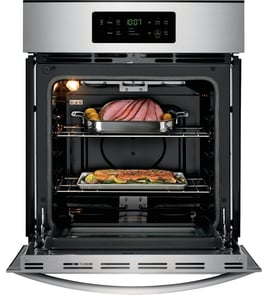


What is the difference between 27 and 30 inch wall ovens?
A 27-inch and a 30-inch wall oven mainly differ in cabinet cutout width, overall oven width, and the support requirements for the cabinet base. For Kenmore model 79048762900, the installation guide shows different product and cutout dimensions for 27-inch versus 30-inch openings. See the 79048762900 installation guide for the exact cutout specs.
Key differences that affect your installation
- Cabinet cutout width: 30-inch models require a wider cutout than 27-inch models.
- Oven width: 27-inch ovens are about 27 inches wide; 30-inch ovens are about 30 inches wide.
- Base support rating: the cabinet base must support more weight for a 30-inch oven.
- Clearance needs: plan for door swing clearance in front of the oven.
- Trim fit: correct cutout depth helps the decorative trim sit flush.
Typical dimension comparison (single wall oven)
| Size class | Product width (approx.) | Typical cutout width range | Base support requirement |
|---|---|---|---|
| 27-inch | 27 in. | 24 7/8 to 25 1/4 in. | 300 lb |
| 30-inch | 30 in. | 28 1/2 to 29 in. | 375 lb |
Capacity and cooking space (what most shoppers notice)
Even though the “inch size” is about the exterior width, 30-inch wall ovens usually provide more usable cooking space than 27-inch models.
- 27-inch wall ovens commonly land around about 4.0 cu. ft.
- 30-inch wall ovens commonly land around about 4.7 to 5.1 cu. ft.
Why it matters
Choosing 27-inch vs 30-inch is not just a style decision; it determines whether your wall cabinet cutout, electrical junction box location, and support structure match the oven. A mismatch can lead to poor trim fit, installation delays, or overheating concerns.
Last updated: January 2026
Does a wall oven need a special outlet?
Yes. A Kenmore 79048762900 electric wall oven typically uses a dedicated 240-volt circuit that is hardwired (not a standard 120-volt plug outlet). The installation instructions also require proper grounding and following local electrical codes; see the installation guide.
What “special” means for an electric wall oven
Most electric wall ovens are supplied by a dedicated 240V branch circuit sized to the oven’s wattage. In many installations, the oven connects to a junction box with flexible conduit rather than plugging into a receptacle.
Common requirements:
- Dedicated circuit (no other appliances on the same breaker)
- 240V supply (typical for electric wall ovens)
- Correct breaker size for the oven’s wattage
- Proper grounding per code
Breaker size guidance (based on the installation chart)
The installation guide provides a wattage-to-circuit recommendation. Use the oven’s rating plate wattage to pick the correct circuit.
| Oven rating (240V) | Recommended circuit |
|---|---|
| Less than 4800W | 20A |
| 4800W to 7200W | 30A |
| 7200W to 9600W | 40A |
| 9600W and up | 50A |
Quick checks before you install
These steps help avoid nuisance breaker trips and overheating at the connection point.
- Confirm the home has a dedicated 240V circuit available at the cabinet cutout
- Verify the breaker size matches the oven’s wattage rating
- Inspect the junction box and wire condition (no heat damage or loose connections)
- Make sure the oven is centered in the cutout (spacers, if equipped, should stay in place)
- Shut off power at the breaker before any line connections are made
Why it matters
A wall oven draws high current. Using the wrong voltage, an undersized breaker, or a poor connection can cause weak heating performance, repeated shutdowns, or overheated wiring. Correct electrical setup also supports safe operation of the electronic oven control.
Last updated: January 2026
What are the parts of an oven called?
Most ovens, including the Kenmore 79048762900 electric wall oven, use the same core component names: the oven cavity, door and glass, racks, heating elements (bake and broil), temperature sensor, light assembly, and control system. Your 79048762900 owner's manual lists the feature names used for your exact control panel.
Common oven parts and what they do
- Oven door and glass: seals heat in; lets you view food while baking.
- Oven racks: support cookware; rack position affects browning and airflow.
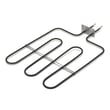
- Bake element: primary heat source for baking and roasting.
- Broil element: high radiant heat from the top for broiling.
- Temperature sensor: tells the control board the oven temperature.
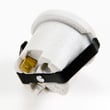
- Oven light system: bulb, socket, and lens so you can see inside.
- Cooling fan: helps cool electronic components; may run after the oven is off.
Parts you can shop by name for this model
These are examples of part names you will see for the Kenmore 79048762900.
| Part name (common term) | Example part for this model | What it affects |
|---|---|---|
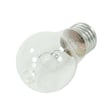
| Oven light bulb | Range oven light bulb 316538904 | Interior light not working |
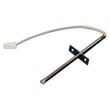
| Temperature sensor | Frigidaire range oven temperature sensor 316217002 | Inaccurate temps, error codes |
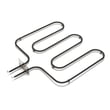
| Bake element | Frigidaire range bake element 318254902 | No bake heat, weak baking |
| Cooling fan assembly | Range oven cooling fan assembly 318073028 | Overheating, fan noise |
Why the names matter when ordering parts
Using the correct part name helps match the symptom to the right system. For example, uneven baking often points to rack placement or airflow, while temperature swings often point to the sensor or control.
Quick tips for describing a part correctly
- Use the model number 79048762900 when ordering.
- Describe the symptom (no heat, overheats, light out, door won’t close).
- Note which mode fails (bake vs broil).
- Check rack placement and airflow guidance in the manual (cookware spacing matters).
Last updated: January 2026