Owner’s manual
 Error Codes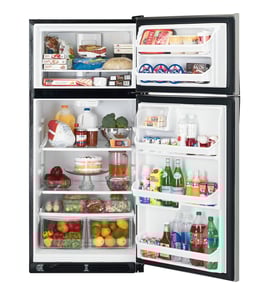




How to tell cubic feet of Kenmore refrigerator by model number?
For Kenmore model 10674259402, the most reliable way to get the refrigerator’s cubic feet is to look up the capacity in the specifications section of the 10674259402 owner's manual. If you cannot find a listed capacity, you can estimate cubic feet by measuring the usable interior space and converting cubic inches to cubic feet.
- Check the model and serial number label inside the fresh food compartment; then use the model number 10674259402 to match the correct spec listing in the manual.
- Look for a “Specifications” or “Product data” section in the 10674259402 owner's manual.
- If you need an estimate, measure the interior and calculate volume (details below).
- Empty the compartment you are measuring (fresh food and freezer can be estimated separately).
- Measure width x depth x height of the usable interior space in inches.
- Multiply to get cubic inches.
- Divide by 1,728 (12 x 12 x 12) to convert to cubic feet.
| What you have | What to do | Result |
|---|---|---|
| Interior inches (W x D x H) | Multiply | Cubic inches |
| Cubic inches | Divide by 1,728 | Cubic feet |
Kenmore model numbers (including the 106 prefix) identify the product line and configuration, but they do not consistently encode the exact interior capacity. Capacity can also vary by shelf design, ice maker setup, and liner shape, so the manual spec is the best match for your exact unit.
Most top-mount refrigerators are commonly in the 14 to 22 cubic feet range. Use that as a reasonableness check against your measurement estimate.
Last updated: January 2026
How much top clearance does a fridge need?
For Kenmore top-mount refrigerator model 10674259402, we recommend at least 1/2 inch of clearance above the cabinet (case) for proper ventilation. In most kitchens, leaving a little extra space helps airflow and reduces compressor run time.
Use these minimum clearances unless your installation space requires more:
- Top: 1/2 inch
- Each side: 1/2 inch
- Back: allow extra space if you have an ice maker water line connection
- Next to a fixed wall: 2 inches minimum on the hinge side so the door can swing open
- Avoid heat sources: do not place near an oven or radiator
For the exact wording and the diagram for this model, follow the ventilation guidance in the 10674259402 owner's manual.
| Location around refrigerator | Minimum clearance | Notes |
|---|---|---|
| Top (above the case) | 1/2 in | Clearance is above the cabinet, not the hinge |
| Left side | 1/2 in | Helps ventilation |
| Right side | 1/2 in | Helps ventilation |
| Hinge side near a fixed wall | 2 in | Allows door swing |
| Back | Extra if needed | Leave room for water line if equipped |
Top clearance is part of the refrigerator’s ventilation path. When the top and sides are too tight, heat cannot dissipate efficiently, which can lead to warmer temperatures, longer run times, and higher energy use.
- Measure the opening at the top front and top rear; cabinets can be out of square.
- Confirm the doors can open fully before final placement.
- If the unit has an ice maker, plan space so the water line does not kink.
- Keep the condenser area clean so airflow is not restricted.
Last updated: January 2026
What are the disadvantages of a top mount fridge?
A top-mount refrigerator like Kenmore 10674259402 puts the freezer at eye level and the fresh-food section lower, so daily fridge access usually means more bending. These models also tend to have fewer built-in organization and dispenser features than many bottom-freezer designs.
- More bending for fresh food: the refrigerator compartment is below the freezer, so produce drawers and lower shelves take more reaching.
- Less “grab-and-go” convenience: many top-mount models do not include an external water or ice dispenser.
- Fewer premium storage features: compared with many bottom-freezer units, you often get fewer adjustable bins, dividers, and specialty zones.
- Odors can transfer between sections: because air circulates between freezer and refrigerator, smells can move from one section to the other.
- Airflow can be easier to block: overpacking can block vents and cause temperature and moisture problems.
For model-specific use and airflow guidance, follow the venting and loading tips in the 10674259402 owner's manual.
| Feature | Top-mount refrigerator | Bottom-freezer refrigerator |
|---|---|---|
| Fresh-food access | Lower, more bending | Higher, less bending |
| Freezer access | Higher, easier | Lower, more bending |
| Typical features | More basic | Often more feature-rich |
| Cost to buy/repair | Often lower | Often higher |
If vents are blocked, airflow is reduced and you can see warm spots, excess frost, or moisture issues. Keeping vents clear and foods covered also helps reduce odor transfer between compartments.
- Keep everyday items on the middle shelves to reduce bending.
- Do not block freezer or refrigerator vents with packages.
- Wrap or cover foods tightly to limit odor transfer.
- Set controls to the recommended mid-settings after installation, then adjust gradually.
- If you rely on ice, confirm your ice maker setup and water line clearance during placement.
Last updated: January 2026
What are the common problems with Kenmore Elite refrigerators?
Common issues on Kenmore top-mount refrigerators like model 10674259402 are cooling problems, frost buildup, water or ice maker troubles, and normal-to-loud operating noises. Most fixes start with airflow, door sealing, and water system checks outlined in the 10674259402 owner's manual.
- Not cooling well: blocked air vents, dirty condenser area, evaporator fan issue, or sealed system/compressor trouble
- Too much frost or ice: door not sealing, frequent door openings, or a defrost system problem
- Water leaking or puddles: clogged/iced defrost drain, loose water line, or valve seepage
- Ice maker not making ice: water supply issue, ice maker component failure, or poor water quality
- Noises (buzzing, clicking, humming): normal operating sounds, fan blade contact, or compressor start components
- Confirm airflow: keep vents inside the fresh food section and freezer clear; don’t pack items tight against the back wall.
- Verify door seal and alignment: gaskets should sit flat all the way around; level the cabinet so doors close on their own.
- Listen for fan operation: a rubbing or ticking sound often points to a fan blade or ice buildup near the fan.
- Check the water system (if equipped): make sure the shutoff valve is fully open and the supply line is not kinked.
- Give it time after changes: temperature adjustments and ice maker changes can take a full day to stabilize.
| Symptom | Likely area | Example part for 10674259402 |
|---|---|---|
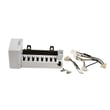
| Ice maker not producing | Ice maker assembly | Ice maker assembly - refrigerator ice maker by whirlpool 4317943 |
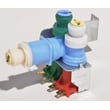
| Water not filling ice maker | Water inlet valve or supply line | Refrigerator water inlet valve WP2188808 |
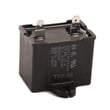
| Clicking or hard-start symptoms | Start components | Upright freezer run capacitor WPW10662129 |
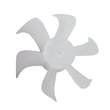
| Fan noise in freezer | Fan blade interference | Fan blade WP2163777 |
Cooling and frost issues usually get worse over time; they can lead to spoiled food, heavy ice buildup that blocks airflow, and extra strain on the compressor. Catching door seal, airflow, and water supply problems early prevents bigger repairs.
For model-family troubleshooting steps and display-related faults, use Kenmore 106 model refrigerator error codes.
Last updated: January 2026