Owner’s manual
 Error Codes




What is the most common problem with a Maytag washer?
For the Maytag PAVT234AWW washer, the most common service complaints we see are won’t spin or won’t drain issues. On this model, that often traces back to a lid-not-closed condition, oversudsing (suds lock), a kinked/blocked drain path, or a worn drive system.
Quick checks first (no parts)
- Confirm the lid is fully closed; this washer will not spin with the lid open.
- Push the timer knob in, set a cycle, then pull the knob out to start.
- Look for a kinked drain hose or a restricted home drain.
- If you used too much detergent, run a rinse/spin with no detergent to clear a suds lock.
- Redistribute the load if it is off-balance; heavy items can stop a strong spin.
For model-specific operating and troubleshooting steps, use the PAVT234AWW use & care manual.
When it points to a part on PAVT234AWW
If the washer fills and agitates but struggles to spin, slips under load, or makes belt-related noises, the drive belt is a common wear item to inspect.
- Check belt condition: glazing, cracking, fraying, or a loose fit
- Inspect the drain path for clogs (hose routing, standpipe restriction)
- If you see water on the floor near hose connections, check clamps and hoses
Helpful model-matched parts to consider:
Symptom-to-cause guide
| Symptom | Common cause on top-load Maytag designs | What to do next |
|---|---|---|
| Won’t spin | Lid not closed, off-balance load, worn drive belt | Rebalance load; inspect belt |
| Won’t drain | Kinked/blocked drain hose, home drain restriction, suds lock | Straighten hose; clear suds |
| Stops mid-cycle | Normal pauses, overload protector tripping | Reduce load; retry cycle |
| Leaks | Loose hose connections, worn hose/clamp | Tighten; inspect hoses/clamps |
Why it matters
Spin and drain problems can leave clothes soaking wet and can also cause extra vibration, longer cycle times, and water leaks. Catching a simple issue (like oversudsing or a kinked hose) early can prevent unnecessary part replacement.
Last updated: January 2026
What year did the Maytag Neptune come out?
We can’t confirm an official “launch year” for the Maytag Neptune from the model-specific information we have for Maytag washer model PAVT234AWW. This model’s documentation is a 2003 use and care guide, but that date applies to PAVT234AWW documentation, not the Neptune product line. See the PAVT234AWW use & care manual for details that do apply to your washer.
What we can confirm for model PAVT234AWW
From the PAVT234AWW manual text, we can verify this washer is a top-load design with lid safety and traditional cycle controls.
- It is a top-load washer (lid opens on top; tub and agitator are referenced).
- It uses a lid safety stop during spin (it should stop when the lid is opened).
- The guide shows a 2003 publication date (Form No. A/06/03; Litho U.S.A. 2003).
| Item | Applies to | What we can verify here |
|---|---|---|
| Neptune “came out” year | Maytag Neptune product history | Not verified from PAVT234AWW documentation |
| Manual publication year | PAVT234AWW use and care guide | 2003 |
| Washer style described | PAVT234AWW | Top-load |
How to identify the year for your specific washer
If you’re trying to date your own washer (PAVT234AWW), the most reliable method is the serial number on the unit, not the model name.
- Find the model and serial label (often on the back center of the control panel area).
- Use the serial number to decode the manufacture date (format varies by brand and era).
- If you need parts, match by model number PAVT234AWW and the exact component.
Why it matters
Neptune is commonly associated with Maytag front-load washers; PAVT234AWW is a different top-load platform. Mixing product-line dates can lead to wrong assumptions about features, error codes, and compatible replacement parts.
Last updated: January 2026
What is the average lifespan of a Maytag washing machine?
For a Maytag washer like model PAVT234AWW, an exact “average lifespan” is not something we can confirm from model-specific documentation; it depends heavily on use and maintenance. In practice, many washers provide years of service when you follow the operating and care guidance in the PAVT234AWW use & care manual.
What we can say for PAVT234AWW (model-specific)
The PAVT234AWW manual focuses on habits that reduce wear, leaks, and odor. Those habits are the best predictor of how long your washer will last.
- Avoid overloading; heavy loads can trigger the overload protector and increase drive-system stress
- Redistribute off-balance loads during spin instead of letting repeated vibration continue
- Use the correct detergent amount to prevent oversudsing (suds lock can stop draining/spinning)
- Leave the lid open after washing so the interior can dry
- Inspect inlet hoses periodically and replace them about every 5 years (per the manual)
Maintenance checklist that helps extend service life
These steps come straight from common care guidance for this Maytag design.
- Wipe up detergent/bleach spills on the cabinet finish
- Keep the washer level to reduce “walking” and vibration
- Clean and freshen the interior every 60 to 120 days (more often with frequent cold-water washing)
- Check hose connections for seepage and tighten as needed
Quick guide: usage patterns vs. wear
| Pattern | What it tends to affect | Best habit |
|---|---|---|
| Frequent overloading | Motor protection trips, belt and suspension wear | Reduce load size, choose proper water level |
| Repeated off-balance spins | Suspension and drive wear | Pause, redistribute, restart |
| Too much detergent | Suds lock, residue, odors | Measure detergent, rewash without detergent if suds lock occurs |
When parts and repairs come into the picture
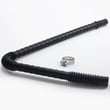
If you’re seeing leaks, one common wear item is the drain hose. For this model, a compatible replacement option is the washer drain hose WP21001872. We avoid guessing which clamp or connection is leaking until you identify the exact leak point.
Why it matters
Instead of relying on a generic “years” estimate, following the PAVT234AWW care steps helps prevent the failures that usually end a washer’s service life: chronic vibration, leaks, and drive-system strain.
Last updated: January 2026