Owner’s manual
 Error Codes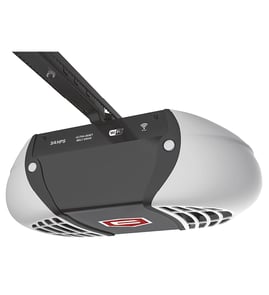



How do I know what model my garage door opener is?
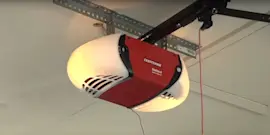
Your Craftsman garage door opener model number is printed on a label on the powerhead (the motor unit mounted to the ceiling). On many Craftsman units, you can find it under the front light lens or under the light lens on the side opposite the antenna.
Where to look on the opener
Check these common label locations on a Craftsman garage door opener powerhead:
- Under the front light lens cover
- Under the left light lens (when you are facing the garage door)
- On the side of the powerhead opposite the antenna wire
- On the back or side panel near the wiring terminals
- Near the hanging bracket or rail attachment point
What the model number looks like
For this parts page, the model is 13953647SRT1. Model numbers are usually a mix of numbers and letters and are printed on a white or silver sticker.
| What you see | What it means | What to do next |
|---|---|---|
| A long number like 139.53647SRT1 or 13953647SRT1 | The opener model identifier | Use it to match parts and troubleshooting info |
| A short code on a remote (example: FCC ID) | Remote/transmitter identifier | Use it for remote compatibility, not opener parts |
| A motor HP rating or voltage | Basic spec | Helpful for diagnosis, not for identifying the exact model |
Why it matters
Using the exact model number helps us match the correct Craftsman garage door opener parts, wiring diagrams, and adjustment steps (travel limits, force settings, and safety sensor alignment). It also helps when diagnosing blinking light patterns and other fault indicators.
Next steps after you find it
- Write the model number exactly as shown on the label
- Compare it to the model shown on this page: 13953647SRT1
- Use the 13953647SRT1 owner's manual to confirm label location and identify key components
- If you are troubleshooting, use the Craftsman error codes guide to interpret diagnostic flashes
Last updated: February 2026
Where can I buy Craftsman garage door opener parts?
You can buy replacement parts for your Craftsman 13953647SRT1 garage door opener directly from our model-specific parts listing and diagrams, so you get components that match your opener’s exact configuration. Use the 13953647SRT1 owner's manual to confirm the correct part description before ordering.
Best ways to find the right part
- Match the full model number: 13953647SRT1 (use the complete number from the opener label).
- Use the exploded-view diagrams to identify the exact assembly (motor head, rail, sensors, wall control).
- Compare the part name and notes (some parts look similar but fit different revisions).
- If your opener flashes diagnostic lights or shows an error pattern, use Craftsman error codes to narrow the failed component.
- Order by the identified part from the model page to avoid returns and downtime.
Common parts customers replace on Craftsman openers
| Symptom | Often related to | What to check first |
|---|---|---|
| Door will not close | Safety sensor circuit | Sensor alignment, wiring, sun glare, LED status lights |
| Opener runs but door does not move | Drive system | Chain/belt tension, trolley engagement, stripped gears |
| Remote or keypad not working | Controls/radio | Battery, reprogramming, wall control lock feature |
| Reverses or stops mid-travel | Force/travel settings | Door balance, binding rollers, force adjustment |
Why it matters
Garage door opener parts are model- and revision-sensitive; using the correct Craftsman 13953647SRT1 part helps restore safe operation (especially the safety sensors) and prevents repeat failures from mismatched components.
Last updated: February 2026
How to find a compatible garage door opener?
For a Craftsman garage door opener like model 13953647SRT1, compatibility comes down to matching the accessory or replacement opener to the opener’s radio system (learn button type, rolling-code generation, and frequency) and to your door’s size and weight. Use the ID label on the motor head and the programming steps in the 13953647SRT1 owner's manual to confirm what will pair correctly.
What to match for compatibility
When we help customers choose a compatible remote, keypad, wall control, or smart controller, we match these items first:
- Brand and platform: Craftsman openers often share systems with Chamberlain/LiftMaster families
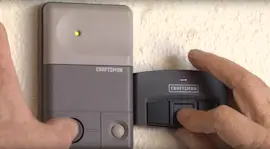
- Learn button type/color (common identifier for the radio generation)
- Rolling code vs. dip switches (older systems use dip switches; newer use rolling codes)
- Frequency (varies by generation)
- Accessory type: remote, wireless keypad, wall control, safety sensors, or smart hub
Quick identification checklist (what to look at on the opener)
Use the motor head label and the learn button area to identify what you have:
- Model number: 13953647SRT1
- Learn button color and nearby indicator LED
- Any printed terms like “Security+” or similar radio branding
- Whether the remote has dip switches inside the battery compartment
- Approximate opener age (helps narrow the radio generation)
If you are choosing a whole new opener (not just a remote)
Accessory compatibility is one piece; the opener must also be sized correctly for the door.
| Door type | What we match | Typical guidance |
|---|---|---|
| Single steel door | Door weight and balance | Most openers handle this well if the door is properly balanced |
| Insulated or wood door | Higher door weight | Choose a stronger drive system and confirm door balance |
| Tall door (8 ft) | Rail/travel length | You may need an extension kit depending on opener design |
Why it matters
Using the wrong radio generation or programming method can look like a “bad remote” problem, but it is really a compatibility mismatch. Matching the learn button system and programming steps prevents no-response issues, intermittent operation, and repeated reprogramming.
Helpful DIY references
- Use Craftsman error codes if your opener flashes lights or shows a diagnostic pattern while you’re testing compatibility.
Last updated: February 2026
How to find out garage door opener type?
To find your garage door opener type for Craftsman model 13953647SRT1, identify the drive system (chain, belt, or screw) and the control style (smart/learn button vs. DIP switches). This tells you what remotes, safety sensors, and troubleshooting steps match your opener.
Quick ways to identify the opener type
- Look at the rail above the door:
- Chain drive: metal chain like a bicycle chain
- Belt drive: rubber or reinforced belt (quieter)
- Screw drive: long threaded steel rod
- Check the motor head label (on the ceiling unit): brand, model, and sometimes “AC/DC motor”
- Find the programming method:
- DIP switches: a small bank of tiny switches in the remote and/or opener (older style)
- Learn button: a colored button (newer style) used to pair remotes and keypads
- Watch the opener lights when it fails: blinking patterns often point to sensor or travel issues
- Confirm the door type (single vs. double door) because heavier doors often need higher force settings and better door balance
Where to look on a Craftsman 13953647SRT1
Use your owner's manual to locate the exact spots for the learn button, force/travel adjustment controls, and diagnostic light behavior for this model.
Common identification clues
| What you see | What it usually means | Why it matters |
|---|---|---|
| DIP switches in remote/opener | Older radio system | Remote compatibility depends on switch settings |
| Learn button on motor head | Newer radio system | Remotes/keypads must be programmed to the opener |
| Door won’t close and lights blink | Safety sensor issue is common | Sensors must be aligned and unobstructed |
Why it matters
Your opener “type” affects remote programming, safety sensor setup, and troubleshooting. For example, a learn-button system pairs devices differently than a DIP-switch system, and drive type changes noise level and maintenance needs.
Helpful troubleshooting resource
If you’re seeing blinking lights or diagnostic codes, use our Craftsman error codes guide to match the symptom to the most likely cause and fix.
Last updated: February 2026
Is it worth repairing a 20 year old garage door opener?
For a 20-year-old garage door opener, repair is usually only worth it for a small, low-cost fix; for major failures, replacement is the better long-term choice for reliability, safety features, and parts availability. For your Craftsman 13953647SRT1, we use the owner's manual to confirm troubleshooting steps and adjustments before you spend money on parts or labor.
When repair makes sense
A repair is typically worth it when the opener still runs smoothly and the problem is isolated.
- The door reverses because the safety sensors are misaligned or dirty
- The remote or wall control is intermittent (often a wiring, button, or programming issue)
- The opener needs travel or force adjustment after door hardware changes
- The lights blink an error pattern you can diagnose and correct
- The door itself is binding (rollers, hinges, track) and the opener is reacting normally
When replacement is the smarter investment
If the opener has a major mechanical or control failure, the cost and downtime usually outweigh the benefit on a 20-year-old unit.
- Motor runs but the door does not move (common with internal drive gear wear)
- Repeated reversing or stalling even after force and travel are set correctly
- Frequent electrical issues (random resets, no power symptoms after basic checks)
- Missing or unreliable safety sensor operation
- Multiple parts failing close together
Quick decision guide
| What you’re seeing | Typical best choice | Why |
|---|---|---|
| Simple adjustment or sensor alignment issue | Repair | Low cost, fast fix |
| One failed accessory (remote, wall control) | Repair | Limited scope |
| Motor/drive system failure | Replace | Higher labor and parts cost |
| Multiple symptoms across systems | Replace | Reliability drops quickly |
Use error codes and blink patterns first
Before deciding, we recommend checking the diagnostic lights and any blink patterns. Our Craftsman error codes guide helps you match the symptom to the most likely cause so you do not replace parts unnecessarily.
Why it matters
A garage door opener is a safety device as much as a convenience feature. When an older opener starts losing consistent travel control or sensor reliability, the risk of door damage and nuisance failures goes up, and replacement becomes the more dependable path.
Last updated: February 2026