Owner’s manual
 Error Codes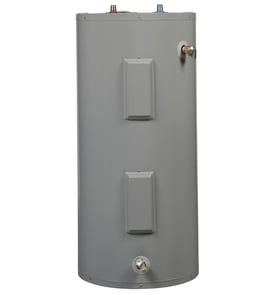



How do I read my water heater model number?
For Kenmore electric water heater model 153586320, we use the model number exactly as it appears on the rating plate sticker on the tank. Look for a label near the lower access panel area; it typically lists the model number and serial number together. For label locations and what the plate includes, use the 153586320 owner's manual.
Where to find the model number on the tank
Most electric water heaters place the rating plate on the outside of the tank jacket.
- Check the front or side of the tank near the lower access panel
- Look for a sticker or metal plate labeled Model, Model No., or Model Number
- Write down both the model number and serial number (both help match parts)
- If the label is dirty, wipe it gently so every digit is readable
- Take a clear photo before ordering parts or scheduling service
What to record (and why)
When ordering parts or getting service, we recommend recording these items exactly as printed.
| Item to copy | What it’s used for | Example (format) |
|---|---|---|
| Model number | Matches the correct parts list | 153586320 |
| Serial number | Identifies production details | Letters and numbers |
| Part number | Ensures the replacement part is correct | 100108290 |
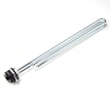
| Part description | Confirms you are ordering the right item | Heating element |
Tips to avoid common model-number mistakes
- Copy every digit; do not drop leading zeros (if present)
- Do not use a “series” name like Kenmore 6 as the model number
- If multiple numbers appear, use the one labeled Model (not voltage, watts, or capacity)
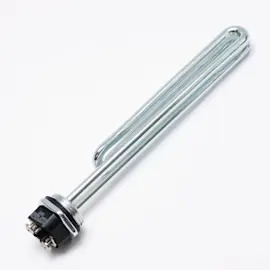
- If you are ordering a common repair part, match it to the parts list for your model (for example, the water heater heating element 100108290)
Why it matters
The model number is the key to getting the correct Kenmore water heater parts, diagrams, and service information. Even a one-digit mismatch can lead to ordering the wrong heating element, thermostat, gasket, or anode rod.
Last updated: January 2026
What is the life expectancy of a Kenmore water heater?
Most Kenmore electric water heaters, including model 153586320, typically last 8 to 12 years with normal water quality and regular maintenance. Keeping the tank flushed and the anode rod in good shape is what most often determines whether you land closer to 8 years or 12.
What affects life expectancy the most
- Water quality (hard water and high sediment shorten tank life)
- Anode rod condition (a depleted anode accelerates tank corrosion)
- Operating temperature (higher settings increase wear and scale)
- Maintenance habits (periodic flushing and inspections)
- Installation factors (proper electrical and plumbing connections)
Maintenance that helps you reach the high end of the range
Use the 153586320 use & care guide for the exact maintenance schedule and safety steps for your heater.
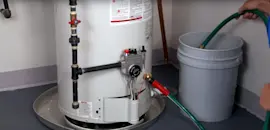
- Flush a few gallons from the drain valve periodically to reduce sediment
- Inspect for moisture at fittings and around element access panels
- Check and replace the anode rod when it is heavily worn
- Keep thermostat settings reasonable (many homes run well around 120°F)
- Address slow recovery or lukewarm water early (often points to element or thermostat issues)
Common “age-related” parts and what they do
| Part | What it protects or restores | Typical symptom when worn |
|---|---|---|
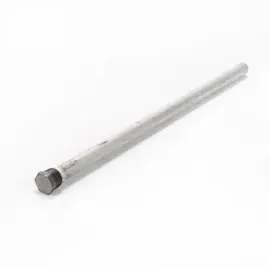
| Water heater anode rod 100108260 | Protects the tank from corrosion | Rusty odor, faster tank deterioration |
| Water heater heating element 100108290 | Heats the water | Slow heating, no hot water |
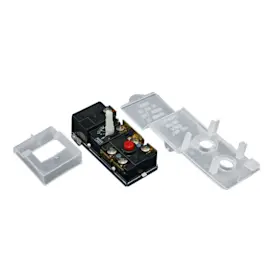
| Water heater thermostat (upper/lower) | Controls temperature and element operation | Overheating, inconsistent temps |
Why it matters
Once a tank begins leaking, replacement is usually the practical path. Extending life is mostly about preventing internal corrosion and sediment buildup, which is why the anode rod and periodic flushing are so important.
Last updated: January 2026
Do I need 10 2 or 10 3 for a water heater?
For the Kenmore electric water heater model 153586320, a typical 240V installation uses 10/2 with ground on a dedicated 30-amp circuit because the heater normally needs two hot conductors and a ground. Use 10/3 with ground only when your specific wiring method or controls require a neutral.
What 10/2 vs 10/3 means (and what most water heaters use)
Most standard residential 240V electric water heaters are straight 240V loads:
- 10/2 with ground: 2 insulated conductors (hot, hot) plus ground; this is the common setup
- 10/3 with ground: 3 insulated conductors (hot, hot, neutral) plus ground; neutral is often unused for basic heaters
- The correct choice still depends on the rating plate voltage and your local electrical code requirements
For model-specific wiring notes and access panel details, follow the 153586320 owner's manual.
How to choose the right cable for your installation
Use this quick checklist before you buy wire:
- Confirm the heater is wired for one voltage only by checking the rating plate (the manual calls this out)
- Match the branch circuit to the heater’s nameplate amps/watts and breaker size
- If your old water heater was wired with aluminum, the manual advises replacing it with copper or having a competent electrician make the connections
- If you are installing any device that needs a neutral (some timers, smart controls, or certain disconnects), plan for 10/3
- Follow local code for conduit, cable type, and grounding
Quick comparison
| Cable type | Conductors (plus ground) | Typical use on a 240V water heater | When it’s the better pick |
|---|---|---|---|
| 10/2 w/ ground | 2 | Standard water heater feed | Basic 240V heater with no neutral needed |
| 10/3 w/ ground | 3 | Sometimes used | Neutral required by an accessory or your wiring method |
Why it matters
Using the correct conductor count and wire type helps ensure safe operation, correct voltage at the heater, and reliable heating performance. It also prevents improper connections inside the upper and lower access panels.
Related parts you may replace during service
If you are troubleshooting “no hot water” or slow recovery, these model-matched parts are common:
- Water heater heating element 100108290
- Water heater thermostat, upper 100108683
- Water heater thermostat, lower 100108421
Last updated: January 2026