Error Codes


How do I tell what model Kenmore fridge I have?
To tell what model Kenmore refrigerator you have, we look for the model and serial tag (rating plate) on the cabinet liner or door area. On many Kenmore bottom-mount units like model 59679542011, it is inside the fresh food section or behind the lower drawers.
Where to look first (most common spots)
- Inside the refrigerator compartment on a side wall (cabinet liner)
- On the ceiling of the fresh food compartment near the light
- On the inside edge of the refrigerator door (hinge side)
- Behind or just above the lower crisper drawers (you may need to slide drawers out)
- Behind the toe grille or kickplate at the bottom front
How to read the tag correctly
The tag usually lists both a model number and a serial number.
| What you see | What it’s used for | Example format |
|---|---|---|
| Model number | Matching parts and diagrams | 596.79542011 or 59679542011 |
| Serial number | Production date and version details | Letters and numbers |
Why it matters
Kenmore refrigerators often have similar-looking doors, bins, and drawers across multiple series. Using the exact model number helps us match the correct parts (like a door bin, gasket, or water tube) the first time.
If the label is missing or unreadable
- Check for a duplicate tag near the hinge area or behind the kickplate
- Look for a faint “imprint” and take a photo with the flash on
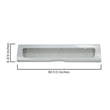
- If you are replacing a common wear item, match by part and diagram; for example, compare your bin shape to the refrigerator door bin WPW10289489
Last updated: February 2026
How to tell if a Kenmore refrigerator compressor is bad?
A bad compressor in your Kenmore refrigerator model 59679542011 usually shows up as poor or no cooling even though the unit has power, along with repeated clicking or humming from the compressor area. Before condemning the compressor, we check airflow, frost pattern, and start components because those failures can look identical.
Quick symptoms that point to a compressor problem
- Refrigerator and freezer both warm, but interior lights and controls work
- Compressor tries to start, then clicks off (often repeats every few minutes)
- Compressor runs continuously but temperatures never reach set point
- Compressor is extremely hot to the touch after running (use caution)
- No vibration or sound from the compressor when the unit should be cooling
Rule out common look-alikes first (most important)
Many “bad compressor” calls end up being a start device, airflow, or defrost issue.
- Condenser coils clogged: poor heat release causes high temps and long run times
- Condenser fan not running (if equipped): compressor overheats and may cycle off
- Evaporator fan not running: freezer may cool unevenly; fresh food warms
- Heavy frost on evaporator cover: defrost problem blocks airflow
- Start components failing: a weak capacitor can prevent the compressor from starting
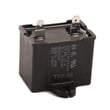
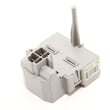
If your compressor is clicking and not starting, the run capacitor is one of the first parts we check on this model: refrigerator run capacitor WPW10662129.
What we check (safe homeowner checks vs. technician checks)
| Check | What you can do | What it tells us |
|---|---|---|
| Listen for click-hum-click | Yes | Start failure or locked compressor |
| Feel for airflow at vents | Yes | Fan/defrost/airflow issue |
| Check condenser coil cleanliness | Yes | Overheating and poor cooling |
| Measure compressor amperage, start winding, continuity | Technician | Confirms electrical health |
| Sealed system leak or restriction diagnosis | Technician | Confirms refrigerant-side failure |
Why it matters
Replacing a compressor is a sealed-system repair; it is higher cost and only makes sense after we eliminate simpler causes like a failed capacitor, fan problem, or airflow restriction. Correct diagnosis prevents replacing the wrong part and protects food temperatures.
Last updated: February 2026
How many cubic feet is my Kenmore refrigerator by model number?
For Kenmore model 59679542011, the most accurate way to get cubic feet (total capacity) is to read the capacity listed on the refrigerator’s rating plate inside the fresh food section. Model numbers alone do not reliably encode the exact cubic-foot size across all Kenmore bottom-mount designs.
Fast ways to find your refrigerator’s cubic feet
Use these options in order; the first two are the quickest and most accurate.
- Check the rating plate (usually on a side wall near the crisper area or on the cabinet frame near the door).
- Look for wording such as “Total capacity”, “Capacity”, or “cu. ft.”
- If the rating plate is hard to read, take a photo and zoom in.
- If the label is missing or damaged, use the model number to cross-reference parts and configuration details.
- If you are trying to estimate capacity for a remodel or replacement, measure the cabinet and compare to typical bottom-mount sizes.
What the rating plate typically shows
Most Kenmore refrigerators list capacity as a single total number, and sometimes break it out by compartment.
| Label item | What it means | What to record |
|---|---|---|
| Total capacity | Combined fresh food + freezer volume | Total cu. ft. |
| Refrigerator capacity | Fresh food section volume | Fresh food cu. ft. |
| Freezer capacity | Freezer section volume | Freezer cu. ft. |
If you need a quick estimate (when the label is unreadable)
Most Kenmore bottom-mount refrigerators commonly fall in the 18 to 25 cu. ft. range. A larger cabinet width and deeper box usually indicates higher capacity.
- 29 to 30 inch wide bottom-mounts often land around 18 to 22 cu. ft.
- 32 to 33 inch wide bottom-mounts often land around 22 to 25 cu. ft.
- Ice maker and dispenser features can slightly reduce usable storage space even when total capacity is similar.
Why it matters
Knowing cubic feet helps you compare storage space accurately, choose correctly sized shelves and bins, and plan for kitchen fit. If you are ordering storage parts for model 59679542011, matching by model number ensures the right fit even when capacity is unknown.
For example, if you are replacing broken storage hardware, you can match parts by model and section, such as the refrigerator door bin WPW10289489 or the refrigerator crisper drawer slide rail WPW10326469.
Last updated: February 2026
Why is the bottom of my Kenmore refrigerator leaking water?
Water at the bottom of your Kenmore 59679542011 bottom-mount refrigerator is usually caused by a clogged or frozen defrost drain, a loose or cracked drain tube, or water spilling from the drain pan during defrost. Clearing the drain path and checking the drain tubing typically stops the leak.
Most common causes (and what to check first)
- Defrost drain clogged with food debris or ice; water backs up and runs into the fresh food section, then down to the floor.
- Drain tube shifted, split, or restricted; water misses the drain pan.
- Drain pan out of position or cracked; defrost water does not stay contained.
- Door not sealing well; excess moisture creates heavier frost, leading to more defrost water.
- Ice maker or water line seep; slow leaks can track to the front or bottom.
Quick troubleshooting steps
- Unplug the refrigerator and remove items near the leak.
- Look for water trails inside the fresh food compartment (often under crisper drawers) and in the freezer bottom.
- Clear the drain opening (typically at the back of the freezer floor or behind the rear panel). Melt ice with warm water.
- Flush the drain with hot water using a turkey baster or squeeze bottle until it flows freely to the drain pan.
- Inspect the drain tubing for kinks or cracks; replace if damaged.
If the drain line is damaged or not routing correctly, replacing the refrigerator drain tube W10619951 is a common fix.
Parts that often solve bottom leaks
| Symptom you see | Likely area | Part that may help |
|---|---|---|
| Water under crisper drawers | Defrost drain backing up | Refrigerator drain tube W10619951 |
| Puddles appear after door openings | Door seal letting in humid air | Refrigerator gasket panel (gray) W10830055 or refrigerator gasket panel W11378944 |
| Leak seems tied to dispenser/ice | Water supply path | Refrigerator water tube W11415785 |
Why it matters
A small leak can turn into recurring ice buildup, warm temperatures, and floor damage. Fixing the drain path and door sealing helps your refrigerator defrost correctly and keeps humidity under control.
Last updated: February 2026
Why is my refrigerator not getting cold at the bottom?
If your Kenmore refrigerator model 59679542011 is warm at the bottom, the most common causes are restricted airflow (blocked vents or an iced-up evaporator area), dirty condenser coils reducing heat removal, or an evaporator fan issue that prevents cold air from circulating into the fresh food section.
Quick checks we recommend first
- Set the refrigerator temperature to a colder setting and wait 24 hours for stabilization.
- Make sure food packages are not blocking interior air vents (especially on the back wall).
- Clean the condenser area (dust and pet hair buildup is a top cause of weak cooling).
- Confirm the freezer is cold; bottom-mount designs rely on moving freezer air up to the refrigerator.
- Listen for the evaporator fan (usually a steady fan sound when the compressor is running).
What to look for (symptoms and likely causes)
| What you notice | Most likely cause | What to do next |
|---|---|---|
| Freezer is cold but refrigerator bottom is warm | Airflow blocked or evaporator area iced over | Clear vents; check for frost buildup behind the rear panel |
| Cooling is weak everywhere | Dirty condenser coils or condenser fan problem | Clean coils; verify airflow at the back/bottom |
| Clicking, humming, then stops cooling | Start components or compressor system issue | Check electrical components; consider professional diagnosis |
| Heavy frost in freezer, then warm fridge | Defrost system problem | Defrost fully, then monitor for repeat icing |
Parts that commonly relate to this problem
We only recommend replacing parts after confirming the failure with symptoms.
- If you suspect a sealed-system or compressor problem (warm temps, long run times, poor cooling), the compressor can be involved; see refrigerator compressor W10233960.
- If the compressor struggles to start or you hear repeated clicking, the run capacitor is a common check; see refrigerator run capacitor WPW10662129.
- If you are troubleshooting airflow and find a damaged fan blade, see refrigerator fan blade WP67006337.
Why it matters
Bottom-area warming usually means cold air is not being distributed correctly. Fixing airflow restrictions and condenser heat removal early helps prevent food spoilage and reduces strain on the compressor.
Last updated: February 2026