 Installation guide
 Owner’s manual


What is the average lifespan of a Whirlpool washing machine?
A Whirlpool washer like model WTW7500GW0 typically lasts about 10 to 14 years with normal household use and routine care. Lifespan varies most with load size habits, detergent choice (HE), installation/leveling, and how consistently you run cleaning and maintenance steps in the WTW7500GW0 use & care manual.
What affects lifespan the most
- Overloading or tightly packing the basket; this increases strain on the drive system and suspension.
- Detergent habits; using non-HE detergent or too much HE detergent can cause excessive suds and residue buildup.
- Off-balance spinning; repeated vibration can wear suspension components faster.
- Moisture and residue; leaving the lid closed between loads can contribute to odor and buildup.
- Water supply issues; sediment or low flow can stress fill components.
Maintenance steps that help WTW7500GW0 last longer
We recommend these habits for this Whirlpool top-load, low-water design:
- Run the Clean Washer cycle about every 30 washes.
- Use HE detergent only and do not exceed dispenser max lines.
- Load items in loose heaps evenly around the washplate.
- Leave the lid open between uses to help the tub dry.
- Inspect fill hoses regularly and replace if worn (the manual recommends replacing inlet hoses after 5 years).
Quick “repair vs replace” guide
| What you notice | Often worth fixing | Often a sign of end-of-life (combined with age) |
|---|---|---|
| Won’t drain or leaves clothes wet | Drain restriction, pump issue | Repeated failures plus loud mechanical noise |
| Excessive vibration | Leveling, suspension wear | Persistent “walking” with multiple worn components |
| Fill problems | Hose screens, inlet valve | Multiple electrical/control issues |
Why it matters
A washer that’s maintained and kept level usually runs quieter, cleans better, and avoids premature wear on high-stress parts like the suspension and drain system. If you’re troubleshooting draining or wet loads on WTW7500GW0, the washer drain pump W10876600 is one of the components we commonly see involved.
Last updated: January 2026
What is a common problem for a Whirlpool washer?
A common problem we see on the Whirlpool WTW7500GW0 washer is a drain or spin issue that leaves clothes wet, often caused by oversudsing (too much or non-HE detergent), an unbalanced load, or a restriction in the drain path. The troubleshooting steps in the WTW7500GW0 use & care manual help narrow it down quickly.
Most common symptoms (and what they usually mean)
- Won’t drain or spins poorly; clothes still wet: oversudsing, drain restriction, or load too tightly packed
- Stops mid-cycle: lid not fully closed/locked, oversudsing pause, or power interruption
- Vibration or “walking” during spin: load off-balance or washer not level
- Musty odor: monthly cleaning not being done, lid kept closed between uses
- Clicking/humming/gurgling: often normal sounds during sensing or draining, but can also indicate an item in the drain system
Quick checks we recommend for WTW7500GW0
- Confirm HE detergent use and correct amount. This model is designed for HE detergent; too many suds can slow or stop draining/spinning.
- Redistribute the load. Load items in loose heaps evenly around the washplate; avoid single heavy items.
- Run Rinse & Spin to clear excess suds and remove water.
- Check the drain setup. A kinked hose, a clogged standpipe, or an incorrect drain hose height can cause long drain problems.
- Listen for clues. A steady hum with occasional gurgle is often the pump finishing a drain; loud rattling can mean something is trapped.
Parts that commonly relate to these problems
If basic checks do not help, these model-compatible parts are often involved:
| Symptom | Part to consider | What it affects |
|---|---|---|
| Long drain, won’t drain | Washer drain pump W10876600 | Pumps water out during drain/spin |
| Long drain, siphoning, poor drain flow | Washer drain hose W11244231 | Drain path from washer to standpipe |
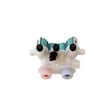
| Fill problems or fill errors | Washer water inlet valve W11165546 | Controls hot/cold water entering the washer |
Why it matters
On the WTW7500GW0, oversudsing and off-balance loads can make the washer extend cycle time, pause to protect components, or leave water in the basket. Fixing the root cause helps prevent repeat wet-load issues and reduces odor buildup.
Last updated: January 2026
What is the capacity of the wtw7500gw0?
We can’t confirm an exact tub capacity (in cubic feet) for the Whirlpool WTW7500GW0 from the model-specific Use & Care information available here; Whirlpool often lists capacity on the product label, spec sheet, or marketing materials rather than in the owner’s guide. For model-specific operating details, use the WTW7500GW0 use & care manual.
How to identify capacity for your exact washer
Capacity is typically printed on a rating label or in a spec document tied to the exact model and revision.
- Check the model/serial tag (often under the lid or on the cabinet rim) for a capacity listing
- Look for a separate “specifications” or “dimensions” sheet that came with the washer
- If you have the original receipt or retailer listing, it may show capacity
- If you’re comparing similar Whirlpool models, confirm the full model number (WTW7500GW0) before relying on a capacity figure
What we can confirm about how WTW7500GW0 uses the tub
From the owner’s guide, WTW7500GW0 is a high-efficiency, low-water top-load washer that uses automatic load size sensing and a washplate (impeller-style) wash system.
| What you’ll notice | What it means | What to do |
|---|---|---|
| Tub not “full of water” | Normal low-water operation | Don’t add extra water |
| Lid locks at start | Sensing and safety | Wait for movement to stop before opening |
| Best cleaning needs movement | Items must circulate | Load in loose heaps around the washplate |
Why it matters
Even when you know the cubic-foot capacity, cleaning and spin performance on this Whirlpool washer depends more on proper loading, HE detergent use, and choosing the right cycle than on filling the basket to the top.
Last updated: January 2026
How do you clean the filter on a Whirlpool top load washer?
On the Whirlpool WTW7500GW0, there is not a routine, user-cleanable lint filter like some top-load washers. For this model, “filter cleaning” usually means monthly tub cleaning plus checking the drain system for clogs; for model-specific care steps, use the WTW7500GW0 use & care manual.
What “filter” can mean on WTW7500GW0
This washer is a low-water, high-efficiency top loader with a washplate (impeller). The manual focuses on maintenance and troubleshooting rather than a removable lint screen.
Common items customers call a “filter”:
- Washer basket and washplate area: lint is flushed out during drain, not trapped in a removable screen
- Dispenser drawer/trays: can collect detergent or softener residue and should be cleaned periodically
- Drain system (pump and hoses): can trap coins, hairpins, and small items if pockets are not emptied
What we recommend cleaning (and how)
1) Run the Clean Washer cycle (monthly)
The manual recommends using the Clean Washer cycle about every 30 washes to reduce residue and odors.
- Run Clean Washer with the tub empty
- Use an affresh® washer cleaner tablet or liquid chlorine bleach as directed
- Leave the lid open after the cycle to help the interior dry
2) Clean the dispenser drawer/trays (as needed)
The manual provides a cleaning procedure for the dispenser drawer.
- Pull the drawer out (release the tab), then remove it
- Wash in warm, soapy water; rinse and dry
- Reinstall the drawer before the next load
3) If you suspect a drain blockage
The manual notes that objects can be caught in the drain system and may require service to remove. If you’re getting long-drain symptoms or drain-related error codes, you can also inspect the drain hose for kinks or clogs and confirm proper installation per the installation instructions.
| Symptom | What you can do safely | What may need repair |
|---|---|---|
| Gurgling/humming during drain | Check drain hose for kinks/clogs | Drain pump obstruction or failure |
| Loads still wet | Run Rinse & Spin; reduce load size | Pump or drive system issue |
| Long drain error | Verify drain hose height/standpipe setup | Pump system problem |
Why it matters
Regular maintenance helps prevent odor and detergent buildup, and it reduces the chance that debris in pockets ends up in the drain system where it can cause slow draining or noisy operation.
Last updated: January 2026





