Owner’s manual



How do you know if your vacuum motor is burnt out?
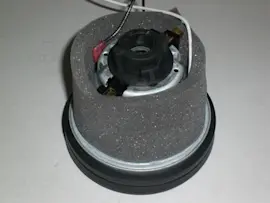
On the Kenmore 11629319800 canister vacuum, a burnt-out motor usually shows up as a strong burning odor, loud grinding or screeching, visible sparking, or a motor that will not start or shuts off quickly. Before assuming motor failure, rule out overheating shutdown from a clog or dirty filters.
Quick checks before you call the motor “burnt out”
Many “dead motor” symptoms are actually airflow problems that trigger the thermal protector.
- Unplug the vacuum and check for clogs in the hose, wand, and airflow path.
- Check the bag and replace it if it is full or packed with fine dust (never reuse a dust bag).
- Clean and fully dry the motor safety filter; running without it can cause motor failure.
- If the vacuum shut off while running, let it cool about 30 minutes, then restart.
- Watch the check-bag indicator behavior; restricted airflow can make performance drop fast.
For the model-specific protector reset and filter steps, follow the owner's manual.
Signs that point to true motor damage
If airflow is clear and the vacuum still acts up, these symptoms strongly indicate a failing or failed motor:
- Persistent electrical or “burnt” smell from the canister body
- Harsh metallic grinding, squealing, or rattling that was not there before
- Motor only “clicks” or hums and will not spin up
- Runs briefly, then repeatedly shuts off even with clean airflow and a cool motor
- Excessive sparking visible through motor vents (more than a brief start-up spark)
Thermal protector shutdown vs. burnt motor
| What you notice | More likely cause | What to do |
|---|---|---|
| Vacuum stops after heavy use; restarts after cooling | Thermal protector tripped from overheating | Clear clogs, replace bag, clean/dry filters, wait 30 minutes |
| Strong burning smell; won’t restart after cooling | Motor windings/brushes failing | Stop using; plan for service/repair |
| Low suction but motor sounds normal | Airflow restriction | Bag, filters, hose, attachments |
Why it matters
Continuing to run a vacuum that is overheating or sparking can damage the motor further and can also melt internal wiring. Fixing airflow issues early (bag, clogs, motor safety filter) is the best way to prevent a motor burnout.
If you need replacement parts for your Kenmore 11629319800, start with the parts list for this model, or search by model number on Sears PartsDirect.
Last updated: February 2026
How long do Kenmore canister vacuums last?
Most Kenmore canister vacuums typically last 8 to 12 years with normal household use and routine maintenance. For your Kenmore 11629319800, keeping up with bag changes, filter care, and brush roll (Power-Mate) upkeep is what most directly extends service life; see the 11629319800 owner's manual for the maintenance schedule.
Typical lifespan by usage
Lifespan depends more on use and care than the brand name on the canister.
- Light use (1 to 2 rooms, a few times/week): 10 to 12 years
- Average whole-home use (weekly): 8 to 10 years
- Heavy use (pets, daily use, lots of carpet): 6 to 8 years
| Usage pattern | What wears fastest | What to do regularly |
|---|---|---|
| Mostly carpet | Belt, brush roll, filters | Clean brush roll, replace worn consumables |
| Mostly hard floors | Hose clogs, seals, wheels | Clear clogs, check for air leaks |
| Pet hair | Brush roll, filters, airflow path | Clean hair wrap, keep filters clean |
Maintenance that adds years
The 11629319800 Use & Care Guide calls out routine care items like bag changing, motor safety filter cleaning, and exhaust filter changing.
- Change the bag before it is overfull (reduced airflow strains the motor)
- Clean or replace filters on schedule (motor safety filter and exhaust filter)
- Keep the Power-Mate brush roll clear of hair and string
- Clear clogs in the hose, wand, and nozzle if suction drops
- If the cord rewind starts sticking, pull the cord fully out, wipe it clean, then rewind evenly
Signs it is near end of life
These symptoms usually mean the vacuum needs repair, major maintenance, or replacement.
- Strong burning smell or repeated overheating shutdowns
- Suction stays weak after bag and filter service
- Power-Mate stops spinning even after cleaning and belt checks
- Cord rewind repeatedly jams or fails
- Cracks in the hose or canister that cause persistent air leaks
Why it matters
A canister vacuum’s motor depends on steady airflow for cooling. When bags, filters, or the brush roll are neglected, airflow drops, temperatures rise, and the motor and wiring wear out faster. Ordering the correct replacement parts by model number helps avoid fit and performance problems; we recommend confirming your exact model on the rating plate and using the parts list for Kenmore 11629319800, or searching by model on Sears PartsDirect.
Last updated: February 2026
Does a Kenmore canister vacuum have a fuse?
Yes. Your Kenmore canister vacuum model 11629319800 is designed to be protected by your home’s electrical protection (a circuit breaker or a household fuse). The troubleshooting section specifically lists a “tripped circuit breaker/blown fuse at household service panel” as a no-start cause; see the 11629319800 owner's manual.
What “fuse” usually means for this vacuum
Most no-power situations trace back to the power source, not a replaceable fuse inside the canister.
- Household fuse or breaker: The manual calls this out as a primary no-start check.
- Thermal protector (internal safety): If the vacuum starts then shuts off, the manual points to a tripped thermal protector in the canister that needs time to reset.
- Power-Mate overload protector (if equipped): If the Power-Mate jams, its overload can trip and require a reset after clearing the blockage.
Quick checks when the vacuum won’t start
Use these steps in order; they match the manual’s most common causes.
- Plug the cord in firmly and confirm the outlet has power.
- Check your home electrical panel; reset the breaker or replace the household fuse.
- Reseat electrical connections at the hose and wand ends.
- Make sure the canister hood is fully closed and latched.
- If it shut off during use, let it cool, clear clogs, then try again (thermal protector reset).
Symptoms and the most likely protection device
| Symptom | Most likely cause | What to do |
|---|---|---|
| No lights, no motor at all | Household breaker/fuse or no outlet power | Reset breaker/replace fuse; test outlet |
| Starts, then shuts off | Thermal protector tripped | Cool down, clear airflow restrictions, restart |
| Power-Mate stops or won’t run | Power-Mate overload or connection issue | Clear jam, reset protector, reseat connections |
Why it matters
Knowing whether the “fuse” is in the house panel or a built-in protector saves time and prevents repeated trips. It also helps you focus on airflow issues (bag, filters, clogs) that can overheat the motor.
If you’re ordering repair items for this model, you can shop the parts list for 11629319800 on this page or search by model at Sears PartsDirect.
Last updated: February 2026
What are the disadvantages of a canister vacuum?
Canister vacuums like the Kenmore 11629319800 clean very well, but the tradeoffs are storage space and handling: you manage a separate canister plus hose and wand, and you need extra care on stairs and around furniture. For model-specific operating and safety tips, use the 11629319800 owner's manual.
Common disadvantages (what you will notice day to day)
- Bulkier to store: the canister body, hose, wand, and floor nozzle take more space than a single-piece upright.
- More to maneuver: the canister follows behind you and can bump baseboards, furniture legs, and door frames.
- Awkward on stairs: you must position the canister carefully; if it slips, it can fall.
- More setup steps: switching between carpet, bare floors, and attachments usually means changing tools and settings.
- Cord and hose management: you need to avoid running over the power cord and prevent hose twisting.
Handling and safety drawbacks (and how we reduce them)
The biggest “con” for many owners is that canisters require more attention to placement and movement.
- Move the vacuum by the canister handle, not by pulling the hose.
- On stairs, place the canister on a stable step and keep it from tipping.
- Use slower, steady strokes; fast, jerky passes clean less effectively.
- Check for hose twisting before pulling the canister to a new spot.
Quick comparison: canister vs. upright
| Feature | Canister vacuum | Upright vacuum |
|---|---|---|
| Storage footprint | Larger (multiple pieces) | Smaller (one main body) |
| Stairs | Harder (separate canister) | Often easier to carry |
| Under-furniture reach | Often better (wand/hose) | Often limited |
| Cord/hose management | More to manage | Usually simpler |
Why it matters
If your home has lots of stairs, tight hallways, or limited closet space, a canister’s separate body and long hose can feel like extra work. If you need reach for edges, under furniture, and above-floor cleaning, those same features can be a benefit.
You can order replacement parts for Kenmore 11629319800 from the parts list for this model, or search by model number on Sears PartsDirect.
Last updated: February 2026
Where to find model number on Kenmore canister vacuum?
On your Kenmore canister vacuum model 11629319800, the model number is printed on the Model and Serial Number Plate on the vacuum. We recommend writing down both the model and serial number before ordering parts or using troubleshooting steps in the owner's manual.
Where to look on the vacuum
Check these common plate locations on Kenmore canister vacuums:
- On the bottom of the canister near the wheels
- On the back or side of the canister body near the cord rewind area
- Near the bag door or inside the bag compartment (on some versions)
- On a sticker or metal plate with both model and serial fields
What the label looks like
The plate usually includes the same core fields. Use this quick guide:
| Label field | What it means | Why you need it |
|---|---|---|
| Model No. | The full model identifier (example: 11629319800) | Ensures diagrams and parts match your exact vacuum |
| Serial No. | Production code/serial | Helps confirm the correct revision when parts vary |
| Date of purchase | When you bought it | Useful for maintenance records and warranty paperwork |
Why it matters
Kenmore canister vacuums often have similar-looking housings, hoses, and Power-Mate style nozzles, but internal parts can differ by model series. Using the exact model number helps us match the correct Kenmore parts list and avoid ordering the wrong component.
Ordering tip
Once you have the model number, you can order replacement parts from the parts list for model 11629319800 on this page, or search by model number on Sears PartsDirect.
Last updated: February 2026