Owner’s manual
 Error Codes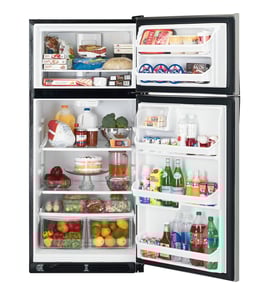






What are the disadvantages of a top mount fridge?
A top-mount (top-freezer) refrigerator like the GE GTS22KGNBRBB is usually affordable and reliable, but the main disadvantages are convenience and organization: fresh food sits lower so you bend more, freezer access is higher, and premium features (like built-in dispensers) are less common. See the GTS22KGNBRBB owner's manual for the exact features and layout on your unit.
Common disadvantages (what you notice day to day)
- More bending for fresh food: the refrigerator compartment is below the freezer, so you reach down more often.
- Less flexible organization: many top-mount designs have fewer specialty bins and adjustable storage options than some bottom-mount styles.
- Fewer “premium” options: through-the-door ice and water dispensers are less common on top-mount models.
- Freezer can feel tighter: bulky frozen items may be harder to stack and access.
- Door swing and clearance needs: you may need extra space around the cabinet for doors to open comfortably.
Installation and space considerations
Even when the layout works for you, top-mount fridges still need proper airflow and clearance. For GE top-freezer models in the 22 cu ft range, typical clearances include:
| Area | Typical clearance guidance |
|---|---|
| Sides | 1/8 inch (3 mm) |
| Top | 1 inch (25 mm) |
| Back | 2 inches (50 mm) |
Quick comparison: top-mount vs bottom-mount
| Feature | Top-mount | Bottom-mount |
|---|---|---|
| Fresh food access | Lower (more bending) | Higher (less bending) |
| Freezer access | Higher | Lower |
| Organization | Often simpler | Often more flexible |
| Cost | Often lower | Often higher |
Why it matters
Choosing the right layout affects comfort and food waste. If you use fresh foods daily, the extra bending can be a real drawback; if you prioritize value and straightforward cooling, a top-mount can be a strong fit.
Last updated: January 2026
Is a top mount or bottom mount fridge better?
A top-mount (top-freezer) refrigerator like the GE GTS22KGNBRBB is usually better if you want lower cost, simpler storage, and easy freezer access; a bottom-mount is usually better if you use fresh food most and want the refrigerator section at eye level to reduce bending.
Quick comparison
| Feature | Top-mount (top-freezer) | Bottom-mount (bottom-freezer) |
|---|---|---|
| Fresh-food access | Lower shelves require more bending | Most-used items are easier to reach |
| Freezer access | Easiest (freezer at top) | Drawer-style freezer is organized but lower |
| Price and repairs | Typically lower purchase cost; simpler design | Typically higher cost; more complex layouts |
| Space and layout | Often more usable freezer shelf space | Often better fresh-food layout and visibility |
How we recommend choosing
- Choose top-mount if you use the freezer often, want a straightforward layout, or want to keep costs down.
- Choose bottom-mount if you cook with fresh ingredients daily and want the refrigerator section at a comfortable height.
- If you have mobility or back concerns, bottom-mount usually reduces bending for everyday items.
- If you buy lots of frozen foods, top-mount usually feels more convenient.
- If you are tight on kitchen space, compare door swing and clearance needs before deciding.
Why it matters for your GE GTS22KGNBRBB
Your GTS22KGNBRBB is a top-freezer design, so it naturally prioritizes freezer convenience and a simpler, reliable layout. For installation planning, the clearances and leveling guidance in the GTS22KGNBRBB owner's manual help you confirm fit, airflow space, and door closing performance.
Fit and installation tip (often overlooked)
Even the “better” style can feel wrong if it is not leveled or spaced correctly. Most top-mount refrigerators work best when:
- The cabinet has the recommended side, top, and rear clearances for airflow.
- The front is raised slightly so doors close easily.
- The unit can roll out for cleaning (rollers and leveling legs work together).
Last updated: January 2026
What is the most common problem with GE profile refrigerators?
The most common GE Profile refrigerator complaint is not cooling properly; it’s usually tied to airflow, dirty condenser coils, or a failed fan. For your GE GTS22KGNBRBB top-mount refrigerator, we start with temperature settings, door sealing, and fan operation using the GTS22KGNBRBB owner’s manual.
Most common issues we see (and what to check first)
- Not cooling or weak cooling: verify vents are not blocked and the condenser area is clean.
- Unusual noises: a fan blade hitting ice or a worn fan motor can cause buzzing or rattling.
- Ice maker not working (on equipped models): confirm the water supply is connected and pressure is adequate.
- Water leaking: often a clogged defrost drain or a water line connection issue.
- Door not sealing: warm air leaks cause temperature swings and frost.
Quick troubleshooting steps for “not cooling”
- Set temps to typical targets: 37°F fresh food, 0°F freezer.
- Make sure food packages are not blocking return vents.
- Listen for the evaporator fan in the freezer; if it’s silent when the compressor is running, suspect the fan circuit.
- Check door gaskets for gaps; clean with warm soapy water and dry fully (the manual notes gasket care helps them last longer).
- If the unit has an ice maker and water line, confirm cold-water supply and correct pressure.
Common causes and likely symptoms
| Symptom | Likely cause | What you’ll notice |
|---|---|---|
| Warm fridge and freezer | Airflow or sealed-system issue | Compressor may run a lot |
| Freezer cold, fridge warm | Air damper/airflow problem | Frost buildup or blocked vents |
| Rattling or scraping | Fan or ice interference | Noise changes when door opens |
| No ice | Water supply or ice maker issue | Small cubes or no fill |
Parts that often relate to these problems (for this model)
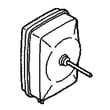
- Evaporator fan motor WR60X31522 (moves cold air through the compartments)
- Refrigerator door switch WR23X31507 (can affect lights and some fan behaviors)
- Refrigerator defrost heater assembly WR55X31113 (helps prevent heavy frost that blocks airflow)
Why it matters
Cooling and ice-making problems usually get worse over time; catching airflow, gasket, or fan issues early helps protect food, reduce run time, and prevent frost or water leaks.
Last updated: January 2026